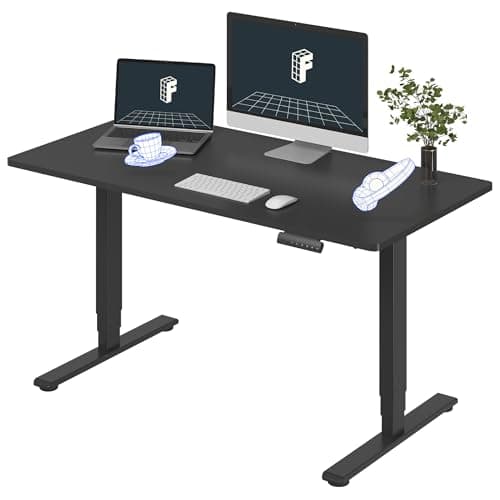
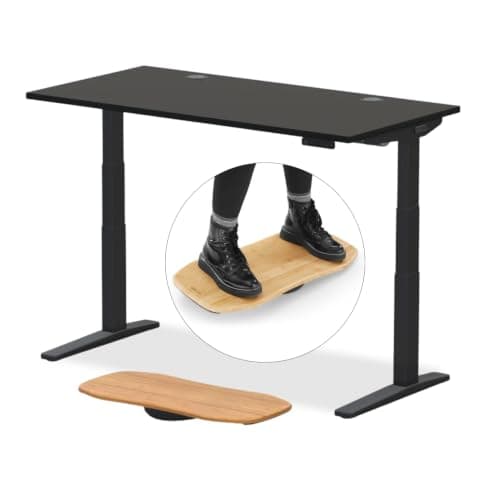
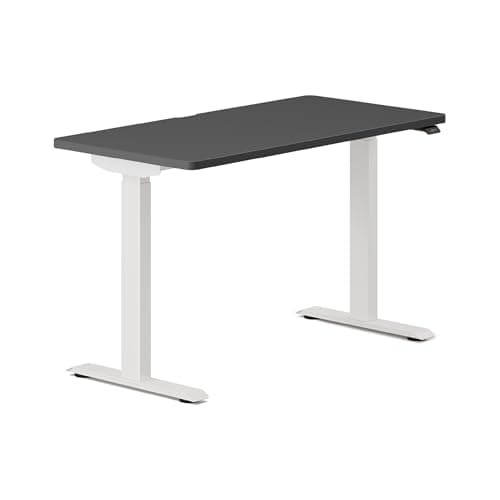
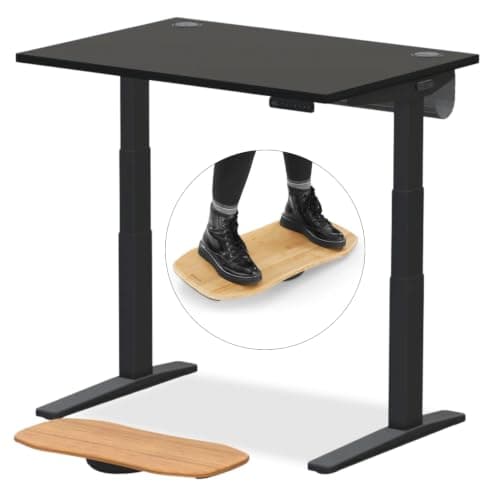
Buy the UPLIFT V3 42×30 laminate. UPLIFT publishes a 22.6 to 48.7 inch height range for the V3 frame — the lowest published floor of any desk we track — and the laminate desktop line is the one UPLIFT publishes its GREENGUARD Gold document for. For a shorter body that is the whole decision: the desk has to come down to your seated height, and it should do it on a certified top. Everything below is ranked on the same number, and the last pick is on this list to show you what a desk that fails it looks like.
Why the minimum height is the spec, not the maximum
This page is the mirror image of our desks for tall people roundup, and the inversion matters. A tall user runs out of desk at the top: they need travel above roughly 48 inches, and leg-stage count is what gets them there. A short user has the opposite problem. Every electric desk on the market reaches a standing height that suits a 5-foot-2 body without breaking a sweat. Where they fail is at the bottom of the range — when you sit down.
Work the numbers with the stature ratios our height calculator uses: a seated desk height of roughly 0.41 of your stature, a standing height of roughly 0.62. At 5 feet 0 inches that is a seated surface around 24.6 inches and a standing surface around 37.2 inches. At 5 feet 2 inches it is about 25.4 and 38.4 inches. At 5 feet 4 inches, about 26.2 and 39.7 inches.
Now set that against what the furniture industry actually builds. Cornell's ergonomics guidance describes a fixed work surface of 28 to 30 inches as the height suitable for most adults — and that is the band a normal desk is manufactured at. For a 5-foot-2 sitter whose number is 25.4 inches, a standard desk is roughly three to five inches too high, permanently. That is not a rounding error. Three inches of excess desk height is what makes you shrug your shoulders, float your wrists and reach up to type all day, which is the mechanism behind a large share of the complaints in our neck pain and wrist pain guides.
So the promise of a sit-stand desk for a short person is not really the standing. It is that for the first time the seated half of the day can be set to the right height too. That only happens if the frame's floor is below your seated number — and a desk whose minimum is 28 inches has simply reproduced the problem you were trying to escape.
The three desks that publish a number you can use
Published height ranges are rarer than you would expect. Of the desks in our catalog, the ones with a range you can read before you buy are the UPLIFT V3, the FlexiSpot E6 and the Branch Duo. Here is what each one actually says:
- UPLIFT V3 — 22.6 to 48.7 inches, which UPLIFT states as 26.1 inches of total travel, with 355 lb of lift capacity and a 15-year warranty. The 22.6 inch floor clears the seated number for essentially any adult stature, including a 4-foot-11 sitter.
- FlexiSpot E6 — 23.6 to 48.4 incheswith 275 lb capacity, on FlexiSpot's own E6 frame page. One inch higher at the bottom than the UPLIFT, still low enough for a 5-foot-0 seated height, and at a fraction of the price.
- Branch Duo — 28 to 47.3 inches. Branch deserves credit for printing the range at all, and then the range disqualifies it. A 28 inch floor sits above the seated height of every stature under roughly 5 feet 8 inches. It is a good desk that cannot be set correctly for the reader of this page, and we would rather rank it last and say why than leave it off and let you discover that after delivery.
For every other desk in the category the honest answer is that the minimum height is not published, and a seller who cannot tell you the bottom of the range is a seller you should assume built to the 28-to-30 inch default. Ask before you order, and ask about the exact frame and leg configuration in your cart rather than the product line.
Why a sit-stand converter is the wrong purchase here
A converter sits on top of your existing desk and raises your work surface. It is a genuinely good answer to "I cannot replace my desk" — we rank them on the converters page — and it is precisely the wrong answer to this problem. A converter only adds height. If your desk is already three inches too tall when you sit, a converter leaves the seated position exactly as wrong as it was and lifts only the standing position. You will have spent money fixing the half of the day that was already fine.
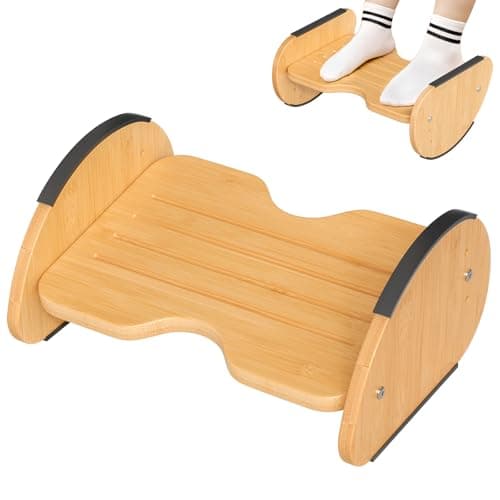
If replacing the desk is genuinely not an option, the fix for the seated half is a keyboard tray that mounts under the existing surface and drops the keyboard to your real elbow height, plus a footrest so your feet stay supported once the chair comes up. That combination is the standard remedy for a too-tall fixed desk, and it costs a fraction of a new one.
The two things to check after the height range
Depth matters more for a shorter body than width does. A screen wants to sit about an arm's length away to be read comfortably, and a shorter arm on a 24-inch-deep desk pushes a large monitor closer than it should be. Both UPLIFT picks here are 30 inches deep for that reason; the trade-offs are worked through in our desk size guide.
The other is the top itself, which is the material-safety question this whole site exists for. UPLIFT's GREENGUARD Gold document covers its laminate desktops, not its bamboo — so on this page the certified top is also the cheaper one, which is a rare and welcome alignment. Verify any certificate yourself at UL SPOT rather than trusting a listing badge; the three-step lookup is in GREENGUARD explained.
How to buy a desk that fits a shorter body
1. Get your seated number first, then your standing number
Run your height through the calculator and write both figures down. The seated number is the one that rules desks in or out, because it is the one nearly every desk fails. Treat it as a hard requirement and the standing number as a formality.
2. Refuse to buy a desk whose minimum height is not published
This is the single most useful rule on the page. A brand that publishes 23.6 inches has made a commitment you can hold it to; a brand that publishes only "adjustable height" has told you nothing, and the default it was built to is above your number. Ask, and if no answer comes, move on.
3. Subtract the desktop thickness and check where the keypad mounts
A published frame range is usually the frame alone, and a one-inch top sits on top of it. Confirm whether the figure quoted to you includes the desktop, and where the control keypad sits — a keypad on the underside of a low desk can foul your thighs at the bottom of the travel.
4. Set the chair and the footrest before you judge the desk
Lower the chair until your feet are flat and your thighs level, and only then set the desk to your seated number. Many people who conclude their desk is wrong have actually left the chair too high; if the chair has to stay up for the desk to work, a footrest is the missing part, not a new desk.
5. Use the memory presets, or none of this happens
Two numbers, two buttons. A desk that has to be dialed by hand gets adjusted twice and then lives at one height forever, which throws away the entire benefit described in how long to stand.