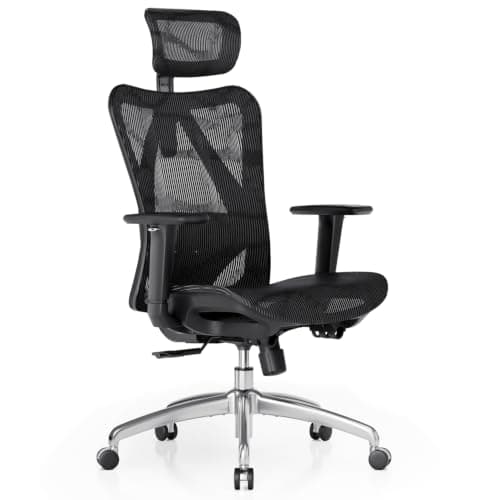
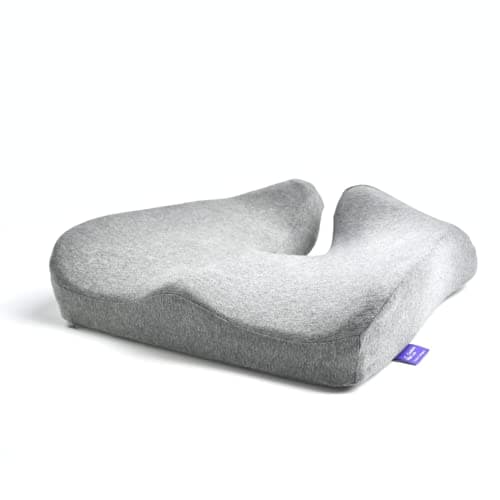
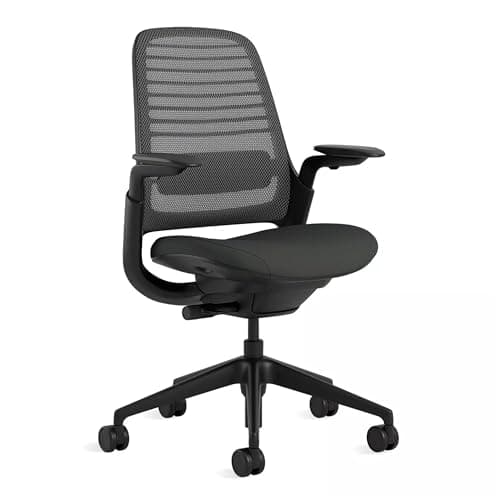
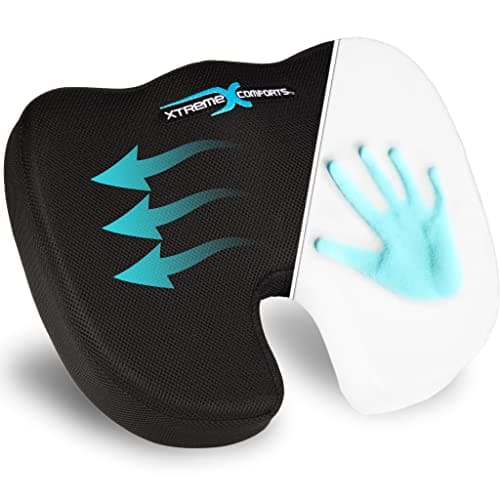
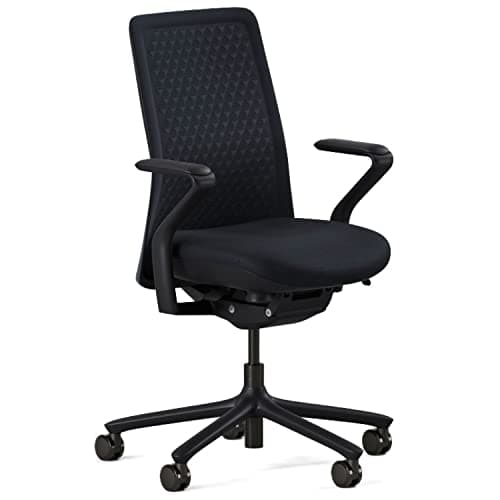
If sitting sends pain down one leg, the highest-value change is not a chair — it is standing up more often. Sciatic symptoms are provoked by sustained flexed sitting more than by any specific seat, so a sit-stand routine does more than any purchase on this page. When you do buy, buy adjustable lumbar support and a dense, pressure-distributing seat, in that order. The Branch Verve is our pick because it has both — a lumbar rest you can move up and down, and an adjustable seat depth — and because Branch documents what it is made of.
This page is general information, not medical advice. Sciatica is a symptom with several possible causes, and persistent or worsening leg pain — particularly with numbness or weakness — is a reason to see a clinician rather than to buy furniture. MedlinePlus is a better starting point than any product page.
Why sitting is the provoking position
Sciatica describes pain radiating along the path of the sciatic nerve, usually from the lower back through the buttock and down one leg. Sitting tends to be the worst position for it for two mechanical reasons that are worth understanding, because they explain what to look for in a seat.
- Flexed sitting rolls the pelvis backward and flattens the lumbar curve, which increases load on the structures at the base of the spine — the region most sciatic symptoms originate from.
- The seat surface compresses the buttock directly, over the path the nerve takes. On a hard or collapsed seat pan, that pressure is concentrated exactly where you least want it.
Those two facts give you the shopping list: something that stops the pelvis rolling back (adjustable lumbar support, and a seat pan that does not tip you backward), and something that spreads the pressure under you (a dense cushion, or a well-designed seat pan). Everything else is secondary.
What actually helps, in order of effect
- Get up more often. The dose matters more than the chair. A change of position every twenty to thirty minutes is the single most effective free intervention, and it is what a sit-stand desk exists to make easy — our sit-stand ratio guide covers realistic schedules.
- Fix the lumbar support. Adjustable lumbar on the chair if you can, a lumbar cushion if you cannot. Supporting the curve is what stops the pelvis rolling back in the first place.
- Set the seat height and depth correctly. Feet flat, thighs roughly parallel to the floor, and two to three fingers of gap behind the knee. A seat pan too deep forces you to slide forward and slump, undoing the lumbar support you just added.
- Add a dense seat cushion if the pan is hard or worn. Dense, not soft — our seat cushion page explains why soft foam makes pressure worse after an hour.
- Consider a forward-tilt or perching seat for part of the day. Opening the hip angle is the same mechanism a kneeling chair uses, and a sit-stand stool does it at a raised desk.
What to look for in a chair, specifically
- Adjustable lumbar, in height as well as depth. A fixed lumbar bulge in the wrong place is worse than none. This is the feature that separates the chairs we rank here from the mesh chairs that merely look ergonomic.
- Adjustable seat depth or a shorter pan if you are not tall. Pressure behind the knee is a separate problem that gets misattributed to sciatica constantly.
- A seat pan that can tilt slightly forward, or at minimum one that is flat rather than bucketed. A deeply bucketed seat forces posterior pelvic tilt by design.
- Real recline with lockable positions. Reclining slightly unloads the lumbar spine, and being able to change between two or three positions through the day beats any single perfect posture.
- A seat pan that is not soft. Counterintuitive and important — soft foam collapses under the sit bones and concentrates pressure rather than spreading it.
What we are not going to tell you
No chair treats sciatica. No cushion is a medical device unless it is sold as one and cleared as one, and none of these is. Any listing promising to cure or eliminate sciatica is making a claim it cannot support, and the frequency of that language in this category is the reason this page leads with a caveat rather than a product.
What furniture can do is stop making the problem worse for eight hours a day, and make the position changes that genuinely help easy enough that you actually do them. That is a real, useful, unglamorous benefit — and it is the honest ceiling.
One pattern worth separating out before you buy from this page. If the pain sits in the hip itself rather than radiating down the leg, the mechanism is hip angle and seat-pan pressure rather than nerve irritation, and the adjustments that help are different — that is covered in office chairs for hip pain.