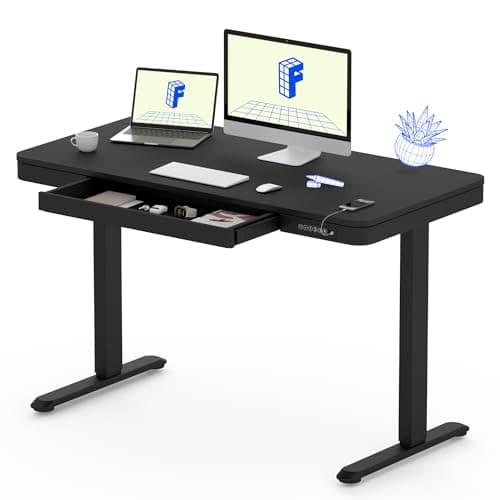
For a home office, buy the EUREKA frosted glass 55-inch. It is the only desk we rank whose working surface has no composite core at all — tempered glass has no particleboard, no adhesive resin and no laminate, so the formaldehyde question that drives desktop shopping simply does not apply to the thing in front of your face — and it has a power outlet and USB built into the frame, which is the difference between a tidy room and a power strip on the carpet. If you would rather have a warm surface and a drawer, the FlexiSpot Comhar is the all-in-one: top, frame, drawer, USB-A and USB-C and memory presets in one unit, with nothing to assemble around. The budget pick is the HUANUO 32-inch, the smallest real electric sit-stand desk here and the one that fits an alcove. Prices come from the Amazon Creators API with the date they were read; nothing is typed in.
“Home office desk” is one of the biggest measured queries in this category — and the desks that win it on most sites are simply the desks that win best standing desk, which is lazy. A desk at work sits in a room built for desks: hard floor, cable trunking, nobody sleeping. A desk at home sits in a room that has another job, and four things decide whether it stays there.
The four things that actually decide it
1. What the surface is made of, because the room is smaller.A new laminate desktop is a fresh composite panel, and a spare bedroom is a fraction of the air volume of an office floor. Every composite panel sold in the US sits under EPA's federal formaldehyde standard, so this is not an uncontrolled product — but concentration is a function of panel area over room volume, and that arithmetic is worse at home. The two honest answers are a surface with no composite core, or a ventilated first week: the first 72 hours is the free version and formaldehyde in desks is the longer one.
2. Noise, because someone else is in the house. Motor noise is the spec least often published and most often regretted. A brushless frame is quieter than a brushed one, and a desk you only raise when the house is empty is a desk you have stopped using. If a walking pad is part of the plan, that is the louder half of the problem — walking pad noise covers it.
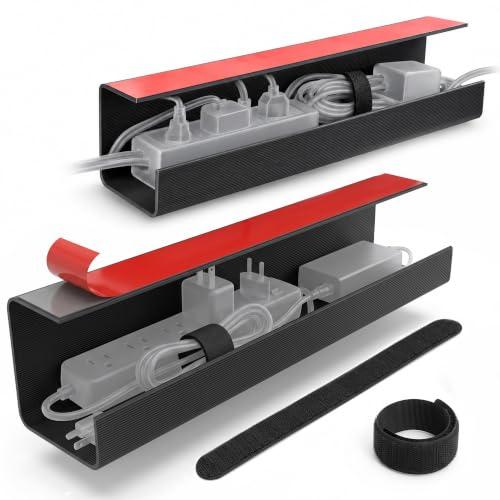
3. Where the cables go through 18 inches of travel. In an office someone else solved this. At home, a desk that drags its own power strip up and down is the single most common reason a sit-stand desk ends up parked at one height. Built-in outlets and a built-in tray are worth more here than any feature on a spec sheet; standing desks with cable management is the full treatment.
4. Footprint and how it looks.Most home offices are a wall, a corner or an alcove rather than a room. Depth is what decides ergonomics — OSHA's workstation guidance and our monitor height guideboth put the screen at roughly arm's length, which is hard on a 24-inch top with a monitor stand on it — and width is what decides whether the room still works. Standing desks for small spaces is the page if the room is the binding constraint.
Who each pick is for
- EUREKA frosted glass 55 in — the one that answers the materials question by construction instead of by certificate. Tempered glass top, dual motors, a EUREKA-stated 220 lb rating, power outlet and USB in the desk. Buy it if the desk lives in a bedroom or a small room and you would rather not put a new composite panel in it.
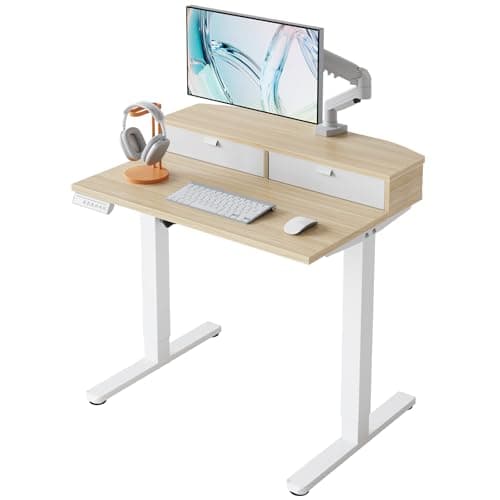
- FlexiSpot Comhar 48 in — the all-in-one. Drawer, USB-A and USB-C charging, memory presets, top and frame matched, one box. Buy it if you want a warm surface, a drawer and nothing to source separately.
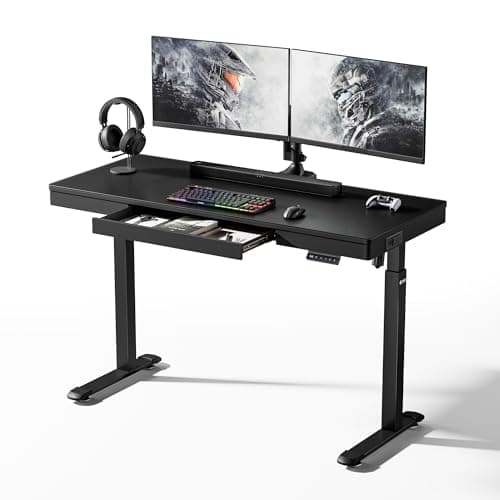
- SHW 40 in with drawer — a genuine electric sit-stand desk in a 40-inch footprint, with a drawer, from an established budget brand. Buy it for a bedroom corner that 48 inches would dominate.
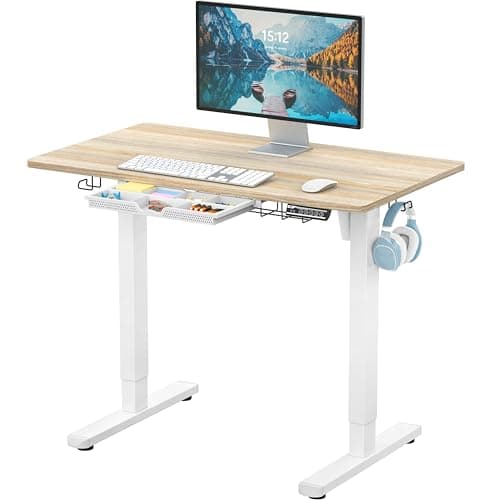
- HUANUO 32 in (budget pick) — the smallest real electric desk here. Buy it for an alcove, a landing or a shared room where the desk has to be almost invisible.
The honest trade in each one
The glass desk is cold and shows everything.The frosted finish helps with fingerprints; it does not solve them. Glass is hard under the wrists, and clamping a heavy monitor arm to a glass edge needs care — check your arm's clamp range and glass rating first. The drawer unit and base are still engineered wood, and the listing's “E1-grade” description is a manufacturer statement with no certifier or certificate number attached. EUREKA publishes no emissions certificate and no third-party BIFMA mark for any desk.
The Comhar's top is fixed forever. An all-in-one is tidy precisely because the top and frame are matched, which also means you can never put bamboo or solid wood on it. FlexiSpot publishes no emissions certificate for the model.
The two small desks are small on purpose.Forty inches is one monitor and a notebook; 32 inches is a laptop. Neither has the depth to put a screen at arm's length behind a keyboard once a stand is involved, which is an argument for a wall-mounted or clamped monitor arm rather than for a bigger desk — monitor arms buys back the depth a small desk does not have.
What we would actually do
Pick the desk for the room, then spend the next fifty dollars on the floor. A hard floor under two hours of standing is its own complaint, and NIOSH is clear that prolonged standing is a hazard in its own right rather than a cure for sitting — the best anti-fatigue mats is the fix and mats for standing all day is the page if your working day is genuinely spent upright.
If the budget will stretch, the band above these desks is where the published paperwork and the lower minimum heights start: standing desks under $500. And if you like the desk you already own, do not replace it — a standing desk converter sits on top of it for less than any desk here, and desk versus converter is the comparison that decides it.
Before you buy
How to choose a standing desk for a room you also live in
1. Measure the wall, then subtract for the chair
A 48-inch desk needs more than 48 inches of room, because the chair has to come out behind it. In a bedroom or an alcove the chair clearance is usually what makes the decision, not the top.
2. Decide the surface question before the feature list
A desk with no composite core in the surface, or a desk you ventilate hard for a week. Those are the two honest options at home, and only the first one is permanent.
3. Prefer a desk that carries its own power
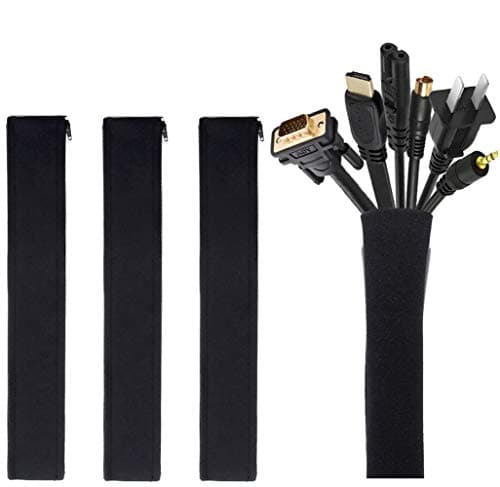
An outlet or a USB port in the desk removes the one thing that stops people raising it. If the desk does not have them, buy a tray and a sleeve at the same time as the desk, not six months later.
4. Check the minimum height, not the maximum
A desk whose floor is 29 inches is a normal desk height, which means it adds standing without improving your seated position. Measure your seated elbow height first.
5. Buy depth with a monitor arm, not with a bigger desk
A clamped arm pushes a screen back over the edge and frees the whole desktop. On a small home desk that is worth more than four extra inches of top.
6. Assume you will move it
Home offices get rearranged. A desk that one person can shift, with a top that is not permanently bolted to a 100 lb frame, is the one that survives the next room change.