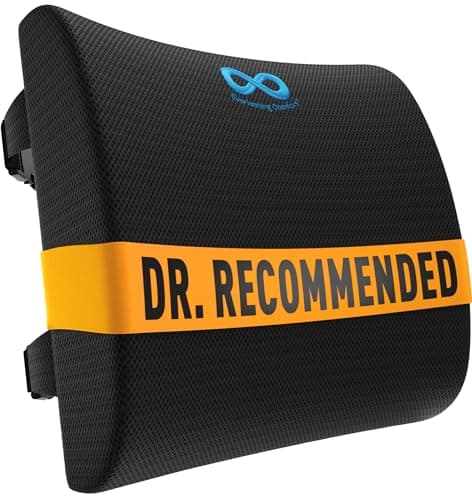
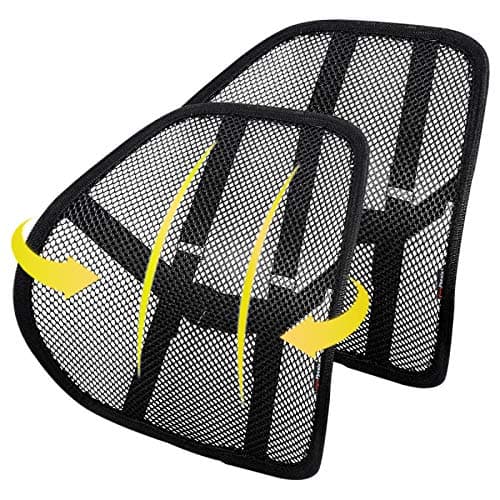
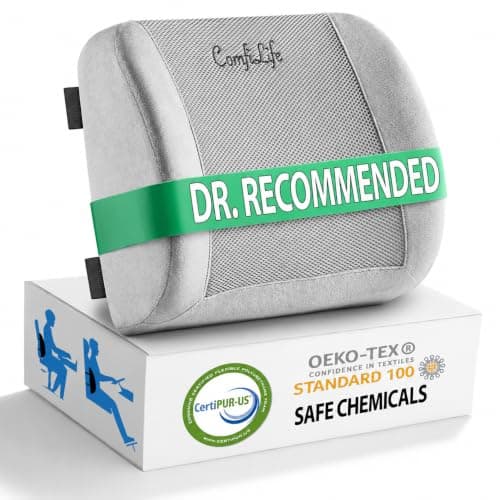
Buy the ComfiLife. It has the curve depth to actually restore a lumbar arch rather than just padding the chair back, and a two-strap system that stops it sliding down every time you stand — which is the failure mode that kills cheap cushions. If foam makes you hot, buy the mesh kingphenix instead; if the problem is your tailbone rather than your lower back, buy the seat cushion.
What a lumbar cushion is actually for
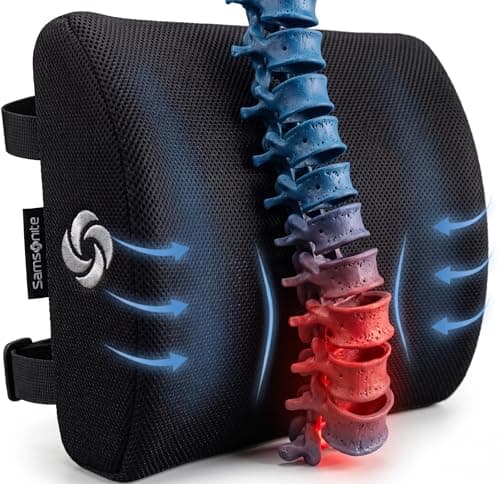
Your lumbar spine has a natural forward curve. Sit in a flat-backed chair for an hour and that curve flattens or reverses as your pelvis rolls back — the slump everybody recognizes. A lumbar cushion fills the gap between a flat chair back and the small of your back so the curve is supported and your pelvis stays upright.
That is a real mechanical function, not a comfort accessory, and it is the reason a thirty-dollar cushion can meaningfully change how a chair feels over a full day. What it cannot do is add adjustment, seat depth, or armrests to a chair that has none. Ergonomics guidance consistently points at chairs that support the lower back and let you sit with feet flat and thighs roughly parallel to the floor — a cushion helps with the first of those and nothing else.
Height matters more than firmness
The most common mistake is buying a cushion that is too big and mounting it too low. Support belongs at the level of your belt line, roughly where your back curves in most — not down at the seat, and not up between your shoulder blades. A cushion an inch or two too low tips your pelvis forward and creates a new ache; too high and it pushes your ribs forward and does nothing for your lumbar spine.
Every cushion here uses an adjustable strap for exactly this reason. Set it, sit, and move it up or down half an inch at a time over the first few days. Almost nobody does this, and it is the difference between a cushion that helps and one that goes in a drawer.
Foam, mesh, or neither
- Memory foam molds to your back and gives the most contoured support. It is also warm, and new foam carries an odor for a few days. This is the default and the right starting point for most people.
- Tensioned mesh gives springy support with air passing straight through. It is the answer for hot rooms, for mesh-backed chairs, and for anyone who does not want a foam product against their back all day. Support is firmer and less molded.
- Neither — if your chair has a built-in adjustable lumbar mechanism, use it before you buy anything. Adding a cushion to a chair with a working lumbar adjustment usually overshoots.
When a cushion cannot save your chair
Be honest about this before you spend. A cushion will not help if:
- The seat is too deep. If the front edge presses into the back of your knees, your pelvis will roll back no matter what is behind you. Seat depth is a chair problem.
- The chair back is too short. Nothing to strap to means nothing to support you.
- The seat foam is dead. Sitting in a collapsed seat pan tilts your whole pelvis; a back cushion cannot correct a bad foundation. A seat cushion might.
- The height is wrong. Feet dangling or knees above hips is a height problem — fix it with a chair adjustment or a footrest.
If two or more of those apply, a cushion is money spent postponing the real fix. Our budget office chair roundup shows what actual adjustability costs these days, and it is less than people assume.
Seat cushions solve a different problem
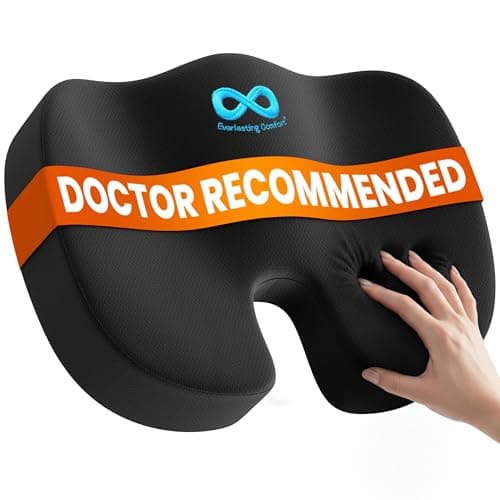
A coccyx seat cushion with a U-shaped cutout unloads the tailbone and is the right purchase if your pain is at the base of your spine or if your seat pan has gone hard. It is not a lumbar product and it will not fix a slump. One caution: raising your seat by two inches can strand your feet, so plan on a footrest at the same time.
Materials, briefly
None of these cushions publishes a foam certificate, which is worth knowing given how much time the product spends pressed against you. Memory foam is polyurethane; new foam commonly has an odor that fades over days. Unwrap a new cushion somewhere ventilated and give it a couple of days before daily use. The mesh option sidesteps the question entirely, which is a genuine point in its favor if that is a concern for you.
The certificate that would cover this is CertiPUR-US, which certifies the foam rather than the finished product — what it actually promises, and why not one cushion here carries it, is in what CertiPUR-US actually certifies. A cushion you can slide up and down is also the cheapest way to keep lumbar support in the right place as your shape changes, which is why one leads our pregnancy seating picks.
This is not medical advice
Persistent back pain, or any pain with numbness or radiating leg symptoms, needs a clinician rather than an accessory. A cushion changes how a chair fits you; it does not treat a condition.
How to buy a lumbar cushion
Measure the gap, not the chair
Sit normally and slide a hand behind your lower back. A big gap needs a deep cushion; a small one needs a slim one. A deep cushion in a small gap pushes you off the seat.
Insist on a strap that holds
A cushion that slides down every time you stand is a cushion you stop reseating. Two-point straps hold far better than single elastic loops.
Set the height at your belt line
The natural inward curve of your lower back, not the seat and not your shoulder blades. Adjust in half-inch steps across the first week.
Pick mesh if you run hot
Foam against your back in a warm room is the most common complaint about lumbar cushions. Mesh removes it completely.
Check the chair problem is really lumbar
Seat too deep, seat too high, dead foam, no back — those are chair problems and a cushion will not touch them. Work through the five free adjustments first: how to adjust your office chair.