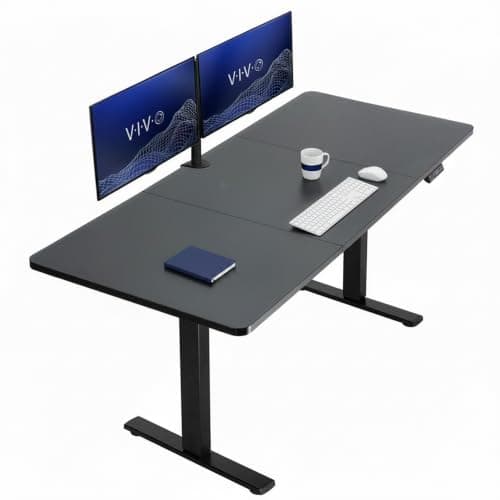
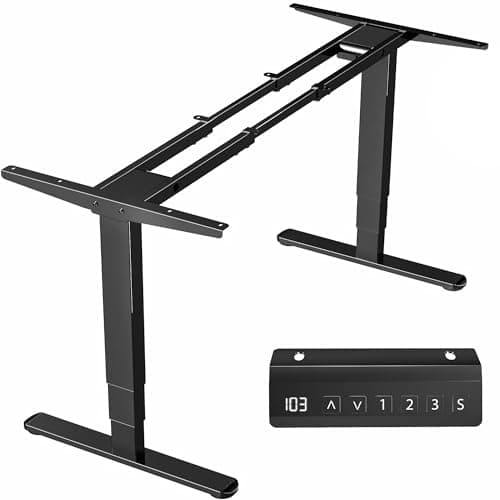
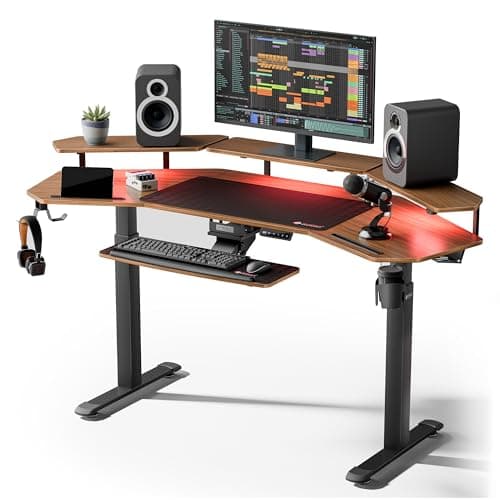
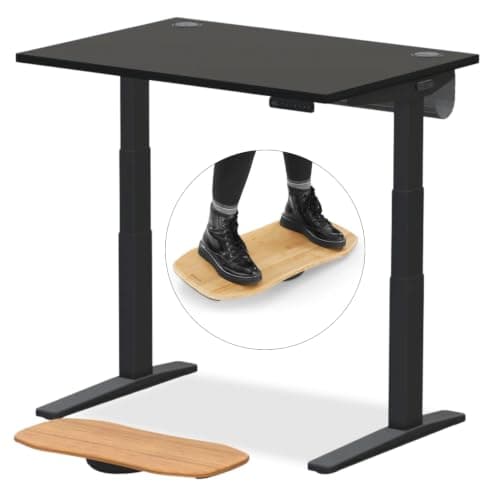
Buy two desks, not one. The correct two-person sit-stand setup is a pair of 42-inch desks side by side — we would buy two UPLIFT V3 42×30 laminates, because that is the desktop line UPLIFT publishes its GREENGUARD Gold document for and because 22.6 to 48.7 inches of travel covers two very different statures. One shared surface means one height, and the entire health benefit of a sit-stand desk is that the height matches the person using it. If the room genuinely only takes one desk, the VIVO 71×30 is the widest single surface we rank.
The flaw in a shared surface
Every ergonomic height guideline is a function of one body. Cornell's sit-stand guidance and OSHA's computer-workstation eTool both set working height from elbow height, which depends on your stature. Two adults of different heights need working heights that commonly differ by three to six inches, and a single desktop cannot be at two heights at once.
So a two-person sit-stand desk does one of three things, all of them compromises: it sits at one person's correct height and the other person's wrong one; it sits between the two and is wrong for both; or it gets parked at a sitting height and never moves, at which point you have bought a very expensive fixed desk. The last one is the common outcome, and it is the reason this page leads with "buy two" rather than with a product.
Two 42-inch desks also cost about the same as one premium 72-inch desk, fit through the same doorway, and can be separated when one person moves out, changes rooms or starts working elsewhere. If one of you is notably short or tall, the minimum and maximum height figures matter more than anything else on the spec sheet — those are the subject of desks for short people and desks for tall people.
When one surface is genuinely the right answer
Four cases where we would buy the single wide desk instead:
- The two people are close in height. Within about an inch of each other, one height serves both, and a single desk is simpler and cheaper.
- One person is a visitor. A desk shared by one full-time worker and an occasional second person should be set for the full-time worker.
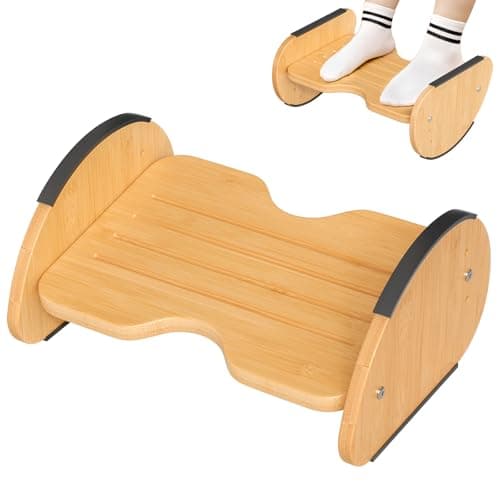
- It is a parent-and-child desk. One surface, two chairs, with the height set for whoever is there most — and a footrest for the shorter person.
- You need the width for one person's kit. A 71 or 72-inch desk is often bought for a multi-monitor or multi-device rig, not for two people at all. Our two-monitor desks page is the better start for that.
What the four picks actually give you
| Route | Published size | Published travel | Emissions document |
|---|
| Two UPLIFT V3 42×30 laminates | 42 × 30 in each | 22.6-48.7 in, UPLIFT rates 355 lb | GREENGUARD Gold document published for the laminate line |
| VIVO 71×30, one surface | 71 × 30 in | Not published for this SKU; VIVO rates 176 lb | None published |
| VIVO dual-motor frame + your own top | VIVO states 40-85 in tops | Not published for this SKU | None published; the frame is powder-coated steel |
| EUREKA 72 in studio desk | 72 in wide, with keyboard tray and monitor shelf | Not published for this SKU | None published; no substrate stated |
Read that fourth column again, because it is the pattern this whole site exists to point out: the only route here with a published emissions document is the pair of UPLIFT laminates. A 72-inch desk is the largest single slab of composite wood you will put in a room, and the brands selling the widest tops publish the least about what is in them. If that is your filter, the frame-plus-your-own-top route is the other way to get there — buy the steel frame and put a solid timber or butcher-block top on it, as we set out in standing desk frames.
Two desks in one room: the practical layout
Side by side along one wall is the obvious arrangement and usually the wrong one, because two people talking on calls three feet apart is a problem no desk solves. Two better options:
Back to back. Two 42-inch desks facing opposite walls gives each person a wall for their monitor, their own cable run and nobody in their camera frame. It needs about 9 feet of room depth.
An L, using two walls.One desk per wall in a corner keeps both people out of each other's sight lines and shares one power outlet. Note that an L-shaped single desk is a different product with the same one-height problem — see L-shaped standing desks.
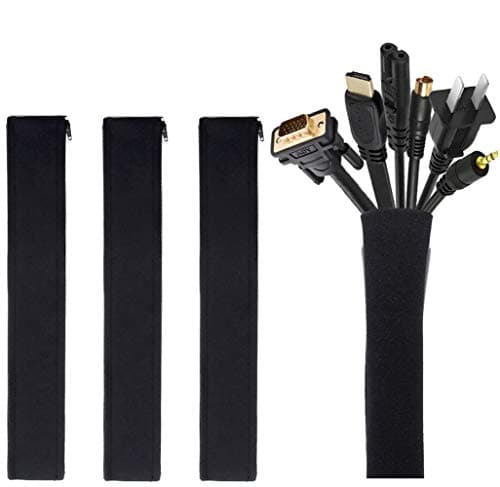
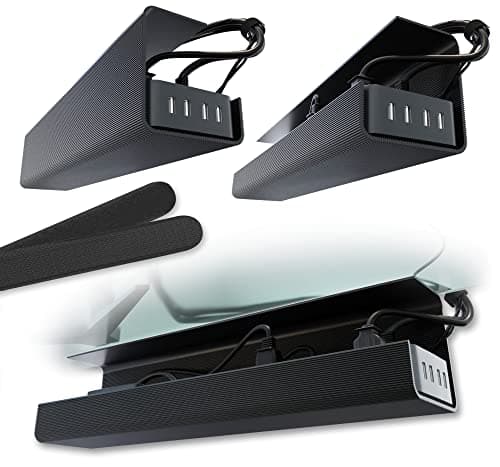
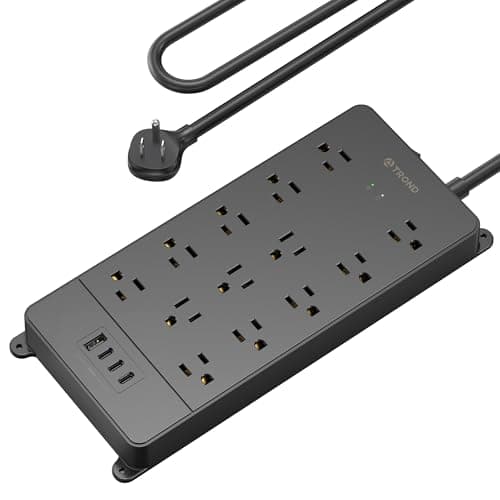
Whichever layout you pick, two electric desks means two power bricks, two controllers and twice the cable, so plan the cabling once rather than twice — our cable-management page covers the trays and raceways we would use, and a single surge-protected strip per desk keeps the floor sane.
What about a desk with two independent halves?
It is the obvious product and we do not rank one, for a simple reason: nothing we could verify as a live, buyable listing offers two independently-adjusting halves under one surface. The products marketed as "two-person standing desks" are single-surface desks that are wide enough for two chairs. We are not going to recommend a product category we cannot point at an actual listing for. If that changes, this page changes with it.
The closest genuine version of the idea is two frames under one long top, which gets you a continuous work surface — but still one height, because the top is rigid. The only way to get two heights is two surfaces.
Buying for two people, in five decisions
1. Measure both people's elbow heights before you shop
Standing, arms relaxed, elbows at about 90 degrees. If the two numbers differ by more than about an inch, buy two desks and stop reading product pages for wide ones.
2. Decide the surface budget per person, not in total
42 inches is a comfortable single-person desk with a monitor and a laptop; 48 is generous. Two 42s is 84 inches of surface, which is more than any single two-person desk gives you.
3. Check the minimum height, not just the maximum
Everyone shops on how high a desk goes. For a shared room with a shorter person in it, how low it goes is the figure that decides whether the desk is usable sitting.
4. Plan power and cable before you order
Two electric desks need two outlets within reach, and a desk that travels needs slack in every cable. Budget a tray per desk.
5. If it has to be one desk, buy the width you need and set the height for the main user
Then give the second person a chair and a footrest that suits the fixed height. A compromise height that fits nobody is worse than a correct height plus an adjustment for the visitor.