Buy the 48-inch Duo. It is the width that turns Branch's compact frame into a desk you can actually work at, it carries the same 10-year warranty and the same published BIFMA line as every other Duo, and it costs less than Branch's larger desk while giving up nothing you are likely to miss on one screen. Just go in knowing what you are buying, because Branch is a more interesting case than the brands either side of it.
Most desk makers publish nothing you can check. Branch publishes two things — a BIFMA position and a GREENGUARD Gold certificate — and the whole point of this review is that those two things are attached to different products. The certificate is on the chair. The desk gets the BIFMA line. If you assumed a brand that certifies one product has certified the rest, this is the page that unpicks it.
What the Duo actually is
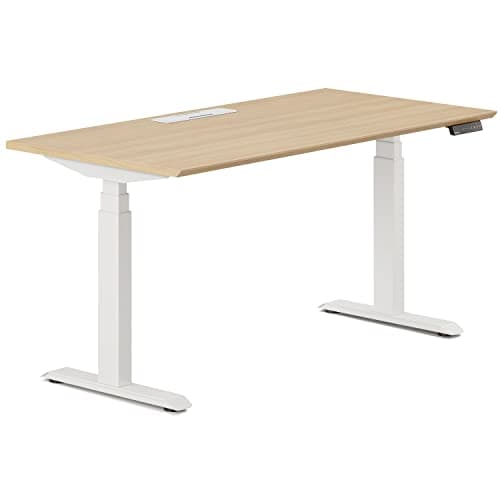
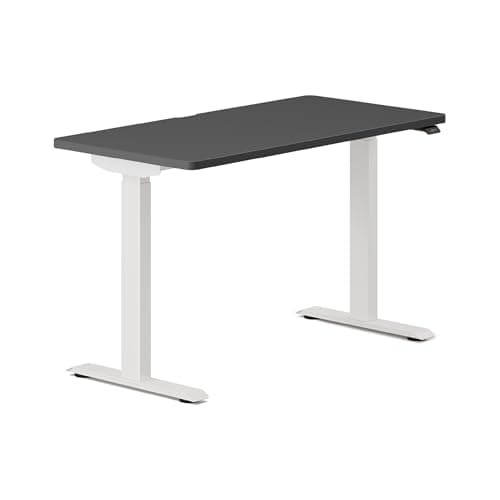
A two-column, dual-motor sit-stand desk built around a frameless base — no crossbar between the legs, which is why the legroom reads more open than the footprint suggests. Branch publishes a height range of 28 to 47.3 inches, a 275 lb load rating, a laminated MDF top over a powder-coated steel base, two height presets on an OLED control paddle, collision detection, and sizes at 36, 48 and 58 inches wide by 24 inches deep. There is also a Branch app that will control the desk, log your standing time and nag you to get up.
Two of those numbers matter more than the rest. 28 inches at the bottom of the range is genuinely low — most budget frames stop at 29 or 30, which strands shorter users at a seated height that is too high for them and quietly cancels half the ergonomic benefit. Run your own figure through our standing desk height calculator before you order anything; the maximum height gets all the marketing and the minimum height is what actually fails people.
24 inchesof depth is the other one, and it is the Duo's real constraint. Twenty-four inches is fine for a laptop and a single monitor at arm's length. It is tight the moment a second screen arrives, and no amount of width fixes a depth problem — which is the argument our two-monitor desk page makes at length.
What Branch publishes — and it is more than most
Three things, all checkable, all unusual in this category.
A BIFMA position on the desk.Branch states the Duo "meets BIFMA standard for commercial-grade use". BIFMA is the structural standard — strength, stability under load, cycle durability — and most home-office desk listings do not mention it at all.
A ten-year warranty.Branch's published warranty schedule gives the Duo Standing Desk and Duo accessories ten years, and its larger Standing Desk ten years for units bought after 1 January 2023. Its Ergonomic and Verve chairs get seven years on parts and components. Accessories get one year, monitor arms two, fabrics three. A schedule that granular is itself a signal: a company that intends to argue about warranty claims does not publish a table this specific.
A GREENGUARD Gold certificate — on the chair.Branch's Ergonomic Chair is published as certified GREENGUARD Gold for low VOC emissions, alongside the same BIFMA line and a 275 lb rating. That is a real, third-party, air-quality certification, and it is the reason the chair leads our GREENGUARD-certified office chairs page. One refinement added 2026-09-26: the line is published per chair, not per brand — Branch prints it on the Ergonomic Chair, the Verve and the Daily, and not on the Ergonomic Chair Pro. Our Branch Ergonomic Chair review compares all six chair pages.
The certificate is on the chair. It is not on the desk.
This is the finding that matters more than everything else on this page.
Branch publishes no GREENGUARD certificate for the Duo's desktop, or for any of its desks. The top is laminated MDF — an engineered-wood panel — and the emissions claim that exists on the chair simply is not made about it.
Read that the right way round. It is not evidence the desk is bad; it is evidence that Branch knows exactly how to get a product certified, has done it once, and has not done it here. That is a more informative silence than the silence of a brand with no certificates at all. If you were about to buy a Branch desk because you had read that "Branch is GREENGUARD certified", the certificate you read about was on a chair.
The practical consequence is small and specific: treat the Duo like any other uncertified composite top. Assemble it somewhere ventilated and give it two to three days of airflow before it enters the room you work in. Emissions from a new panel are front-loaded, the first days carry a disproportionate share of the total, and the fix costs nothing. And if a certificate on the surface itself is the reason you are shopping, the desks that carry one are on our GREENGUARD-certified desks page — the Duo is not among them, and we are not going to fudge that.
"Meets BIFMA standard" is not a BIFMA mark
The second thing worth slowing down on. There is a real difference between a manufacturer saying its product meets a standard and an independent body issuing a mark against that standard.
- Branch says the Duo meets the BIFMA standard for commercial-grade use.That is Branch's statement about Branch's desk. It may be entirely accurate. There is no certificate number, no issuing body and no registry entry attached to it.
- Vari states it carries the UL BIFMA Performance Certification markand publishes a certification table per SKU. That is a third party's name on the claim, and it is a stronger form of the same thing — the reason our Vari Classic review still calls Vari the most granular disclosure in the category.
- BIFMA is structural, not chemical. Whatever form it takes, it tells you the desk survives load and cycle testing. It says nothing about what the panel emits into your air. Our BIFMA explainer exists because listings blur these two constantly, and the Duo is a clean example of a desk where one is documented and the other is not.
None of that makes Branch's claim worthless. A brand willing to put a standard's name in writing has more to lose than one that writes "heavy-duty" and moves on. It is simply a weaker form of evidence than a mark, and this site says so wherever it appears.
The warranty clause to read before you buy on Amazon
Ten years is the headline and it is a good one. Three details in Branch's published policy change how you should buy:
- It is non-transferable. The coverage belongs to the original purchaser. A second-hand Duo is a desk with no warranty, which matters when the warranty is a third of the reason to pay Branch prices.
- Third-party purchases need registration or proof of purchase. Branch states that for purchases made outside its own site, warranty registration or proof of purchase is needed for coverage. Buy through the marketplace and the ten years is real — but keep the order record, or register the desk, on the day it arrives rather than the day it breaks.
- Continental US and Canada only. Branch states coverage does not apply to product used outside those regions, and that using a third-party forwarder to ship elsewhere voids it.
Also worth knowing what a warranty is for: it covers malfunction, not the ordinary aging of a laminate top, textile pilling, or damage from loading past the rating. Ten years of motor and frame coverage is the part that has value, because the motor and the controller are what fail on a sit-stand desk.
48, 36, or the bigger Branch desk
Three real choices, and the answer is mostly about depth.
The 48-inch Duo is the default. A monitor, a keyboard and a notebook fit without argument, and it still tucks against a wall in a normal room. Same frame, same warranty, same BIFMA line as every other Duo.
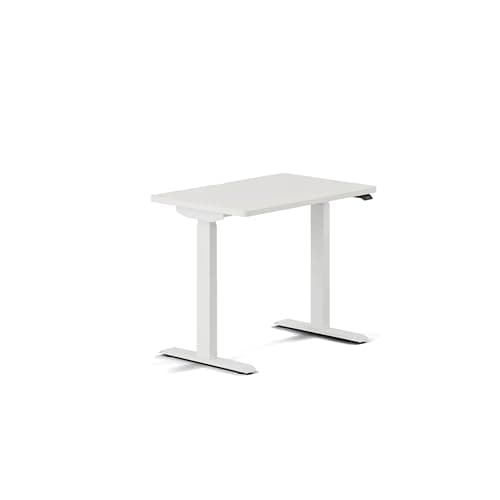
The 36-inch Duo is for rooms that genuinely cannot take 48. An alcove, a bedroom corner, a second desk. It is also, incidentally, the least composite panel Branch will sell you — which is a small point in its favor given none of the tops are certified. Do not take it to save money if you have the wall space; desk width is the thing people most often wish they had bought more of, and our small standing desk roundup is honest about where the compromises land.
Branch's larger Standing Desk is the one to step up to if you run two screens. Thirty inches deep instead of 24, three-stage legs, a 26 to 52-inch range that reaches further at both ends, and four memory presets instead of two. It costs more and carries exactly the same emissions silence, so you are buying travel, depth and presets — not paperwork.
Where the Duo costs you
Honestly: on price, on depth, and on presets. It sits several times above a budget dual-motor desk of the same width, and the budget desks publish load ratings and dimensions too — what they do not publish is a BIFMA line, a ten-year warranty or a certificate on anything. Our FEZIBO review is the other end of that trade, stated plainly.
Twenty-four inches of depth is a real limit, not a quibble. Two presets is stingy at this money. And the laminated MDF top is the same material class as desks costing a fifth as much, with the same absence of an emissions document — you are paying for the frame, the warranty and the finish, not for a better surface on paper.
The head-to-head readers ask for most is against UPLIFT, the other buy-it-once brand here — and it is decided by the Duo's 28-inch floor against the V3's 22.6, 275 lb against 355, and a GREENGUARD Gold document on one desktop line and none on the other. We set it out in Branch vs UPLIFT.
How it compares to the desks we rank around it
Against Vari, Branch loses on documentation and wins on warranty. Vari publishes a per-SKU certification table with GREENGUARD and ANSI/BIFMA columns and states it carries the UL BIFMA Performance Certification mark. Branch publishes a statement and a longer warranty. If your deciding factor is a certificate on the exact desk you receive, that is Vari, not Branch.
Against UPLIFT, the same story from a different angle: UPLIFT publishes a GREENGUARD Gold document covering its whole laminate desktop line, which our UPLIFT V3 reviewworks through in detail. Branch has no equivalent document for its tops. UPLIFT's warranty is longer still, at 15 years, though Branch's frameless base and 28-inch minimum are genuinely nicer if you are short or your room is small.
Against FlexiSpot, Branch is the better-built object with the better warranty and FlexiSpot is a great deal more desk for the money — and neither publishes an emissions certificate for its standard top, as our FlexiSpot E6 review says outright. That comparison is about build and warranty, not paperwork.
And if what you actually want is a top with nothing engineered into it, none of these are the answer: a bare frame under a solid wood slab removes the composite question entirely and usually costs less than a Duo.
Who should buy it, plainly
Buy the 48-inch Duo if you want a genuinely well-built compact desk with a decade of coverage behind it, you run one screen, and you are content that the desk's documentation is structural rather than chemical. Buy the 36-inch if the room forces it. Step up to Branch's larger desk if you run two monitors or sit at either extreme of the height range.
Do not buy a Branch desk if you came here because Branch is "GREENGUARD certified" — that certificate is on the chair, and buying the desk on the strength of it is the exact mistake this page exists to prevent. Do not buy one if price-per-inch is what you are optimizing. And do not buy one second-hand expecting the warranty to follow it, because it does not.