The chair to buy if a GREENGUARD Gold line is specifically what you want is the Branch Verve, because Branch is the only maker here that prints those words. The Herman Miller Aeron is the most thoroughly documented chair on this page and it is notGREENGUARD — corrected on 9 October 2026, after reading Herman Miller's own store page, which names BIFMA Level 3 and SCS Indoor Advantage Gold and never mentions GREENGUARD at all. This is a three-item list, and it is three items because that is how many manufacturers in this category publish anything checkable. For the wider field, where a published certificate is one factor among several, see our best ergonomic office chairs roundup.
Why a chair is a bigger emissions question than a desk
Most of the material-safety conversation in a home office is about the desk, because a desktop is the largest single piece of composite wood in the room. That is the right place to start. But it undersells the chair, and the reason is volume and proximity.
A task chair is a molded polyurethane foam seat pad, a foam or mesh back, a fabric or leather cover, adhesives holding the laminate stack together, and a molded plastic shell and base. Every one of those is a polymer with something in it, and unlike the desk, you sit inside it — with body heat, which increases the rate at which anything volatile leaves a material. A warm foam cushion under continuous body contact for eight hours is a genuinely different exposure geometry from a laminated panel two feet from your face. It is also why a chair is the piece of furniture most likely to develop a smell years later rather than only when new — the three separate causes are in why your office chair smells.
There is a second reason chairs deserve their own page: upholstered furniture is the category where flame-retardant chemistry historically lived, because of flammability rules written for furniture rather than desks. That has changed a great deal, and most modern office chairs are not treated — but it is a question worth asking about a chair and not worth asking about a desk. We work through it in flame retardants in chairs.
What GREENGUARD on a chair actually certifies
The same thing it certifies on a desk: that the product's chemical emissions into indoor air — total VOCs, formaldehyde and a list of individual compounds — stay under defined limits in a controlled chamber test. GREENGUARD Gold applies stricter limits and is the tier written into school and healthcare specifications, which is the one worth holding out for. It does not certify that the foam is "natural", does not certify recycled content, and does not say anything about durability. Durability is BIFMA, and the two are separate — the mechanism is in GREENGUARD explained.
The practical difference from desks is who certifies. In desks, certification comes from two consumer brands. In seating, it comes from contract-furniture manufacturers — companies whose actual customers are architects and facilities managers writing certification into a specification. That is why the certified chair list is stronger than the certified desk list, and why the entry price is higher.
The three, and what each one documents
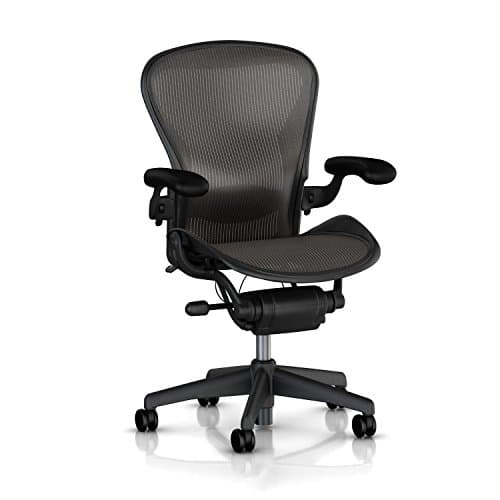
- Herman Miller Aeron. Not GREENGUARD, and we had this wrong until 9 October 2026. Herman Miller's own Aeron store page names "BIFMA Level 3 certified" and "Indoor Advantage Gold certification, SCS Global Services' highest level of indoor air quality performance" — an equivalent emissions certification from a different certifier, verified in the SCS Certified Green Products Guide rather than UL SPOT, which is the same thing we had to correct on the Steelcase Series 1. It stays on this page because it is the most documented chair here and because mesh rather than foam removes the largest soft-material volume in a normal chair, but if the word GREENGUARD is your filter, this is not the chair. The full reading is in our Herman Miller Aeron review. Confirm the configuration too — the Aeron comes in three sizes and the wrong size is worse than a right-size cheaper chair.
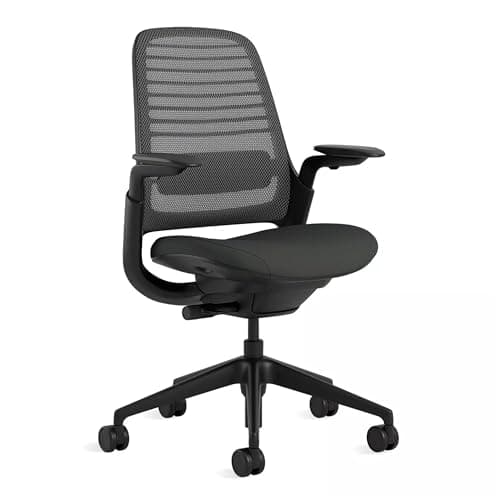
- Steelcase Series 1.Steelcase is a contract manufacturer, and the Series 1 comes with more paper than any chair we rank: a dated compliance certificate to ANSI/BIFMA X5.1 and X5.11 at 400 lb, a cut sheet naming BIFMA LEVEL 3 and SCS Indoor Advantage Gold, an Environmental Product Declaration and a twelve-year warranty. Read the emissions line carefully: Indoor Advantage Gold uses the same ANSI/BIFMA M7.1/X7.1 chamber method as GREENGUARD but is issued by a different certifier and listed in SCS's own guide rather than UL SPOT (this entry said "GREENGUARD or low-emission" until 2026-09-19; the documents say SCS). Our Steelcase Series 1 review goes through each one. The certification depth is the reason to buy it, and the twelve-year warranty is the second reason.
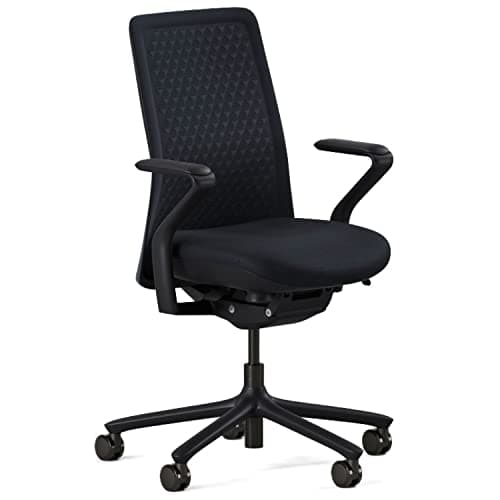
- Branch Verve Chair. Branch prints both lines in the benefits list on this chair's own page — "Certified Greenguard Gold for low VOC emissions" and "Meets the BIFMA standard for commercial-grade use", at 275 lb with a seven-year warranty — a genuinely stronger disclosure than the Amazon chair market, which publishes nothing at all. It is the price point at which documented certification becomes reachable, and it has a height-adjustable lumbar rest and an adjustable seat depth, so it is also a real ergonomic chair rather than a certificate on a bad seat. Two cautions. The GREENGUARD Gold line is published per chair, not per brand: Branch prints it on the Verve, the Ergonomic Chair and the Daily and not on the Ergonomic Chair Pro, the Lite or the Softside, and our Branch chair range review goes through all six pages — it also records that the plain Ergonomic Chair's Amazon listing is delisted, which is why the Verve is the Branch pick here. And if you are buying a matching desk, the Gold certificate stops at the seating line: our Branch Duo review explains why Branch's desktops are not covered by it.
Everything else, honestly
Below Branch, published certification stops. The chairs we rank in the budget roundup — the SIHOO M57 Ergonomic Office Chair, the Ticova High-Back Ergonomic Office Chair, the Hbada Ergonomic Mesh Office Chair with Adjustable Lumbar — have real adjustability and no emissions documentation whatsoever. SIHOO markets some models as BIFMA-tested; we could not verify it per SKU, and we are not going to upgrade a marketing line into a certificate because the chair is otherwise good. The Flash Furniture Mesh Drafting Chair comes from an established office-furniture brand where many chairs are BIFMA-tested, and it publishes no GREENGUARD certificate.
That is not a reason to avoid them. It is a reason to know what you are buying: an uncertified chair with good adjustments, which for a lot of buyers is a better use of money than a certified chair with bad ones. What we will not do is imply the certificate exists.
If you cannot buy a certified chair
Three things genuinely reduce the exposure, all free or nearly free.
- Unbox it somewhere ventilated and give it a week. New foam and adhesives off-gas fastest in the first days, and the EPA puts source control and ventilation ahead of air cleaning in that order. The routine is in the first 72 hours.
- Prefer mesh over thick foam. Less polymer volume, less to emit, and it runs cooler — which matters more than the certificate for most people over an eight-hour day.
- Prefer a chair with no stain-resistant treatment. Easy-clean coatings on upholstery are the application where fluorinated chemistry shows up. Uncoated fabric avoids the question rather than answering it.
And if the chair you own is fine but your back is not, the cheapest real fix is usually support rather than replacement — a ComfiLife Memory Foam Lumbar Support Pillow against the existing backrest costs a fraction of a new chair and is covered in our lumbar support picks.
How to buy a certified chair without being sold a badge
1. Search the model, not the brand, in UL's SPOT registry
Certification is per product. "Brand X is GREENGUARD certified" tells you nothing about the specific chair in your cart. If your model does not appear in the registry, the certificate does not cover it.
2. Ask which tier — GREENGUARD or GREENGUARD Gold
Gold applies stricter limits and is the tier specified for schools and healthcare. Sellers use the two terms interchangeably in listings; the certificate does not.
3. Check whether the certificate covers the upholstery you chose
Chairs are configurable, and a fabric option added later is not automatically inside the original certification. If you are choosing a finish, ask about that finish.
4. Get the size right before you get the certificate right
A wrong-size chair is an ergonomic failure regardless of what it emits. Seat depth should leave two to three fingers between the seat edge and the back of your knee, and the backrest lumbar curve should meet the small of your back. Mayo Clinic's office-ergonomics guide has the full fitting sequence.
5. Weigh the certificate against the adjustments
If the choice is a certified chair you cannot adjust versus an uncertified one you can, take the adjustments and ventilate the room. Posture load is the daily, cumulative problem; emissions from a modern chair are a smaller and decaying one.