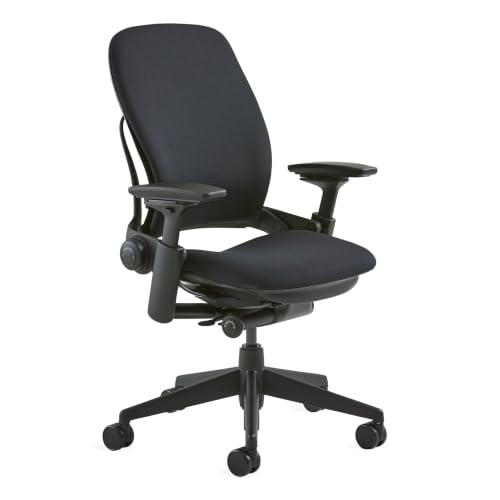
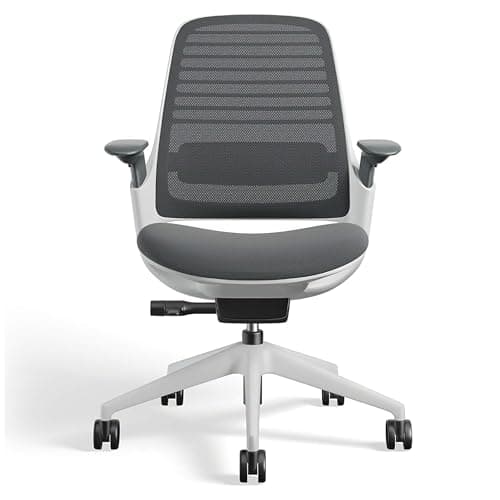
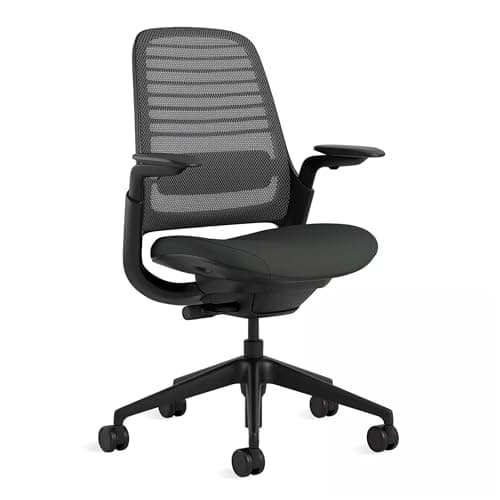
Buy the Series 1 if you need the certificate, and the Leap if you need the lumbar dial. That is genuinely the whole comparison. On 6 November 2026 the Series 1 carpet build was $549 and the Leap was $599 — fifty dollars apart, not a tier apart — and Steelcase publishes the same 400 lb rating and the same twelve-year parts-and-labor term for both. So the price is not buying strength and it is not buying coverage. The Series 1 cut sheet prints BIFMA LEVEL 3, CAL 117 and SCS Indoor Advantage Gold — Furniture as plain readable text, with a dated ANSI/BIFMA X5.1 and X5.11 certificate behind the 400 lb figure. Steelcase's own Leap page names no emissions certificate at all. In exchange, the Leap gets a lower-back firmness dial, a 3D LiveBack and the Natural Glide seat. For the reader this site is written for, the cheaper chair is the one with the evidence. That is unusual enough to be worth a page of its own.
Start with what is identical, because most of it is
These two chairs are easy to mis-shop because the brochure language overlaps so heavily. Both are Steelcase. Both carry a twelve-year manufacturer warranty in Amazon's warranty field. Both are published at 400 lb. Both use a version of LiveBack — the flexing backrest that moves with your spine instead of pivoting at one hinge. Both of the listings we rank are carpet-caster builds. Neither publishes a seat-height range or any stature guidance.
What that overlap means in practice: if you are choosing between them on durability, capacity, brand support or warranty length, there is no decision to make. You have to choose on something else, and there are exactly two things left.
Thing one: the Series 1 is the only one with a readable certificate
This is the finding, and it only shows up if you read the manufacturer's own documents rather than a roundup.
The Series 1 cut sheetlists, in plain searchable text: BIFMA LEVEL 3, CAL 117, SCS Indoor Advantage Gold — Furniture, and a published Environmental Product Declaration. Behind the capacity figure sits a separate dated document — a Product Compliance certificate of 8 January 2024 covering Series 1 seating to ANSI/BIFMA X5.1 and X5.11 at 400 lb. You can print that. You can attach it to a procurement form. You can hand it to someone who asks why you chose this chair for a chemically sensitive household.
Steelcase's Leap pagedoes none of that. Read on 30 October 2026, it names no indoor-air certification anywhere in its body. What it offers is "a CarbonNeutral product certification option" — which is a claim about the product's carbon footprint, not about what comes out of the foam and the plastics in your room — plus a link to a "Leap Product Environmental Profile" said to cover "certifications, declarations, and specific sustainability product attributes". Steelcase publishes that profile, and SCS publishes the Steelcase Americas Indoor Advantage Gold certificate, as image-only PDFs with no searchable text, so no certificate number, model list or expiry date can be quoted from either.
We think the Leap is very likely inside the scope of Steelcase's seating certificate. We are not going to write that it is certified, because we cannot read the document that would prove it. Read our SCS Indoor Advantage Gold explainer for what that certificate actually tests — and note that neither chair is GREENGUARD: searching UL SPOT returns nothing for either, because Steelcase certifies through SCS rather than UL. Our GREENGUARD explainer covers why those two are not interchangeable even though the chamber method is the same.
Thing two: the Leap is the only one with a firmness dial
Fifty dollars up from the Series 1, here is what the Leap listing and Steelcase's Leap page name that the Series 1 documents do not:
- A lower-back firmness dial. Named on the listing in those words, and separate from lumbar height. The Series 1 gets an adjustable lumbar; the Leap gets an adjustable lumbar and a control for how hard it pushes. For a reader who arrived from chairs for back pain, that is the single most useful control in this comparison.
- 3D LiveBack.The Series 1 has a flexing back. The Leap's is described as changing shape in three dimensions to "mimic the natural shape of your spine", which is the mechanism the chair is actually famous for.
- The Natural Glide System.The seat slides forward as the back reclines, so your eyes stay near the screen when you lean back. Without it, reclining means leaning away from your work and then craning your head forward to see it — which is how a recline function quietly becomes a neck problem.
- Four recline stops plus an upright lock, and adjustable backrest resistance. The Series 1 uses weight-activated controls instead, which Steelcase frames as a feature: the chair sets its own tilt tension from your body weight. That is genuinely easier to live with and genuinely less controllable.
The Series 1 answers back on one point worth knowing. Its 4D arms and its adjustable headrest are options, not standard, and the listing part number tells you which build you are buying. The carpet listing we rank decodes as 435A00-5T29-5S25-6205-4ARM-LUM-CC: 4D arms, adjustable lumbar, carpet casters. A Series 1 bought elsewhere without that string can arrive with fixed arms, which changes the chair. There is no equivalent ambiguity on the Leap — fully adjustable arms are standard.
Check your floor, because one of these comes in both
Steelcase sells the Series 1 as a separate hard-floor SKU, and that is a real convenience the Leap listing does not offer. The chair we rank third here is the hard-floor Series 1 build: same chair, casters meant for hardwood, laminate and tile. On the Leap, the listing's Surface Recommendation field reads Carpet and hard-floor casters are a separate order — either soft casters or a chair mat. Our caster guide covers which stem diameter fits what, because getting that wrong is a returned parcel.
If your floor is concrete or an uneven hard surface, read mats for concrete floorsfirst — the caster question and the standing-surface question usually arrive together.
Where the Series 2 fits
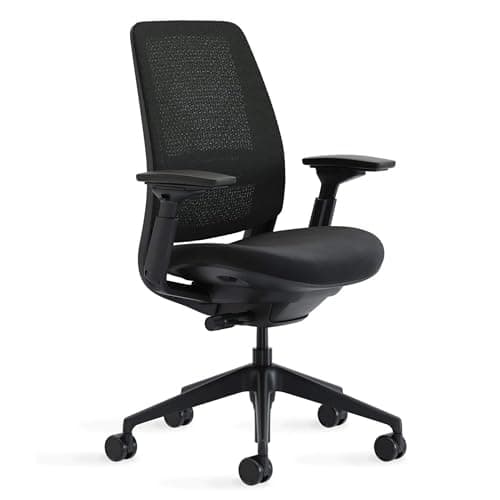
The Series 2 was $687 the day we checked, which puts it above both chairs here, and it is best understood as the Series 1 idea with more back. Its listing names Air LiveBack and adjustable, flexible lumbar support, it holds the same 400 lb and the same twelve-year term, and its own cut sheet prints SCS Indoor Advantage Gold — Furniture as readable text alongside a BIFMA-compliant statement and an EPD. Its part number — 436AIR3D-6205-5T21-5S26-6205-4ARM-LUM-HF — decodes to 4D arms, lumbar, and hard-floor casters, so check that against your floor rather than assuming.
Published item weights tell a small, honest story across the range: 29 lb for the Series 1, 36 lb for the Series 2, and a nonsense 22 lb for the Leap — see the note below.
One number on the Leap listing is wrong, and we would rather say so
Amazon's structured item data prints an Item Weight of 22 poundsfor the Leap. A chair of this class is not 22 pounds — the same field reads 29 pounds for the lighter Series 1 and 36 pounds for the Series 2. The Leap listing's own dimension fields also disagree with each other: 24.75 x 27 x 43.5 in against a Size string beginning "21.75D x 27W x 38.5H". We print the conflict rather than choosing the convenient number. Treat the 22 lb figure as a data-entry error in a structured field.
The reseller question, which applies to both
Steelcase's warranty for the Americas reserves the right to reject warranty claims for products purchased from unauthorized sellers, including unauthorized internet sites, and coverage is non-transferable and runs to the original end-use customer from delivery. Twelve years of parts and labor is a large share of what you are paying for on either chair. Check the sold-by line before you order and keep the order confirmation. Note also that the Series 1 listing read "Only 4 left in stock" and the Series 2 "Only 9 left" on 6 November 2026, so these specific listings can move.
Who should buy which
- You need the certificate in writing — the Series 1. Cheapest chair here, same 400 lb, same twelve years, and the only one whose certifications are printed as readable text with a dated compliance certificate behind the capacity number. This is most readers of this site.
- Lower-back pain is the reason you are shopping — the Leap. The firmness dial, the 3D LiveBack and the gliding seat are a genuinely different mechanism, and fifty dollars is a small price for a control the Series 1 does not have. Buy it knowing the certificate is the thing you are giving up.
- Hardwood, laminate or tile — the hard-floor Series 1. Same chair, right casters, no second order, no caster-stem guesswork.
- You want more back and will pay for it — the Series 2. Air LiveBack, adjustable lumbar, readable certificate, hard-floor casters in the part number we rank.
If the price gap you are actually weighing is bigger than fifty dollars, the two neighboring comparisons are Leap vs Herman Miller Aeron — where the expensive chair turns out to hold less weight — and Leap vs Gesture, where the thousand-dollar gap buys arms and nothing else. And if the honest answer is that neither Steelcase is in budget, Steelcase alternativesis the page for that — it is built around which of this brand's three strengths you can buy on its own.
How to decide this one in four minutes
1. Ask whether anyone will ever ask you for the document
A procurement form, a landlord, a school district, a partner with a chemical sensitivity, your own peace of mind — if any of those will want a certificate, the Series 1 is the answer and it is also the cheaper answer. If nobody will ever ask, that advantage is worth nothing to you and you should spend the fifty dollars on the Leap's mechanism instead.
2. Point at where it hurts
Lower back specifically, and the Leap's firmness dial is the control you want — it adjusts how hard the lumbar pushes, not just where it sits. General stiffness from long sitting days, and the Series 1's weight-activated tilt plus its adjustable lumbar is enough. See lumbar support for what the mechanism actually does. Nothing here is medical advice.
3. Read the part number, not the photo
The Series 1's arms and headrest are options. The listing we rank decodes to 4D arms, adjustable lumbar and carpet casters. If you buy a Series 1 somewhere else, find the part number string and check for 4ARM and LUM before you check the price. The Leap has no such ambiguity.
4. Check your floor before you check the chair
Steelcase sells a hard-floor Series 1 as its own SKU. The Leap listing is carpet only, so on a hard floor budget for soft casters or a mat. This is a ten-dollar problem if you plan for it and a returned-parcel problem if you do not.
5. Do not expect a stature chart from either
Steelcase publishes seat height as a single figure — 20.5 in for the Leap — and no range for either chair. Measure from the floor to the back of your knee while sitting, add an inch for shoes, and if your number is well under 18 in, treat fit as the open question rather than assuming a 400 lb rating implies the chair fits you. Chairs for short people is built only from makers who publish a range, and our adjustment guide walks the order to set things in.
6. Check who is selling it
Steelcase reserves the right to refuse claims on chairs bought from unauthorized sellers, and twelve years is most of the value. Confirm the sold-by line.
7. Ventilate it anyway
Both chairs have conventional foam seats, and a certificate is a ceiling on emissions, not an absence of them. Give a new chair a few days in a ventilated room before you sit in it all day — the first 72 hours explains why that single habit does more than most certificates.