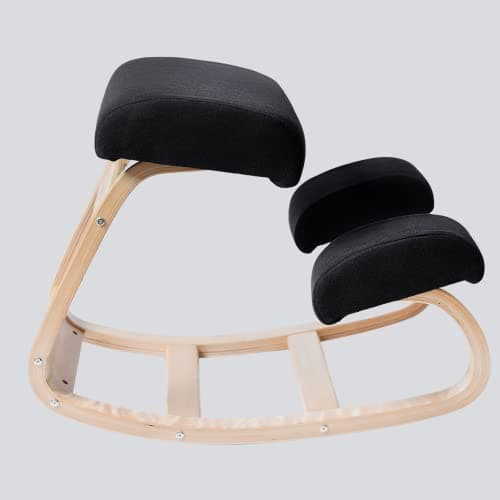
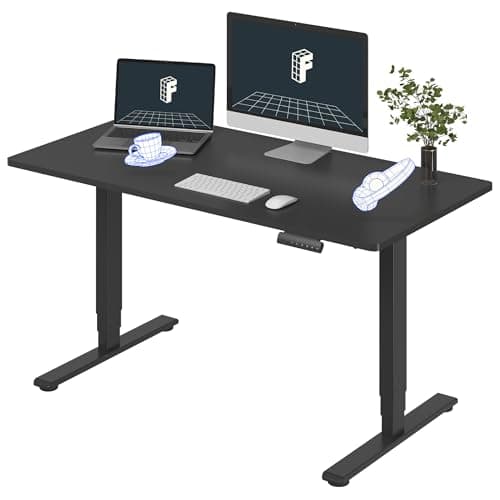
Buy the desk first. A kneeling chair improves the shape of sitting; a sit-stand desk lets you stop sitting, which addresses the underlying problem rather than reshaping it. A kneeling chair is a genuinely good third position to rotate into — but nobody uses one for eight hours, and anyone telling you otherwise has not tried.
They are not competing for the same job
A kneeling chair tips the seat forward and takes some of your weight through the shins, which opens the hip angle from the roughly 90 degrees of a normal chair to something like 110 to 120. That rotates the pelvis forward, which restores the lumbar curve without you having to hold it with muscle. It is a real mechanism and it works.
A sit-stand desk does not change your sitting posture at all. What it changes is the ability to alternate, and — because it lowers as well as raises — the seated height, which is the other thing a fixed desk usually gets wrong. Neither product does the other's job.
Framed properly, the choice is: do you want better sitting, or less sitting? The evidence base points at less. Mayo Clinic's material on prolonged sitting and OSHA's ergonomics guidance both treat duration in one position as the variable, not the geometry of the chair.
The dose problem with kneeling chairs
This is the honest limitation and it decides the comparison. A kneeling chair puts pressure through the shins, which is tolerable for stretches of 30 to 45 minutes and becomes uncomfortable well before an eight-hour day is over. It also has no back support by design, which means your own muscles hold your torso up — fine when they are fresh, tiring by mid-afternoon.
So a kneeling chair is a rotation item. It works beautifully as one of three or four positions you cycle through, and it does not work as the only chair in the room. Our kneeling chair roundup makes the same point at length, including the rocking-versus-static distinction that decides whether one is worth owning at all.
Cost, honestly
A decent kneeling chair is a fraction of the cost of a decent electric sit-stand desk, and if budget is genuinely the constraint that matters. Buying a kneeling chair now and a desk later is a defensible sequence — you get a real change for a small outlay, and it tells you something about how your body responds to changing position.
What is not defensible is buying a kneeling chair instead of a desk and expecting the same result. If you want the cheap route to the desk benefit, that is a bare frame under your existing top or a converter, both of which land closer to kneeling-chair money than to electric-desk money — see budget standing desks.
Two things a kneeling chair does that a desk cannot
- It fixes a slouch you cannot correct by willpower. If you slump within minutes of sitting down regardless of the chair, the open hip angle removes the mechanical reason for the slump. That is a different intervention from standing.
- It fits where a desk change is impossible. A shared office, a rented flat, a desk that belongs to someone else. A chair is yours and moves with you.
Two things a desk does that a chair cannot
- It fixes the surface height. A kneeling chair usually sits you slightly higher than a normal chair, which makes an already-too-high fixed desk relatively better — but by accident, and only for some people. A sit-stand desk sets the surface to your elbows deliberately.
- It changes the position of your whole body, not just your pelvis. Standing unloads the spine differently, changes circulation, and interrupts the static pattern. A kneeling chair is still sitting.
The setup most people should actually end up with
A sit-stand desk, a decent adjustable chair for the majority of the seated time, and — if you like the idea — a kneeling chair or a perch stool as a third position to rotate into for 45-minute blocks. That gives you four postures across a day, which is the actual goal.
If you can only buy one thing this year, buy the desk. If you already have a good chair and a desk you cannot change, a kneeling chair is a sensible next purchase. And if your problem is specifically lower back pain, read what the evidence says about standing desks and back pain before you buy either — the answer is more nuanced than either product page will tell you.