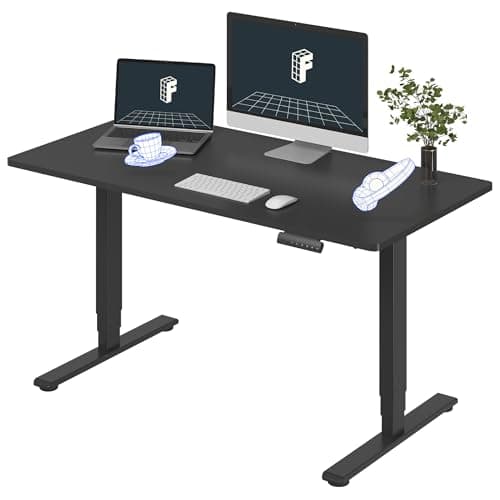
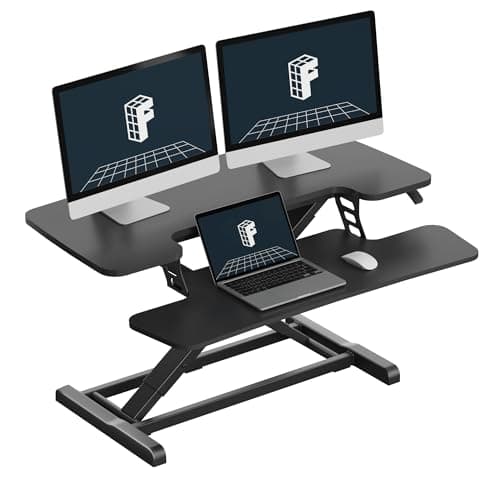
You need one if you are at a desk six or more hours a day, especially if your current desk is too high for you seated. You probably do not if you are at a desk two or three hours a day, if your job already involves moving around, or if you are buying it to lose weight — which it will not do. We sell these. That is precisely why we would rather you buy one for a reason that holds up.
What the evidence actually supports
The claim with support behind it is narrow and worth stating precisely: prolonged uninterrupted sitting is associated with health risks, and breaking it up is a reasonable thing to do. Mayo Clinic frames it that way, and the Cleveland Clinic's summary of standing-desk benefits is similarly measured.
What is not supported: meaningful weight loss, curing back pain, dramatic productivity gains. Standing burns marginally more energy than sitting — a difference far too small to matter for body weight, which we work through with the actual numbers in standing desk calories. And the CDC's activity guidance is about moderate-to-vigorous activity, which standing at a desk is not.
So the honest pitch is: a standing desk is a tool for changing position more often. If that sounds modest, it is — and it is still worth having if you spend most of your working life in one chair.
You probably do need one if…
- You are at the desk six or more hours a day. This is the main one. The problem is dose, and dose is what you have.
- Your desk is too high for you seated.Measure your seated elbow height. Most fixed desks are 29 to 30 inches and most people's elbow height is 25 to 28 — a sit-stand desk fixes that every single day, whether or not you ever stand.
- You get stiff or uncomfortable in the afternoon. The most consistent real-world benefit people report, and the most consistent with the mechanism.
- You know you will use it. If you already fidget, pace on calls, or get up often, a sit-stand desk fits how you already work.
You probably do not if…
- You are at the desk two or three hours a day. The intervention is proportional to the dose, and yours is small.
- You are buying it for weight loss. The energy difference is far too small. Buy shoes and walk.
- You have specific pain you have not had looked at. A desk is not a treatment. If pain is the reason, read what standing desks do for back pain before spending, and consider a clinician before either.
- You will not press the button. A desk that stays at one height is an expensive fixed desk. Be honest — and if the answer is uncertain, buy a converter or a frame to find out cheaply.
- Your problem is actually your screen or your chair. Neck pain is usually a monitor-height problem; a numb leg is usually a chair problem. Those are far cheaper to fix.
Cheaper things to try first
- A timer and existing furniture. Take calls standing at a kitchen counter for a fortnight. If you find yourself doing it voluntarily, you will use a standing desk. If it annoys you by day three, that is useful information that cost nothing.
- A monitor arm. If the complaint is neck and shoulders, this fixes more per pound than anything else on the page.
- A footrest and a chair adjustment. If your feet dangle or your lower back aches, a footrest and fifteen minutes with the chair controls may be the whole fix.
- A converter. Reversible, no assembly, works with the desk you own. The right answer for renters and shared offices, and a genuinely good way to find out whether you will stand — see the converter picks and the comparison.
- A bare frame under your existing top. The cheapest route to a real sit-stand desk if you already have a surface you like, and it adds no new composite panel to the room.
If you do buy one, buy the version you will use
The single feature that decides whether a sit-stand desk gets used is memory presets. A desk you have to hold a button on, or crank, requires a decision every time — and within a fortnight most people stop making it. A preset is one tap.
The second is stability at your standing height, because a desk that shakes when you type is a desk you leave down. And the third, if the material question matters to you, is what the top is made of — the certified short list is at GREENGUARD-certified standing desks, and the frame-plus-solid-top route is at best standing desk frames.
The thing that matters more than the desk
Whatever you buy, the variable that actually does the work is how often you change position — not how many hours you stand. Standing still for four hours is its own problem, well documented in occupational health, and swapping one static posture for another is not the win. Set a sustainable ratio using how long to stand, and treat the desk as the thing that makes changing easy rather than as the intervention itself.
How we picked
We compiled specs from manufacturer manuals, verified every certification claim in the certifying body's own registry (UL SPOT for GREENGUARD, BIFMA, CARB), did the cost-to-own math, and read the aggregated owner reviews, then scored each product against a published rubric. The scores are judgments from documented research — they are not measurements we took, because we do not have a lab and we are not going to pretend we do.