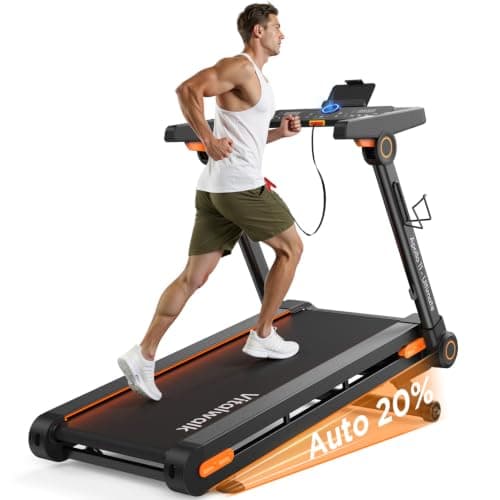
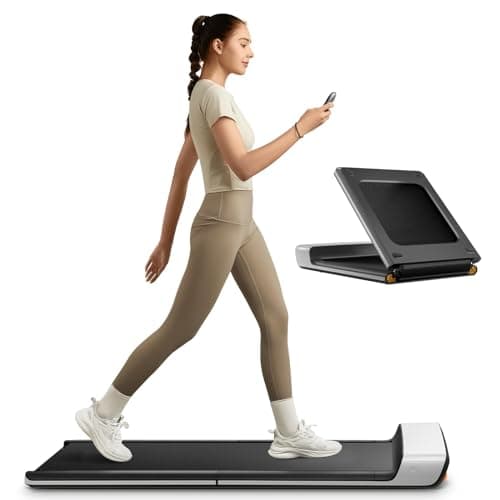
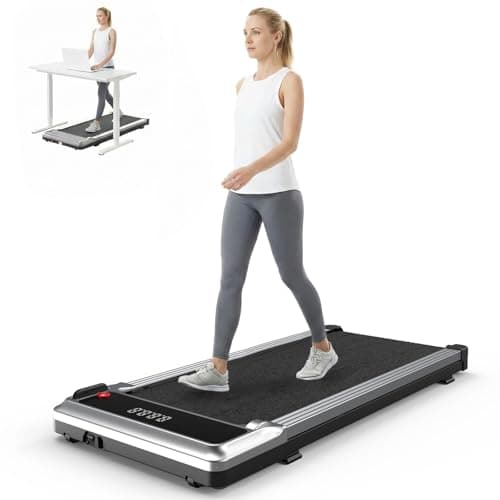
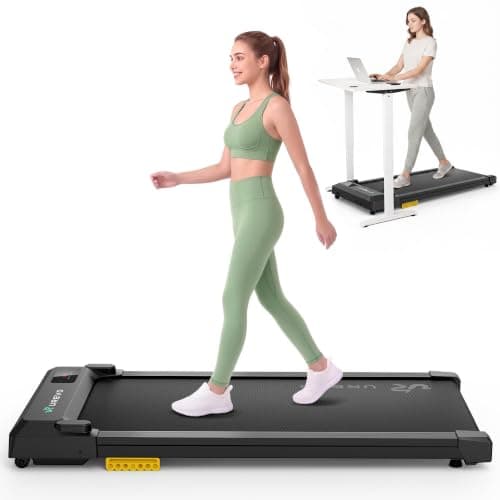
Buy the UREVO. It is the point on the curve where you get a cushioned deck and a motor quiet enough for calls without paying commercial-treadmill money, and for most people it is the pad that turns walking-while-working from an idea into a habit. If you already know you will do two hours a day, skip straight to the Vitalwalk — its 49-inch belt is the one thing a cheap pad cannot give you.
What a walking pad is actually for
Not exercise, in the training sense. Walking at 1.5 to 2 miles an hour while answering email is not a workout and will not replace one — public-health activity guidance is about moderate intensity, and desk walking is below it. What it does is break up sedentary time, which is a separate and well-supported goal, and it does so without costing you working hours.
Frame the purchase that way and the buying criteria change completely. You are not shopping for top speed or incline; you are shopping for a machine you can run for hours at a crawl, quietly, under a desk, for years. That is a duty-cycle question, and it is why the price range in this category is so wide.
The four specs that decide it
- Motor duty rating. A consumer pad is designed for a workout — thirty to sixty minutes, then a rest. Desk walking is the opposite load profile: slow, sustained, hours at a time. Commercial-duty office treadmills are built for it; cheap pads are not, and this is where they fail.
- Noise. The requirement that quietly kills most cheap pads. If you cannot hold a call over it, you will not use it during the working day, which is the only time you were going to use it.
- Deck length. A short belt at walking pace is genuinely unpleasant if you have a long stride — you end up shortening your gait to stay on it, which is its own kind of fatigue. Measure before you buy if you are tall.
- Height under the desk. A pad raises you by two to four inches. Your standing desk has to go that much higher, and a desk already near its maximum may not. Check your number in the height calculator, add the deck height, and confirm your desk reaches it.
Folding versus fixed
Folding pads hinge in the middle so they stand on end in a cupboard. That is genuinely valuable in a small room, and it is the reason the WalkingPad P1 is here. The trade is that a hinge in the middle of a walking surface is a moving part under repeated load — it is the component most likely to develop a creak or a flex over time.
If the pad will live under the desk permanently, buy the fixed one. Fewer parts, usually a better deck, and typically more money spent on the motor rather than the mechanism.
Incline: useful, with a catch
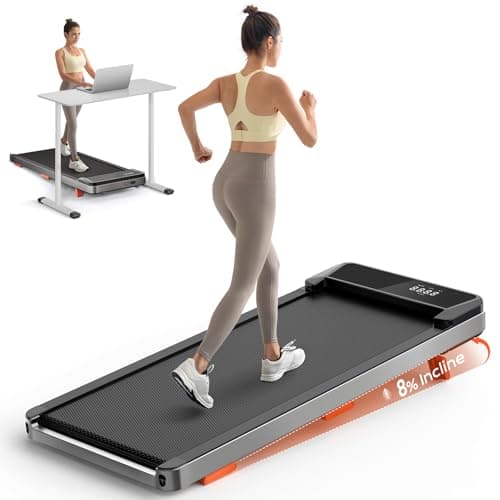
A few degrees of slope raises effort substantially at the same speed, which is exactly what you want when 2 mph is the fastest you can type at. The catch is geometry: an inclined deck sits higher at the back, which changes your height at the keyboard and can put you out of your desk's range. Check the clearance before you buy one.
Start slower and lower than you think
The first week is where most walking pads get abandoned. Two things go wrong: people set the speed too high and cannot type, and people walk for two hours on day one and their calves punish them for three days. Start at 1.2 to 1.5 mph, in twenty-minute blocks, and build up. Fine motor control while walking is a skill, and it does improve.
Also: wear shoes. Walking barefoot on a belt is uncomfortable, and it is hard on the same structures a mat for plantar fasciitis exists to protect.
Where it fits with a standing desk
A walking pad does not replace sitting or standing — it adds a fourth mode to the day. The pattern that works for most people is short walking blocks during low-precision work (calls, reading, email), standing for focused work, and sitting properly for anything demanding. If you are choosing between buying a pad and buying a better chair, read standing desk vs walking pad first — the answer is not always the pad.
A pad also assumes a desk that raises and floor space to put it on. If neither is true — a fixed-height desk, a shared room, an apartment with neighbors below — the seated version of this idea is an under-desk bike or elliptical, which does far less per hour but asks nothing of your desk or your posture.
Safety, briefly
These are motors with moving belts in a home. Keep the area behind the pad clear — that is where you go if you step off the back. Do not plug a treadmill into the same desk-mounted power strip as everything else; a motor is a high-draw device and belongs in a wall outlet. And if you have balance issues, joint problems or a cardiac condition, this is a conversation with your doctor before it is a purchase.
How to buy an under-desk treadmill
Match the duty rating to your actual hours
Under an hour a day, a consumer pad is fine. Two hours or more, daily, and you need an office-duty machine — anything else is a warranty claim waiting to happen.
Treat noise as a hard requirement
If it cannot be used during a call, it cannot be used during work. Read owner reports about noise specifically, not overall ratings — and if the person you are worried about lives below you rather than beside you, the noise that matters is your footfall rather than the motor. We separate the two in walking pad noise.
Measure the deck against your stride
Tall users need a longer belt even at slow speeds. A cramped gait is the reason many pads get used twice.
Add the deck height to your desk height
You will be standing two to four inches higher. Confirm your desk reaches the new number before you order.
Buy the cheap one if you are unsure
This is one category where a budget entry is the right first move. Prove you will use it, then buy the machine that lasts.
Plan the power
Wall outlet, not the desk strip. Motors and daisy-chained strips are a bad combination.