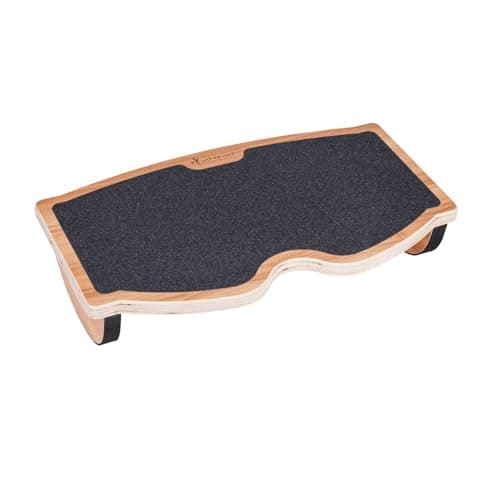
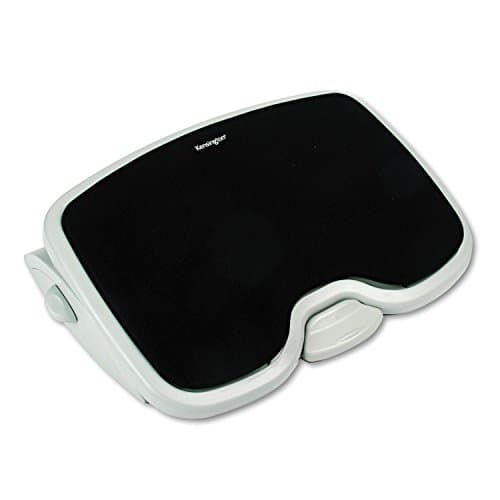
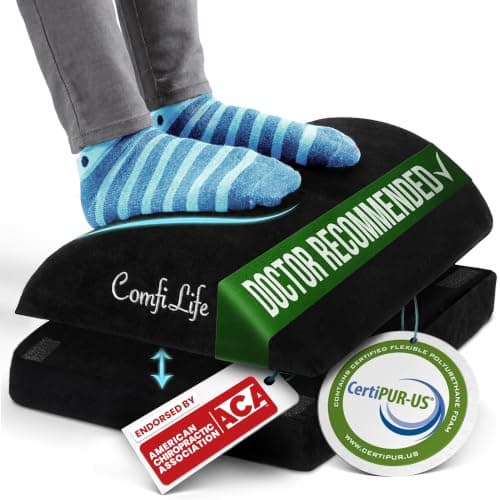
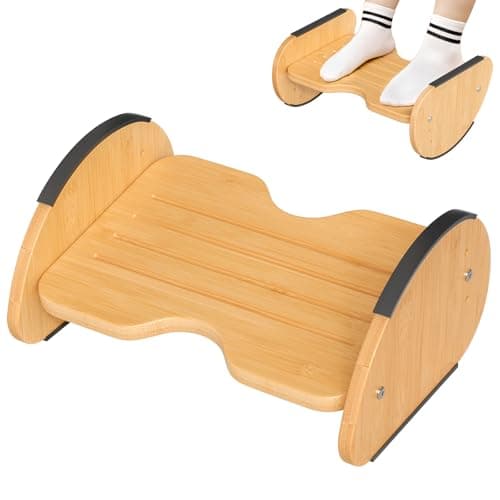
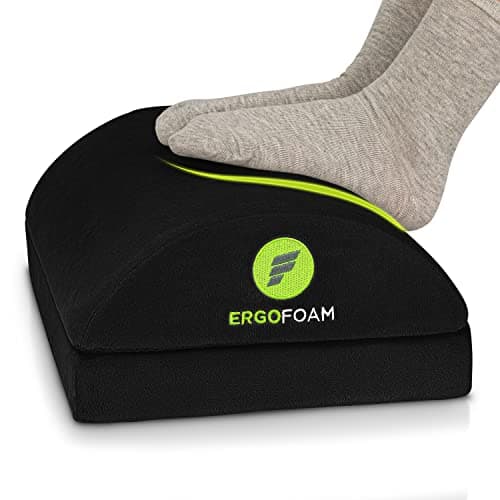
Buy the ErgoFoam if you want a fixed, supportive angle that survives daily use, and the StrongTek wooden rocker if you would rather your ankles kept moving. Those are the two honest answers, and which one is right depends on whether your problem is a height mismatch or a static-posture problem. The Kensington is the pick if you need to dial in a precise angle and height rather than take a preset.
Why most people need one and do not know it
Set a chair correctly and you set it for your arms: seat height so your elbows are at roughly ninety degrees at the keyboard, forearms supported, shoulders relaxed. For anyone below about five foot seven, that height leaves their feet off the floor — and a desk that does not adjust cannot fix it.
Dangling feet are not a comfort issue, they are a load issue. With no floor contact, the weight of your legs hangs from the front edge of the seat pan, which compresses the backs of the thighs and, over hours, produces exactly the dead-leg, restless, lower-back-ache pattern people attribute to a bad chair. Restoring the roughly ninety-degree knee angle takes that load off.
There is a second, sneakier cause: you added a seat cushion. A cushion raises you an inch or two, and that is often enough to strand feet that were previously flat. The footrest and the cushion are a pair far more often than either listing admits.
The four types, and who each suits
- Dense foam wedge. Simple, supportive, warm underfoot. The whole question is density — cheap foam squashes flat within months and the angle disappears. The ErgoFoam is here because it does not.
- Rocking wooden platform.Tilts freely, so your ankles work continuously through the day. That matters more than it sounds: the calf pump is one of the things static sitting removes, and NIOSH's work on prolonged static posture is the background to why movement beats position.
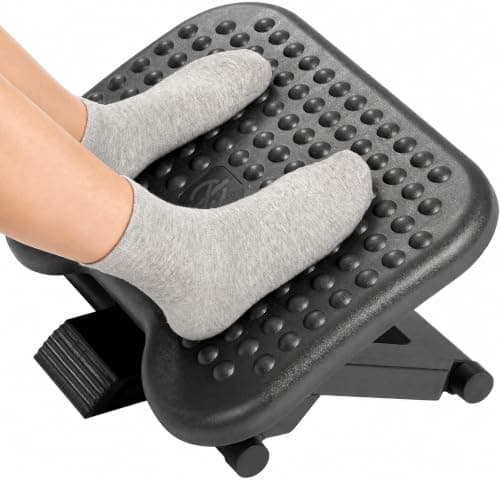
- Adjustable plastic platform. Height and tilt both set independently. The right answer when you need a specific number rather than a shape, and the Kensington is the long-standing office-supply version.
- Bamboo or hardwood platform. Hard, inert, no foam chemistry at all. On a site about materials this is worth naming: bamboo is a solid grass rather than a bonded composite, which makes it the lowest-concern material in the category.
Getting the height right
A footrest is only useful at the correct height, and most people guess. The sequence:
- Set the desk first, or accept the desk you have. Elbows at roughly ninety degrees, wrists straight, shoulders down.
- Set the chair to match the desk, not to match the floor. This is the step people invert, and it is why they end up hunching.
- Measure the gap between your soles and the floor. That is the footrest height you need — and if it is more than about six inches, the desk is too high and a height-adjustable desk is the real fix.
- Aim for thighs roughly parallel to the floor and knees around ninety degrees. OSHA's workstation guidance and Mayo Clinic's desk setup advice both land in the same place here.
When a footrest is the wrong purchase
Two cases. First, if your feet already rest flat on the floor — adding a footrest then raises your knees above your hips, which rolls the pelvis backward and creates the slouch you were trying to avoid. A footrest you do not need is actively harmful, which is not something you will read on a listing.
Second, if the underlying problem is a fixed desk that is far too high for you. A footrest patches a two-inch mismatch; it cannot patch a five-inch one, and stacking yourself upward eventually puts your monitor below eye level and moves the problem to your neck. At that point the answer is a desk that adjusts, or at minimum a keyboard tray that brings the working surface down to you.
Static or rocking — pick by the complaint
If your complaint is dangling feet and thigh pressure, buy a static rest with a firm surface at the right height. If your complaint is stiffness and restlessness despite your feet reaching the floor, buy a rocker — you do not need the height, you need the movement. Buying the wrong one produces a rest that gets pushed under the desk and forgotten within a fortnight.
Materials, briefly
Foam footrests are polyurethane and none of the ones here publishes a foam certificate. That is the norm across this category, and the practical response is the same as for any new foam object: unwrap it and let it air out for a few days before it lives under your desk. Our 72-hour break-in guide covers the method. If you would rather not have the question at all, the bamboo and hardwood platforms have no foam in them.
How we scored these
Posture benefit, adjustability, materials and certifications, build and value. Scores are judgments from published specifications and aggregated owner reports, not measurements — we do not run a lab and our methodology page says so plainly.