Skip to content
Riser & Rail

01 — Standing Desks

The Best Standing Desks for Two Monitors

Two screens are a width problem, a depth problem and a leverage problem. Most dual-monitor complaints are actually one of those three, and only one of them is fixed by buying a bigger desk.

By Stephen V.Updated How we research
#ad

We earn a commission when you buy through our Amazon links, at no extra cost to you. It never affects our rankings, and we say so when the cheaper — or the direct-only — product is the better buy. How this works.

Buy the VIVO 71×30. Seventy-one inches is the width where two 27-inch monitors, a keyboard and a laptop stop competing, thirty inches of depth is what lets you push both screens back to arm's length, and the dual-motor frame handles the leverage of two arms clamped to the rear edge. If your room cannot take a desk that size, the FlexiSpot E6 Electric Standing Desk is the compromise we would make — and the monitor arm matters more than either.

The three numbers to check before you buy anything

Almost every "my dual-monitor setup is uncomfortable" problem reduces to one of three measurements, and it is worth working them out before you shop rather than after.

  1. Width. Two 27-inch monitors are roughly 24 inches each across the bezel, so 48 inches of screen before you add a single other thing. A 48-inch desk is therefore completely full. Sixty inches is workable. Seventy-one is comfortable. If you run two 32-inch screens, treat 60 as the floor.
  2. Depth.This is the one people skip and the one that causes neck pain. A 27-inch monitor wants to sit roughly an arm's length away — about 24 to 30 inches from your eyes. On a 24-inch-deep desk with the arm clamped at the back, the screen ends up around 20 inches away, which is close enough that you scan with your neck rather than your eyes. Thirty inches of depth solves it. Mayo Clinic's office-ergonomics guidance gives the same arm's-length rule from the other direction.
  3. Leverage at the back edge. Two monitor arms bolted to the rear of a desk put a significant cantilevered load a long way from the legs, and that is a torque problem rather than a weight problem. It is why a desk that feels rock solid empty can shimmy when you type with two screens mounted. Dual motors and three-stage legs are what absorb it.

Side by side, or one primary and one secondary?

These are different setups and they want different desks. A symmetric pair — two identical screens, both used equally — needs to be centered on your body with the seam directly in front of you, and that arrangement needs the full width. A primary-plus-secondary setup puts one screen straight ahead and one angled in at 30 degrees or so beside it, which is kinder on your neck and fits on a narrower desk, because the angled screen occupies less of the horizontal span.

If you have a dominant screen, use the second arrangement. Rotating a secondary monitor to portrait saves even more width and is genuinely better for reading long documents or code. We work through the positioning in full in dual monitor ergonomics, including the case for stacking rather than sitting them side by side.

The arm matters more than the desk

This is the part worth saying bluntly, because it saves people money. A dual-monitor setup on monitor stands is limited by the stands: fixed height, fixed tilt, a wide plastic base eating the depth you just paid for. The same two screens on arms sit exactly where you want, free the entire back third of the surface, and can be pushed back to arm's length on a desk you already own.

So if you are choosing between a bigger desk and a good pair of arms, buy the arms first. Check the VESA pattern on the back of each monitor before ordering — 75×75 and 100×100 are the common ones, and some curved gaming panels need an adapter plate. Our picks are at best dual monitor arms, and a single heavy arm each is usually steadier than one dual-mount bar carrying both.

Two screens, one standing height

There is a subtlety nobody mentions. When you stand, your eye height rises by roughly 10 to 12 inches relative to sitting, and a sit-stand desk rises with you — so screens mounted to the desk keep their relationship to your eyes and everything works. Screens mounted to a wall or a separate stand behind the desk do not move with you, and the setup that was perfect seated is wrong standing. If you are going sit-stand, everything has to be attached to the desk. It sounds obvious and it is the most common reason a new standing desk feels worse than the old fixed one.

The other half is the desk height itself. Two screens tempt you to sit further back, which changes your elbow angle. Set the desk from your elbows first — the height calculator gives you the number — then move the screens to your eyes, in that order. Doing it the other way round is how people end up typing with raised shoulders.

What we would actually buy

For most people running two screens in a room that can take it: the VIVO 71×30, two single arms, and a cable tray so the extra display cables do not pull at full height. For a smaller room, the FlexiSpot E6 Electric Standing Desk with a primary-plus-angled-secondary arrangement. If the corner is the only place the desk fits, the three-leg VIVO 63×55 in Corner Standing Desk (DESK-E3CTB) — and read the honest note on corner stability before you commit. None of these desks publishes an emissions certificate; if that is your first filter, start at the certified list instead and accept a narrower choice of sizes.

The short answer

Quick picks

#ProductBest forScorePrice
01
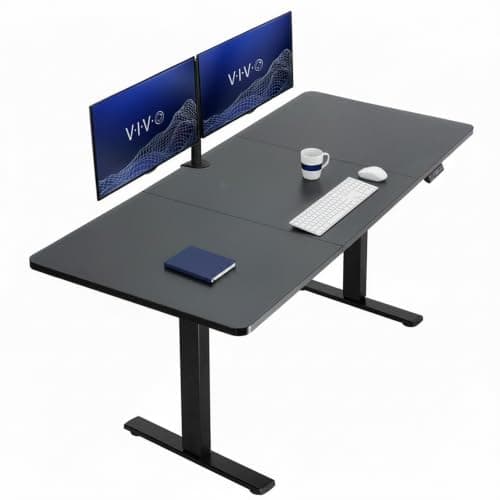
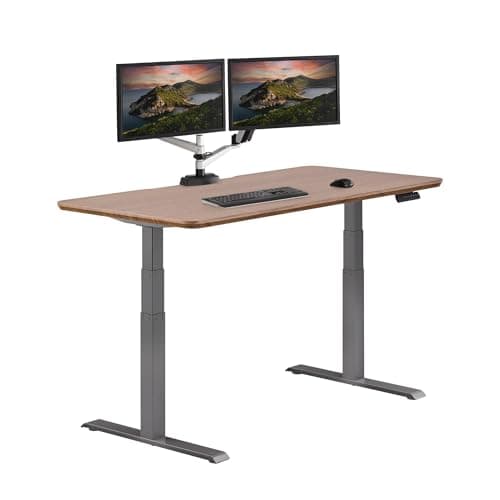
VIVO VIVO Electric Standing Desk (71×30)
VIVO Electric Standing Desk (71×30)

The big surface for the money — 71 inches wide, which is a lot of desk for a dual-monitor setup.

Wide dual-monitor workstations
7.0
$299.99Amazon
02
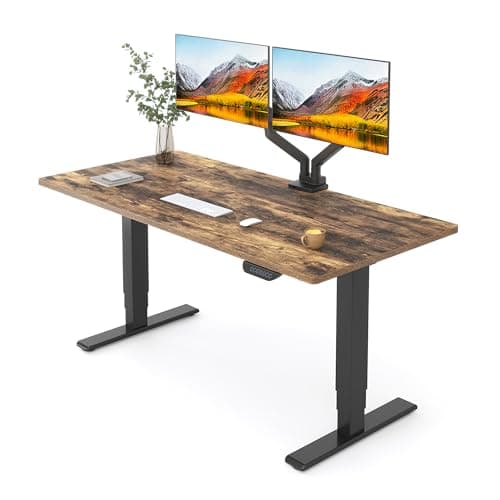
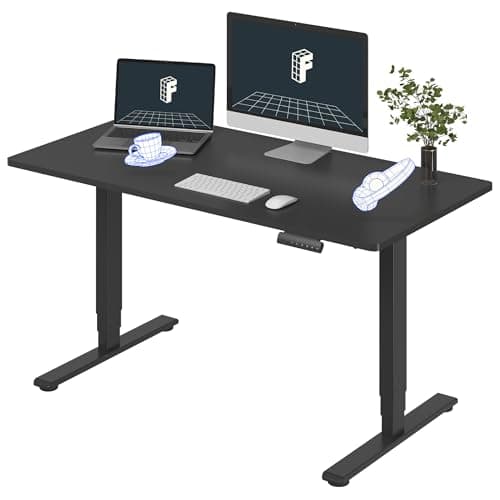
FlexiSpot FlexiSpot E6 Electric Standing Desk
FlexiSpot E6 Electric Standing Desk

The sensible default electric desk: dual-motor stability at a price that undercuts the premium brands.

Most people who just want a solid electric desk
7.6
$369.99Amazon
03
Vari Vari Classic Electric Standing Desk (60×30)
Vari Classic Electric Standing Desk (60×30)

The one desk here whose maker publishes a per-product certification table you can open and read.

The buyer who wants the certificate, not the claim
8.4
$829.00Amazon
04
FlexiSpot FlexiSpot E6 MAX Heavy-Duty Standing Desk (55×28)
FlexiSpot E6 MAX Heavy-Duty Standing Desk (55×28)

The heavy-duty E6: the same dual-motor logic on a stiffer frame, with the headroom a tall user needs.

Tall users and heavy multi-monitor loads
7.8
$341.99Amazon
05
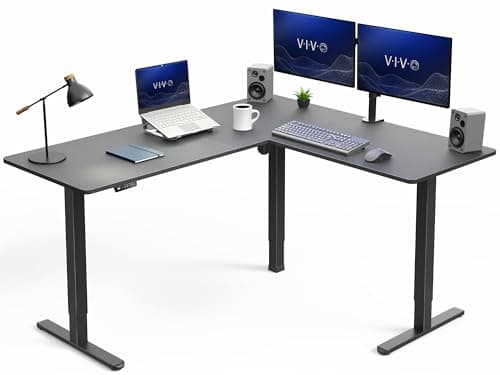
VIVO VIVO 63×55 in Corner Standing Desk (DESK-E3CTB)
VIVO 63×55 in Corner Standing Desk (DESK-E3CTB)

The three-leg corner desk that stays flat: the middle leg is the difference between a stable L and a diving board.

Most home-office corners
7.2
$259.99Amazon

#ad · Live prices from the Amazon Product API, as of Sep 6, 2026. Where we have no verified live price, we show none — we would rather leave a gap than print a number that has rotted.

In detail

The picks, in full

01
VIVO VIVO Electric Standing Desk (71×30)

Wide dual-monitor workstations

VIVO Electric Standing Desk (71×30)

71×30 inDual motorVIVO rates 176 lbMemory presets

Certification & materials

No GREENGUARD/BIFMA/CARB certificate published for this model. Laminate top over engineered wood — uncertified on emissions.

7.0/10

The big surface for the money — 71 inches wide, which is a lot of desk for a dual-monitor setup.

Stability
7
Adjustment
8
Materials & certs
5
Build & motor
7
Value
8

Pros

  • 71 inches is genuinely large — room for two monitors and a laptop without cramping
  • Dual motor keeps a wide top steadier than a single motor would at this size

Cons

  • A wide top amplifies any wobble; keep it against a wall if you type hard
  • No published emissions certificate

Don't buy this if…

your room is small — 71 inches dominates a space, and a 48-inch desk will serve a single screen better.

$299.99View on Amazon

Price as of Sep 6, 2026. Prices change — Amazon's is the one that counts.

#ad · we may earn a commission from this link to VIVO Electric Standing Desk (71×30)

02
FlexiSpot FlexiSpot E6 Electric Standing Desk

Most people who just want a solid electric desk

FlexiSpot E6 Electric Standing Desk

Dual motor3-stage legsFlexiSpot rates 220 lbMemory presets

Certification & materials

No GREENGUARD or BIFMA registration is published for this model. The top is laminate over engineered wood, and FlexiSpot does not publish a CARB Phase 2 / formaldehyde certificate for it — treat it as uncertified on emissions and give it its first-week off-gassing period in a ventilated room.

7.6/10

The sensible default electric desk: dual-motor stability at a price that undercuts the premium brands.

Stability
8
Adjustment
8
Materials & certs
5
Build & motor
8
Value
9

Pros

  • Dual motors and 3-stage legs make it noticeably steadier at full height than single-motor budget desks
  • Memory presets mean it actually gets adjusted, which is the entire health benefit
  • Widely available with a large owner base, so problems and fixes are well documented

Cons

  • Laminate-over-engineered-wood top with no published emissions certificate
  • The included top is the weakest part; many owners pair the frame with a better surface

Don't buy this if…

a verified low-emission certificate is your hard requirement — this desk doesn't carry one. Look at UPLIFT's V3 laminate line instead — that is the desktop UPLIFT publishes its GREENGUARD Gold document for — and accept the higher price.

$369.99View on Amazon

Price as of Sep 6, 2026. Prices change — Amazon's is the one that counts.

#ad · we may earn a commission from this link to FlexiSpot E6 Electric Standing Desk

03
Vari Vari Classic Electric Standing Desk (60×30)

The buyer who wants the certificate, not the claim

Vari Classic Electric Standing Desk (60×30)

60×30 in topElectric dual-columnPer-SKU cert tableShips largely assembled

Certification & materials

Vari's own published certification table lists the Electric Standing Desk 60×30 with GREENGUARD certification and ANSI/BIFMA certification, and Vari states it was the first company to have sit-stand office products receive the UL BIFMA Performance Certification mark (August 2017). The table is per-SKU — open vari.com/certifications.html and confirm the row for your exact size and finish before you buy.

8.4/10

The one desk here whose maker publishes a per-product certification table you can open and read.

Stability
9
Adjustment
8
Materials & certs
10
Build & motor
9
Value
6

Pros

  • The certification position is published as a per-product table, not a vague sustainability page
  • ANSI/BIFMA certification means the frame was tested for strength and stability, not just rated by the seller
  • Arrives largely assembled, which removes the worst part of owning a standing desk

Cons

  • Costs several times what a budget dual-motor desk costs
  • The certification is per-SKU, so a different size or finish may not be on the table

Don't buy this if…

price is the deciding factor. This is the documented-certification pick; if you only need a stable desk, the FlexiSpot E6 does that job for a fraction of the money.

$829.00View on Amazon

Price as of Sep 6, 2026. Prices change — Amazon's is the one that counts.

#ad · we may earn a commission from this link to Vari Classic Electric Standing Desk (60×30)

04
FlexiSpot FlexiSpot E6 MAX Heavy-Duty Standing Desk (55×28)

Tall users and heavy multi-monitor loads

FlexiSpot E6 MAX Heavy-Duty Standing Desk (55×28)

Dual motor3-stage legsFlexiSpot rates 330 lb55×28 in top

Certification & materials

No GREENGUARD, BIFMA or CARB registration is published for this model. The top is laminate over engineered wood with no emissions certificate — uncertified, and worth a ventilated first few weeks.

7.8/10

The heavy-duty E6: the same dual-motor logic on a stiffer frame, with the headroom a tall user needs.

Stability
9
Adjustment
8
Materials & certs
5
Build & motor
9
Value
8

Pros

  • A 330-pound rating and a heavier frame make it noticeably stiffer under a loaded desk
  • 3-stage legs give more travel than the 2-stage frames tall users usually get stuck with
  • Still costs a fraction of a contract-grade desk

Cons

  • No published emissions certificate, same as the rest of the FlexiSpot line
  • Heavier to assemble and to move than the standard E6

Don't buy this if…

you are average height with a laptop and one monitor — you would be paying for frame stiffness you will never load.

$341.99View on Amazon

$379.9910% off

Price as of Sep 6, 2026. Prices change — Amazon's is the one that counts.

#ad · we may earn a commission from this link to FlexiSpot E6 MAX Heavy-Duty Standing Desk (55×28)

05
VIVO VIVO 63×55 in Corner Standing Desk (DESK-E3CTB)

Most home-office corners

VIVO 63×55 in Corner Standing Desk (DESK-E3CTB)

63×55 in L footprintThree legsElectric height adjustMemory presets

Certification & materials

Laminate over engineered wood. VIVO publishes no CARB Phase 2, TSCA Title VI or GREENGUARD certificate for the tops. An L-shaped desk is roughly half again the panel area of a straight desk, so the break-in period matters proportionally more.

7.2/10

The three-leg corner desk that stays flat: the middle leg is the difference between a stable L and a diving board.

Stability
8
Adjustment
8
Materials & certs
4
Workspace
9
Value
7

Pros

  • The third leg under the corner is what keeps a large L from sagging and racking at height
  • Two full working zones — a monitor wing and a paper wing — without buying two desks
  • Reversible orientation, so the same desk fits a left or right corner

Cons

  • No emissions documentation for the largest composite surface in most rooms
  • Assembly is long and awkward; budget a couple of hours and a second pair of hands

Don't buy this if…

you move house often. Corner desks are the hardest sit-stand format to relocate and re-level.

$259.99View on Amazon

$299.9913% off

Price as of Sep 6, 2026. Prices change — Amazon's is the one that counts.

#ad · we may earn a commission from this link to VIVO 63×55 in Corner Standing Desk (DESK-E3CTB)

How to buy a desk for a dual-monitor setup

1. Measure your monitors, not your desk

Bezel-to-bezel width of each screen, added together, plus at least 12 inches for everything else. That is your minimum desk width. Do this before you look at a single listing.

2. Treat 30 inches of depth as the target

Twenty-four is the standard budget depth and it is the reason so many dual setups feel cramped. Thirty inches lets both screens sit at arm's length with a keyboard in front. If you can only have one upgrade, take depth over width.

3. Buy dual motors

Two arms at the back edge is exactly the load case single-motor desks handle worst. This is not a luxury on a dual-monitor desk; it is the requirement.

4. Check the clamp thickness against your desktop

Most arms clamp to tops up to about 1 to 1.5 inches. Some thicker or beveled desktops do not fit, and some desks have a rear frame rail exactly where you want the clamp. Look at the back edge of the desk you are about to buy and make sure there is clear, flat space for two clamps.

5. Add slack for two display cables

Two monitors mean two power cables and two display cables that all have to survive a 12-inch rise. Route them into a tray under the desk with slack at the top of the travel, and test at full height before you tidy anything.
How we picked

We do not run a testing lab

We compiled specs from manufacturer manuals, verified every certification claim in the certifying body's own registry (UL SPOT for GREENGUARD, BIFMA, CARB), did the cost-to-own math, and read the aggregated owner reviews, then scored each product against a published rubric. The scores are judgments from documented research — they are not measurements we took, because we do not have a lab and we are not going to pretend we do.

Small things, same day

Desk-day essentials under $40

None of these will change which desk you should buy. They are the cheap, unglamorous parts that decide whether the desk you do buy is pleasant to use on a Tuesday — and, where the material is the whole point of the thing, we have said what it is and what it is not certified to.

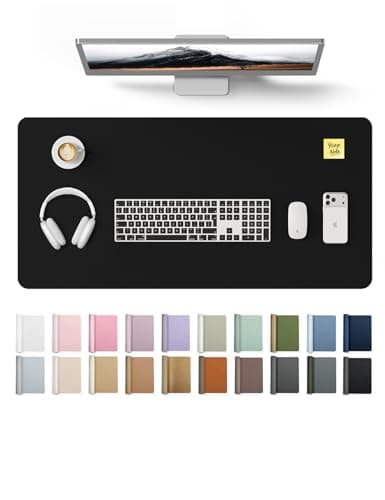
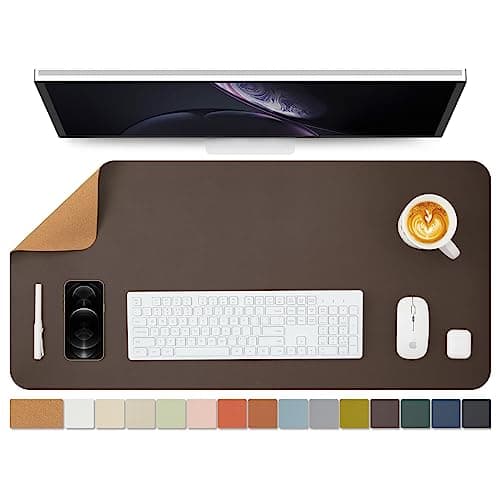
  • YSAGi PU Leather Desk Pad (31.5 × 15.8 in)

    YSAGi PU Leather Desk Pad (31.5 × 15.8 in)

    The cheapest way to stop a laminate top getting scratched, and it gives the mouse one consistent surface at both sitting and standing height.

    Materials YSAGi lists it as PU — polyurethane, the same polymer we prefer over PVC on the mats side, and for the same reason: no plasticizer question. No emissions certificate is published for it, and at this price we would not expect one.

  • Cork Desk Mat, dual-sided (36 × 17 in)

    Cork Desk Mat, dual-sided (36 × 17 in)

    The natural-material option if a polymer sheet on your desk is exactly the thing you are trying to avoid. Wide enough that keyboard and mouse both sit on it.

    Materials Sold as a dual-sided cork mat — cork is bark rather than a polymer sheet, which is the whole reason to pick it here. The seller does not publish what the backing or the second face is made of, and there is no emissions certificate, so treat it as uncertified like the rest of this list.

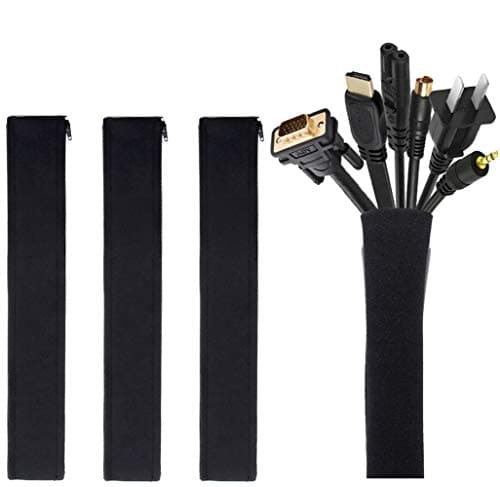
  • JOTO Cable Management Sleeve (4-pack, 19-20 in)

    JOTO Cable Management Sleeve (4-pack, 19-20 in)

    A sit-stand desk drags its entire cable loom up and down twenty times a day. Sleeving the run is the single cheapest thing that stops a cable snagging mid-travel.

    Materials No certification is published, and none would mean anything on a cable wrap. This one is on the list for what it prevents, not for what it is made of.

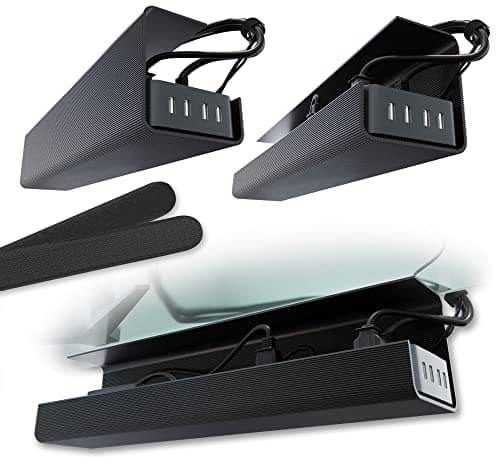
  • Scanfield No-Screw Under-Desk Cable Tray (17 in, 2-pack)

    Scanfield No-Screw Under-Desk Cable Tray (17 in, 2-pack)

    Gets the power strip and the laptop brick off the floor and onto the underside of the top, so the whole lot travels with the desk instead of tugging at it.

    Materials No certification is published and none applies to a tray. The reason it is this one: the no-screw mount means nothing gets drilled into a desktop you may have chosen precisely because it is intact and certified.

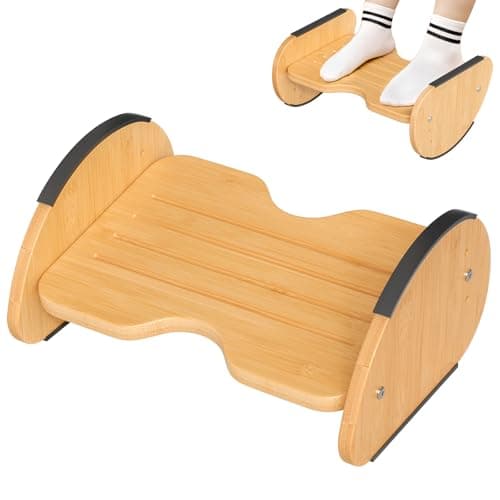
  • Amazer Bamboo 2-in-1 Reversible Rocking Footrest

    Amazer Bamboo 2-in-1 Reversible Rocking Footrest

    Rock it while you sit, flip it to a fixed angle while you stand. Movement is the entire point of alternating, and this is the cheapest way to add some.

    Materials Bamboo. Bamboo panel is normally laminated with an adhesive, and Amazer publishes no formaldehyde or emissions certificate for this model — we are not going to imply it has one.

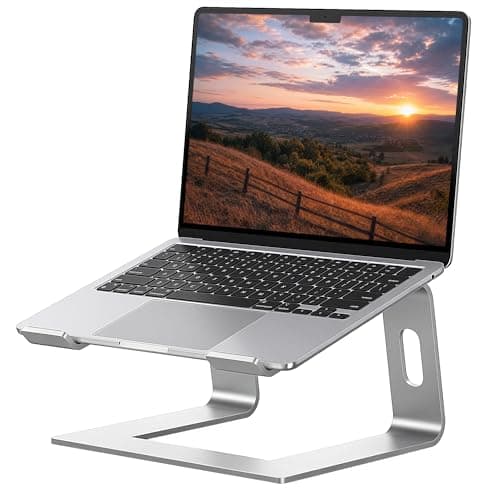
  • SOUNDANCE Aluminum Laptop Stand (10-15.6 in)

    SOUNDANCE Aluminum Laptop Stand (10-15.6 in)

    If you work off a laptop, no amount of desk height fixes a screen sitting in your lap. This lifts it toward eye level for under twenty dollars.

    Materials Solid aluminum — no composite panel, no adhesive, nothing to off-gas. That is the honest appeal of a metal accessory on a site like this, and it needs no certificate to be true.

  • Gorilla Grip Memory Foam Wrist Rest (keyboard + mouse, 2-piece)

    Gorilla Grip Memory Foam Wrist Rest (keyboard + mouse, 2-piece)

    Standing does not fix wrist extension; keeping the wrist neutral does. Two pieces, so the mouse hand gets one as well.

    Materials Memory foam under a fabric cover. No emissions or content certificate is published — memory foam is polyurethane foam, and if that is a hard line for you, skip this one rather than talk yourself into it.

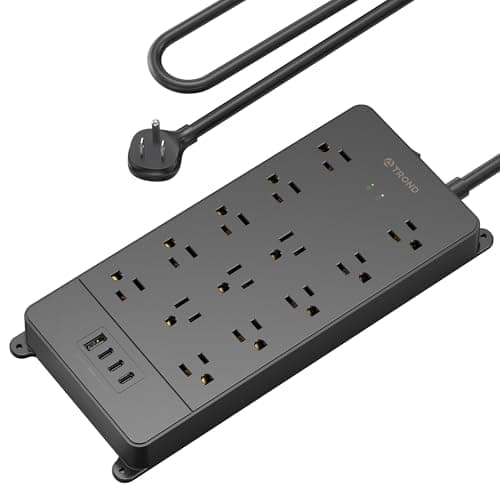
  • TROND Surge Protector Power Strip (4000 J, ETL Listed)

    TROND Surge Protector Power Strip (4000 J, ETL Listed)

    A powered desk, two monitors and a laptop brick all end up on one strip that travels with the top. Worth thirty dollars for that not to be the cheapest part of the setup.

    Materials ETL Listed — a real third-party safety listing from Intertek, and the only genuine certification in this list. You can look it up in Intertek's public directory the same way we tell you to check a GREENGUARD claim at UL SPOT.

Questions

Frequently asked

How wide should a standing desk be for two monitors?
Sixty inches is comfortable for two 27-inch screens; 71 inches is generous. A 48-inch desk fits two 24-inch monitors and essentially nothing else. Measure your screens bezel to bezel and add at least a foot.
Do I need a deeper desk for two monitors?
Yes, and it matters more than width. Thirty inches of depth lets both screens sit at arm's length; on a 24-inch desk they end up too close and you scan with your neck. Depth is the upgrade people underestimate.
Will two monitor arms make a standing desk wobble?
They can on a light single-motor frame, because two arms at the rear edge apply leverage far from the legs. A dual-motor, three-stage frame absorbs it. If your current desk shakes, work through the wobble fixes before buying a new one.
Is one dual-monitor arm better than two single arms?
Two singles are usually steadier and far more flexible, because each screen gets its own height, depth and angle. A single dual-mount bar is tidier and cheaper, and fine for two identical lightweight panels used symmetrically.
Should the two monitors be side by side or stacked?
Side by side for equal use, with the seam in front of you. Stacked, or angled with one primary, if one screen does most of the work — it keeps your neck rotating less. See dual monitor ergonomics.

Keep reading

Receipts

Sources

We do not run a testing lab, and we do not pretend to. We verify certifications in the certifying body's own registry, compile specs from manufacturer manuals, and cite health claims to recognized authorities — by name, with a link. Where we could not verify something, we say so on the page rather than quietly leaving it out. Read our full method.