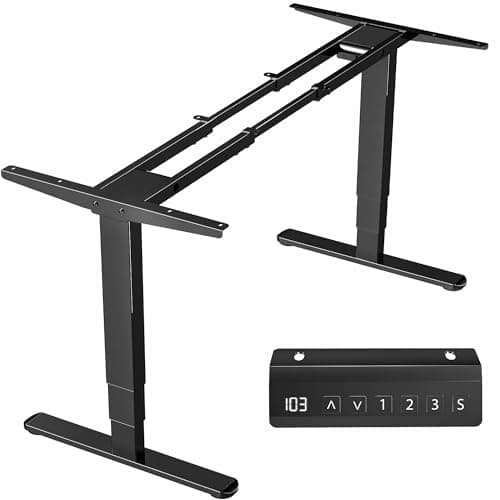
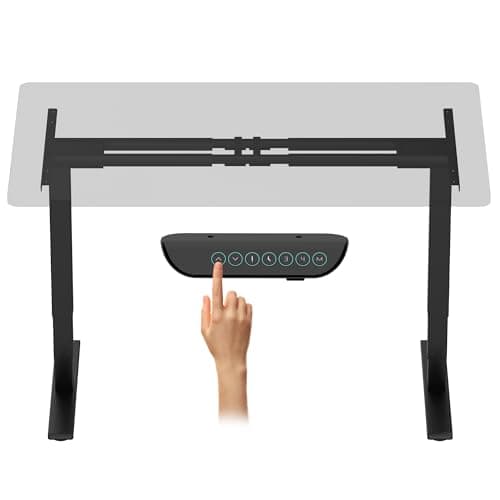
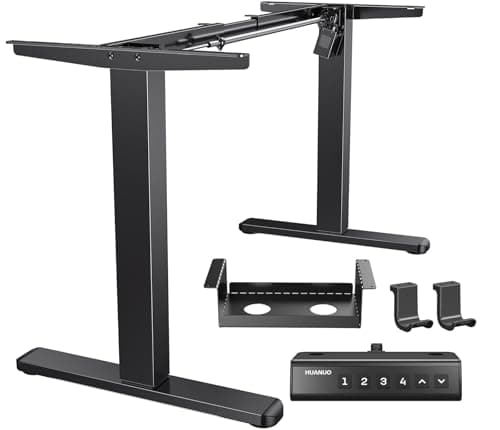
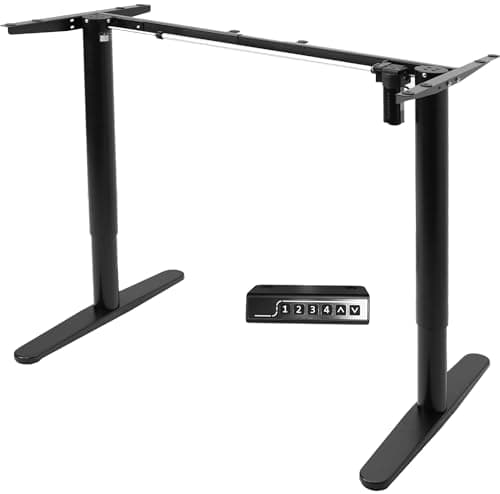
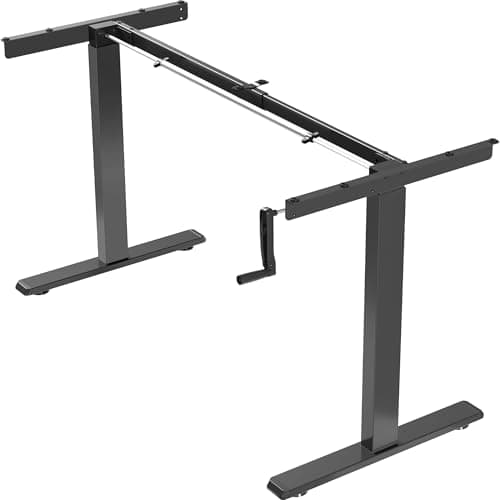
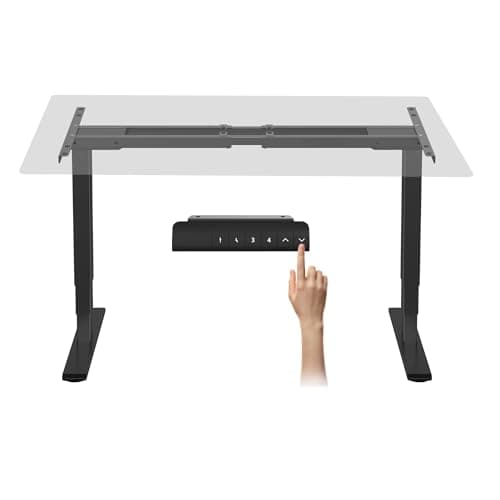
Buy the FlexiSpot E6 frame. It is the base under the electric desk we already recommend to most people, minus the laminate top that is the only part of a standing desk with a material question attached to it. Put a solid wood, bamboo or butcher-block surface on it and you own a desk with no composite core, no adhesive resin and nothing to break in. That is not a marketing angle — it is arithmetic about what a desk is made of.
Why a frame is the answer to a materials question
Almost everything written about standing-desk emissions is written about the desktop, and it should be. A sit-stand desk is a powder-coated steel frame and a wooden surface. Steel is inert. The composite core of a laminate top is bound with a formaldehyde-based resin, which is why the formaldehyde question exists at all, why the EPA regulates composite wood under TSCA Title VI, and why CARB Phase 2 limits are the number every serious desk brand quotes.
Separate the two purchases and the problem separates with them. A frame with no top is a certified-material desk waiting for a surface you choose — and solid pine, bamboo, or a butcher-block slab from a hardware store are all cheap, widely available and made of wood rather than wood fiber glued together. This is the route we would take ourselves, and it is why this page exists alongside the GREENGUARD-certified desks roundup: one page buys the certificate, this one sidesteps the need for it.
What actually separates a good frame from a bad one
Frames look identical in listings and are not. Four things decide how one behaves:
- Motor count. A dual-motor frame drives each leg independently. A single-motor frame drives both through a cross-shaft, which is slower, noisier, and more prone to racking under an unevenly loaded top. Every frame in the top half of this list is dual-motor.
- Stage count. Two-stage legs have one telescoping section, three-stage legs have two. Three stages give a wider height range and a shorter collapsed leg, so the desk goes lower for short users and higher for tall ones. Three-stage also means more overlapping steel at any given height, which is why it is stabler at standing height, not just taller.
- Span adjustment. The frame has to fit the top you have. The VIVO dual frame spans 40 to 85 inches, which is unusually wide; most frames want a 48 to 72 inch top.
- Controller. Presets are not a luxury feature. A desk without memory heights is a desk that stops being adjusted after week three, and an unadjusted sit-stand desk is just a desk.
Choosing the top — the part this page is really about
Four surfaces, in ascending order of what they cost you and descending order of how much you have to think about emissions:
- Solid hardwood or butcher block.No composite core at all. A hardware-store butcher-block counter section is the classic answer: heavy, beautiful, and it needs oiling rather than a certificate. Weight is the catch — check the frame's load rating, and this is where the E6 Max frame earns its price.
- Bamboo. A solid grass, not an MDF panel, and the material behind the non-toxic desk picks. Lighter than hardwood and usually pre-finished.
- Solid pine or fir. The cheap version of the same idea. Softer, dents more easily, and needs finishing — but a glued-panel pine top costs less than a laminate one and has no composite core.
- A certified laminate top. If you want laminate, buy one with a certificate. UPLIFT publishes that its laminate desktops are GREENGUARD Gold over an E-1 rated core and sells tops separately. That is a documented option, and it is direct-only rather than available through a live Amazon offer.
One practical warning: a glued panel is not the same as a solid board, and "solid wood" on a listing sometimes means a veneer over MDF. If the seller will not say what the core is, assume it is composite. The reading discipline is the same one we apply to mats in PFAS and PVC in anti-fatigue mats: a specific, falsifiable material claim beats a reassuring adjective every time.
Where a frame build stops making sense
Honest accounting: a frame plus a good top usually costs more than a bundled desk of the same size, not less. You are buying materials and control, not savings. The exception is the bottom of the market — the VIVO single-motor frame under a $60 pine top is genuinely the cheapest composite-free sit-stand desk that exists, and it undercuts every certified desk on the market by a wide margin.
The other case against: drilling. Most frames need pilot holes in the underside of the top. If you do not own a drill and a tape measure, or you are in a rental where a cordless drill is a problem, buy a bundled desk. Our main standing desk roundup and the budget picks both cover complete desks that arrive with the holes already there.
Manual frames: still the right answer sometimes
Two hand-crank frames are on this list on purpose. A crank frame has no motor, no controller and no electronics to fail, which means the two most common standing-desk faults — a desk that stops going up and a controller that loses its presets — cannot happen to it. It also costs a third of what an electric frame costs and needs no outlet, which matters more than it sounds in a room with one socket behind a bookcase.
The cost is friction: about twenty to thirty crank turns per transition. Every honest owner review says the same thing — you will change height less often than you promised yourself. If the whole health benefit of the desk depends on alternating, and it does, that friction is a real argument for paying for motors.
If you do pay for motors, the next question is how many, and on a frame it matters more than on a complete desk — you are choosing the base that will carry a top you picked yourself, possibly a heavy solid one. The published spans and load ratings are compared in single vs dual motor standing desks.