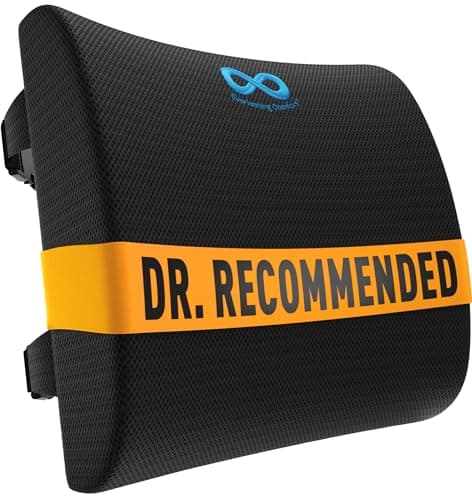
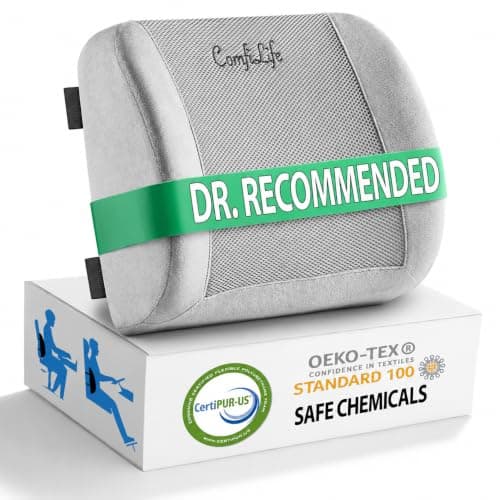
For most people with a sore lower back at a desk, the best gift is a lumbar cushion — the ComfiLife if their chair is ordinary, the deeper Everlasting Comfort if they are heavier or the chair back is far away. It is cheap, it fits any chair with a back, and it addresses the most common cause of desk-related lower-back ache: a chair that offers nothing to the curve of the spine. If you can spend more and they cannot replace their desk, a sit-stand converter is the gift that lets them alternate — which is the thing the evidence actually supports.
What a gift can and cannot do for back pain
Start with the honest part. Back pain has causes a cushion cannot reach, and if someone has persistent or severe pain — or a diagnosed condition like a herniated disc or sciatica — the useful gift is a clinician's appointment, not an object. Our herniated disc guide and sciatica seating page are written for exactly that reader and say so plainly.
For the far larger group whose back aches because of the desk — because the chair gives no lumbar support, because their feet dangle and tilt the pelvis, because they sit for eight hours without moving — a gift can change the setup, and the setup is the problem. The picks below come straight from our lumbar support, seat cushion, footrest, mats for back pain and converterrankings, re-sorted for someone buying on another person's behalf.
Match the gift to what they have said
- "My lower back aches by the afternoon." A lumbar cushion. The ComfiLife is the default — the right amount of memory foam, an adjustable strap that holds. If they are heavier, or the chair back is deep and far from their spine, the Everlasting Comfort is firmer and deeper. Both are polyurethane foam with no published certificate: unwrap them and let them air out for a few days, and say so when you hand it over.
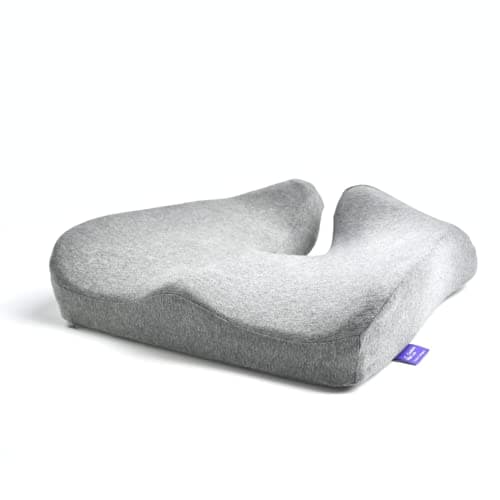
- "My tailbone / sit bones hurt." A seat cushion — but the right shape. The Cushion Lab is a dense, contoured foam still supporting at hour six; it is for general seated ache on a hard chair. A localized tailbone complaint wants a coccyx cutout instead, which our seat cushion page covers. Buy for the complaint you heard, not the picture on the box.
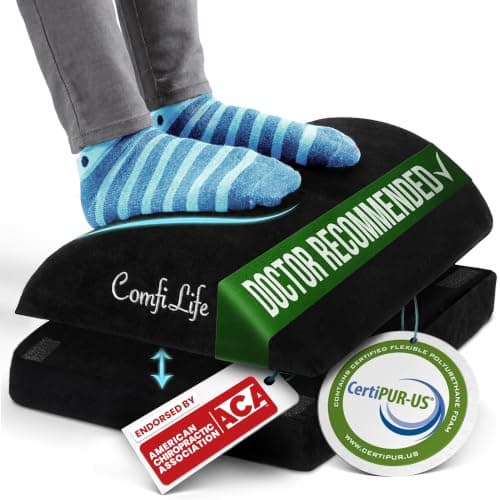
- "My feet don't reach the floor" (or you have seen them dangle).A footrest. This is the quiet cause of a lot of lower-back ache: a chair set correctly for the arms leaves shorter sitters' feet off the floor, the pelvis tilts, and the back takes the load. The ComfiLife footrest is the cheapest fix and fits under any desk.
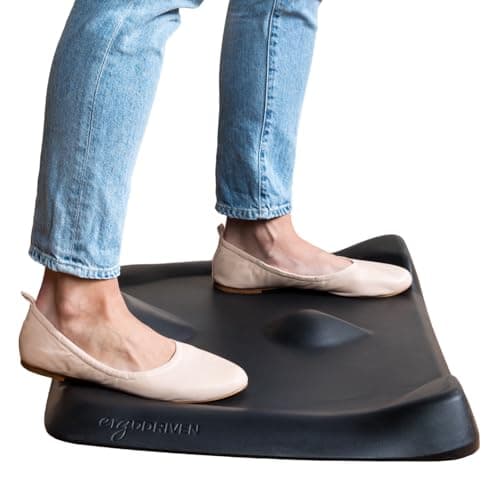
- "Standing helps, but my feet and back hurt after an hour." The Ergodriven Topo. A sculpted mat that keeps the feet moving is the difference between standing that helps and standing that just moves the ache downward. It is polyurethane rather than PVC, with a manufacturer disclosure of no PVC or PFAS — a disclosure, not a certificate, as our non-toxic mats page explains.
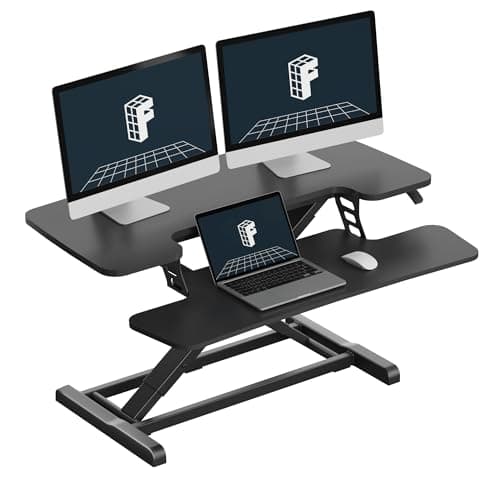
- "I'd stand more if I could." The FlexiSpot converter. A stable riser that sits on the desk they already own, so they can alternate between sitting and standing without replacing furniture — and alternating, not standing, is what the evidence supports (see our standing desks and back pain guide). A converter is steel and laminate rather than a composite-wood desktop, so the formaldehyde question is far smaller. Check: that their desk has the depth for it and can take the weight, and that they do not already own a height-adjustable desk.
What not to buy someone with back pain
- A posture corrector, brace or strap. A medical claim on a box is not a treatment, and holding the shoulders back with elastic does nothing about the chair that caused the slump.
- An inversion table or a "spinal decompression" device. Not a desk product, not something to buy for someone whose condition you do not know.
- A chair — as a surprise. A properly fitted ergonomic chair is the biggest single upgrade for a bad back, and it is also the item most likely to fit wrong. If the budget allows, our no-budget guide explains how to give the chair as a shared decision rather than a box.
- A standing desk with the assumption they will stand all day. All-day standing is its own back problem. The gift is the ability to alternate.
The gift that is not a product
Half an hour with our height calculator, ergonomic self-assessment and posture guide — setting chair height, desk height and monitor height to their body — is worth more than anything on this page, and it is what makes the cushion or the footrest land. Give the object and the half hour together.
The short answer
#ad · Live prices from the Amazon Product API, as of Sep 14, 2026. Where we have no verified live price, we show none — we would rather leave a gap than print a number that has rotted.
In detail
Most chairs that lack real lumbar support
Memory foam coreAdjustable strapMesh coverFits most office chairs
Certification & materials
No CertiPUR-US or emissions certification is published for this cushion. Memory foam is a polyurethane product and new foam can carry an odor for the first days — unwrap it and let it air out before use.
The default: the right amount of memory foam, an adjustable strap that actually holds, and a price that makes it a low-risk fix.
- Lumbar support
- 8
- Fit & retention
- 8
- Materials & certs
- 5
- Build
- 7
- Value
- 9
Pros
- +The curve is deep enough to actually restore a lumbar arch, not just pad the chair back
- +The two-strap system stops it sliding down every time you stand, which is where cheap cushions fail
- +Cheap enough to test the idea before spending on a new chair
Cons
- −No foam certification published
- −A cushion cannot fix a chair whose back is the wrong height for you
Don't buy this if…
…your chair has no back worth strapping to. A cushion works with a chair, not instead of one.
All-day sitting where cheap cushions bottom out
Contoured high-density foamPatented profileNon-slip baseWashable cover
Certification & materials
Polyurethane foam with a fabric cover. Cushion Lab publishes no CertiPUR-US or GREENGUARD certificate that we could verify, so we are treating the foam as undocumented. Give it a few days out of the wrap before daily use.
The one that keeps its shape: a dense, contoured foam that is still supporting you at hour six.
- Pressure relief
- 9
- Durability
- 9
- Materials & certs
- 6
- Fit on a chair
- 8
- Value
- 7
Pros
- +Density is the whole game with seat cushions and this one does not compress into a pancake
- +The contour actually offloads the sit bones rather than just adding height
- +Cover comes off and washes, which matters more than people expect
Cons
- −Roughly double the price of the mainstream memory-foam cushions
- −Firm — people expecting plush often send it back in week one
Don't buy this if…
…you want softness. This supports; it does not sink, and that is a deliberate design choice you may not want.
Most standing-desk users
Sculpted terrainPolyurethane foamNot-flat designBeveled edges
Certification & materials
Polyurethane (PU) foam, not PVC — PU avoids the plasticizers and chlorine chemistry PVC is criticized for. Ergodriven markets it as non-toxic; no formal third-party certificate is published, but the PU material is the lower-concern choice for a mat.
The one that's actually designed for a desk — sculpted terrain that keeps your feet moving, not a flat kitchen pad.
- Cushioning
- 8
- Edge & safety
- 8
- Materials
- 9
- Durability
- 8
- Value
- 7
Pros
- +The raised contours prompt small posture changes, which is the actual mechanism behind reduced standing fatigue
- +Firm PU foam holds its shape instead of bottoming out like cheap gel
- +Purpose-built for a desk footprint rather than a kitchen
Cons
- −The sculpted surface is love-it-or-hate-it — some people want a plain flat cushion
- −Costs more than a basic rectangular mat
Don't buy this if…
…you want a large flat surface to shift a chair around on. The Topo's whole point is the terrain, and a flat mat is better for a roll-around setup.
Renters and anyone who can't replace their desk
36 in wideSits on existing deskKeyboard trayGas-spring lift
Certification & materials
A converter is a steel-and-laminate riser, not a composite-wood desktop, so the formaldehyde question is far smaller here. No formal emissions certificate is published; the material risk is inherently low.
The convert-your-existing-desk route: a stable riser that sits on the desk you already own.
- Stability
- 7
- Adjustment
- 7
- Materials & certs
- 7
- Build & motor
- 7
- Value
- 8
Pros
- +Turns any desk into a sit-stand setup for a fraction of a full electric desk
- +Nothing to disassemble — it lifts off if you move
Cons
- −Eats desk depth and raises the monitor and keyboard together, which can be too high or too low for some heights
- −Less stable at full height than a dedicated electric desk
Don't buy this if…
…you have room and budget for a real electric desk — a converter is the compromise, not the ideal, and a full desk is steadier and roomier.
Heavier users and deep-backed chairs
Dense memory foamAdjustable strapBreathable coverDeeper profile
Certification & materials
No CertiPUR-US or third-party emissions certification published. Standard polyurethane memory foam — air it out before first use.
The firmer, deeper cushion — the one to pick if the ComfiLife compresses flat under your weight.
- Lumbar support
- 8
- Fit & retention
- 7
- Materials & certs
- 5
- Build
- 8
- Value
- 8
Pros
- +Denser foam holds its shape under sustained pressure instead of pancaking by month three
- +The deeper profile fills the gap in chairs with a very flat or very reclined back
Cons
- −Too deep for shallow chairs — it can push you forward off the seat
- −No foam certification published
Don't buy this if…
…your chair back is already curved. Adding a deep cushion to a contoured back overshoots and creates a new problem.
How to choose a gift for someone with back pain
Buy for the setup, not the symptom
Cushions, footrests, mats and converters change how they sit and stand. Braces and gadgets with medical claims do not.
Know whether the pain is seated or standing
Seated ache wants lumbar support, a seat cushion or a footrest. Standing ache wants a sculpted mat. Both want the ability to switch.
Deep chair or heavier person: go firmer and deeper
A slim cushion disappears against a deep chair back. The Everlasting Comfort is the deeper option for that case.
Air foam out before it is used daily
None of the cushions here publish a foam certificate. Unwrap and let them sit for a few days — consider giving them early.
If the pain is persistent or diagnosed, the gift is an appointment
This page is general information, not medical advice. A clinician or physical therapist should come before a cushion for anyone with severe or ongoing pain.
How we picked
We compiled specs from manufacturer manuals, verified every certification claim in the certifying body's own registry (UL SPOT for GREENGUARD, BIFMA, CARB), did the cost-to-own math, and read the aggregated owner reviews, then scored each product against a published rubric. The scores are judgments from documented research — they are not measurements we took, because we do not have a lab and we are not going to pretend we do.
Not medical advice
This page is general information, not medical advice, and does not replace a clinician. If you have persistent or severe pain — or a specific condition like a herniated disc or sciatica — talk to a doctor or physical therapist before changing how you work.
Questions
What is a good gift for someone with lower back pain who works at a desk?+
A lumbar cushion is the safest and cheapest — it fits any chair with a back and addresses the most common cause, a chair with no support for the curve of the spine. A sit-stand converter is the higher-impact gift if they cannot replace their desk, because it lets them alternate.
Is a standing desk a good gift for back pain?+
The ability to alternate between sitting and standing is what the evidence supports; standing all day is its own back problem. A converter on the desk they already own gives them that without a furniture decision. A full desk needs their room and is better given as a shared decision.
Should I buy a posture corrector for someone with back pain?+
No. A brace or strap does nothing about the chair, desk or screen height that caused the posture, and it carries a medical claim we would not make. Change the setup instead.
Which cushion — lumbar or seat?+
Lumbar for a lower-back ache and a chair with a flat back; seat cushion for sit-bone or tailbone discomfort on a hard seat. If they have said "tailbone", buy a coccyx cutout rather than a general contoured cushion.
What if their back pain is serious?+
Then the gift is a clinician's appointment, not an object. Persistent, severe or diagnosed pain — a herniated disc, sciatica — should be assessed before anyone changes how they work. This page is general information, not medical advice.
Receipts
We do not run a testing lab, and we do not pretend to. We verify certifications in the certifying body's own registry, compile specs from manufacturer manuals, and cite health claims to recognized authorities — by name, with a link. Where we could not verify something, we say so on the page rather than quietly leaving it out. Read our full method.