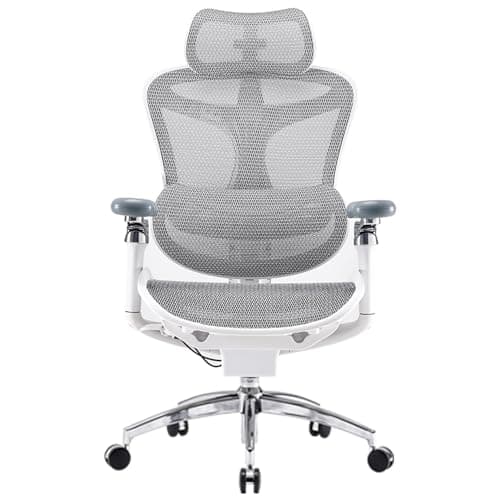
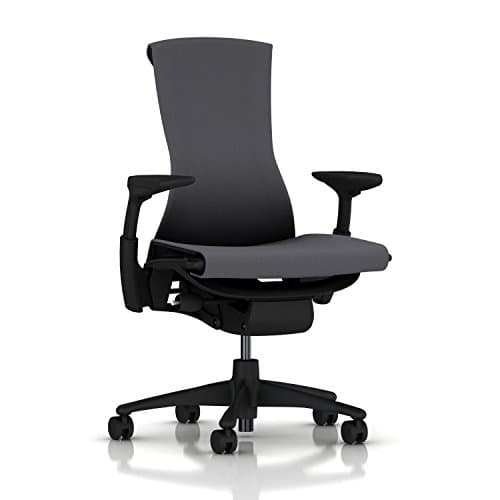
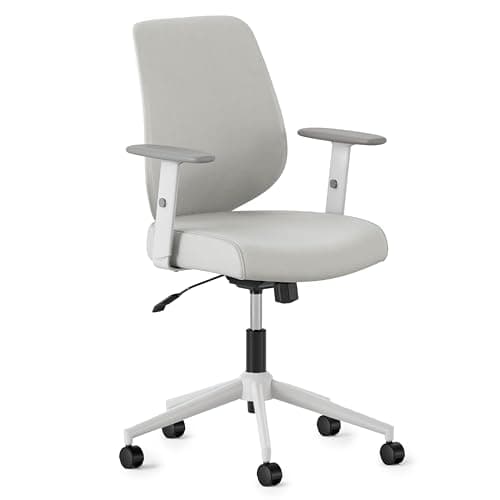
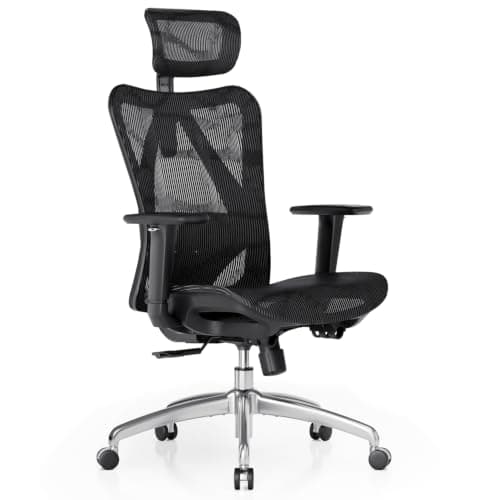
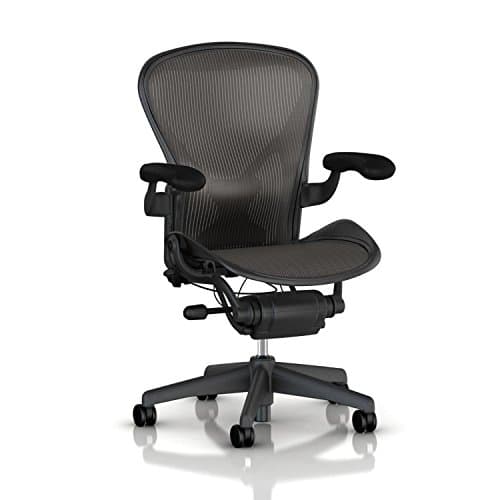
If you came for a Leap and left on price, the Classic Aeron is the pick: a genuine Herman Miller suspension chair, the pre-Remastered generation, and the cheapest live new-condition Aeron listing we have found — a different mechanism to Steelcase's, at a price a Leap no longer sits anywhere near. If what you wanted was Steelcase's adjustability rather than its badge, buy the SIHOO Doro C300 Pro: it is the one chair in its family whose listing names seat-depth adjustment, and it has six-way arms. The budget pick is the SIHOO M57 — real adjustable lumbar and 3D arms for a fraction of anything else here. None of these is a Leap, and this page does not pretend otherwise. Steelcase is a good company that publishes more than most; the question is which part of it you were paying for.
One note before the picks, because it is the reason this page is shaped the way it is: the live prices beside each chair are read from the Amazon Creators API and stamped with the date they were read. We do not type prices into the page. That matters more here than on most roundups, because Steelcase's own Amazon listings move by hundreds of dollars between checks — the Leap listing we rank elsewhere on this site nearly doubled between two price runs a week apart. Judge the gap on the day you buy, not on a number someone wrote into an article.
What Steelcase is known for, in three parts
"A Steelcase alternative" is an unanswerable request until you split the original into the things it is actually bought for, because no single cheaper chair replaces all three. This is the same method we used on the Herman Miller alternatives page, and it lands somewhere completely different here.
The mechanism.Steelcase's signature is a back that changes shape rather than a back that pivots. On the Leap that is LiveBack plus the Natural Glide System: the backrest flexes along its length as you move, and the seat slides forward as you recline so your eyes stay near the screen. On the Series 1 and Series 2 it is LiveBack with a height-adjustable lumbar on top. On the Gesture it is the arms — they move through a full 360 degrees, which is a separate problem being solved, and if your complaint is shoulders and wrists rather than lower back, that is the Steelcase you were actually looking at.
The paperwork. This is the strength people underrate and the one this site cares most about. Steelcase publishes a dated product-compliance certificate for Series 1 seating to ANSI/BIFMA X5.1 and X5.11 at 400 lb, and a cut sheet that prints BIFMA LEVEL 3, CAL 117, SCS Indoor Advantage Gold (Furniture) and a published Environmental Product Declaration in plain, readable text. Very little else in this category does that at all — and note that even Steelcase does not do it evenly: its own Leap page names no emissions certificate in the body, offering a CarbonNeutral product option, which is a carbon claim rather than an indoor-air one. We wrote that up in full on our Series 1 review.
The term of years. Twelve, with 24/7 parts and labor, against the three to five years that is normal below it. That is the number that quietly justifies the price: a chair at a third of the money with a three-year warranty is not a third of the chair, it is a quarter of the service life on paper.
Who each alternative is for
- Herman Miller Classic Aeron, size B — buy it to replace the mechanism with a better one of a different kind: a suspension seat and back with no foam to flatten. Buy it knowing it is the Classic generation, with PostureFit rather than PostureFit SL.
- SIHOO Doro C300 Pro — buy it to replace the adjustability at roughly a quarter of the money, accepting that none of it is documented. It is the Doro whose listing names seat-depth adjustment, which is the fit variable almost nothing in its price band moves.
- Herman Miller Embody — the cross-shop if the chair you were actually pricing was a Gesture. It is the only non-Steelcase chair here that matches the 12-year term, and Herman Miller publishes its capacity, seat height and seat depth ranges in its own brochure.
- Branch Daily — buy it to replace the printed emissions line at the lowest price anyone prints one, accepting four adjustment points and a fixed lumbar rest.
- SIHOO M57 (budget pick) — the cheapest chair we rank that still does the job: adjustable lumbar, 3D arms, mesh back, tilt lock.
Which strength you can actually buy cheaper
Adjustability: easily, and this is the surprise
A Leap gives you four-way arms and a lumbar with its own firmness dial. The Doro C300 Pro gives you six-way arms and seat-depth adjustment, and the Pro V2 above it gives you eight-way arms, a 135-degree recline and a deployable footrest. On a count of mechanisms the cheap chairs win outright, and it is not close. What they do not give you is a back that changes shape under you — a dynamic lumbar pad is not LiveBack — or anything you can verify. SIHOO markets the Doro line as "environmentally certified by BIFMA and TUV" with no certificate number, no standard number and no registry entry, and we found no SIHOO model in a LEVEL registry. If you want to understand why that wording means less than it sounds, we take it apart on what BIFMA certification actually covers.
The certificate: only from the makers that publish
Branch prints "Certified Greenguard Gold for low VOC emissions" on the Daily Chair's own page, which makes it the cheapest chair we rank with an emissions line on it at all. Herman Miller names BIFMA Level 3 and SCS Indoor Advantage Gold for the Aeron and the Embody in its own documents. Everything else on this page is undocumented, and we are not going to read a certificate into an absence. Note the trap in this category, because it catches careful shoppers: SCS Indoor Advantage Gold and GREENGUARD Gold are the same chamber method (ANSI/BIFMA M7.1 / X7.1) issued by two different certifiers with two different registries. A chair holding the first will not appear at UL SPOT, and that absence is not a red flag — check the certifier that actually issued it.
The warranty: almost nowhere
The hard one. Twelve years with 24/7 parts and labor is a contract-furniture term, and in our registry only Herman Miller matches the length. Branch publishes five years on the Daily, SIHOO three. There is also a wrinkle on both premium brands that we flag every time: every Herman Miller and Steelcase listing on Amazon is third-party sold, and both makers exclude products bought from unauthorized resellers from their warranties. If the twelve years is part of why you are buying, confirm who stands behind it before you pay, not after.
When the answer is still Steelcase
Three cases, stated plainly, because a page like this is only useful if it also tells you when not to switch.
If you need the document. No chair below the Series 1 publishes a dated compliance certificate and a cut sheet with a named indoor-air certificate on it. If that is your filter — and on this site it often is — then the honest advice is to buy the Series 1 and stop reading. It is the most readable specification sheet in the category. Leap versus Series 1 is the comparison that decides between the two of them, and it usually lands on the cheaper chair.
If your posture changes all day. LiveBack and the Natural Glide System are doing something no mechanism on this page replicates. A recline lock is not a glide; a lumbar pad is not a flexing back. If you shift position every twenty minutes through a long day, that is the mechanism you were buying.
If it was the Gesture, for the arms. Arms that move through 360 degrees answer a specific complaint — working across a laptop, a phone and a tablet with your elbows unsupported — and the Embody, which is the cross-shop at that money, solves pressure instead. Different chair, different problem.
And if the budget rather than the brand is the constraint, skip the brand question entirely: the best office chairs under $500 is the band page for this decision, and budget office chairs is the tier below it. If what you are really trying to fix is a long sitting day rather than a chair, read chairs for long hours first — and consider that the money may be better spent on the desk. Our standing desks under $300 page covers the band where a sit-stand desk stops being a luxury, which is a cheaper fix for all-day sitting than any chair on this page.
What we are not telling you
Three limits on this page, on the record. We have not sat in these chairs side by side: every judgment here comes from published specifications, maker documents, certification registries and aggregated owner reviews, which is what our methodology page says in those words. We cannot verify a Classic-generation Aeron certificate — Herman Miller publishes its BIFMA Level 3 and SCS lines for the current Aeron it sells, this listing says Classic, and we do not carry a document across a generation. And fit is the failure mode at every price in this category: a chair that does not match your femur length is a bad chair however good its paperwork, which is why our short-sitter page exists at all.
Before you buy
How to replace a chair you were not going to buy anyway
1. Name the strength you came for
Mechanism, document or term of years. Write it down before you shop, because every alternative on this page trades one of the three away, and the cheap route is different for each.
2. Count mechanisms, then ask what moves
Six-way arms beat four-way arms on a spec sheet. A back that changes shape as you move is not on the spec sheet at all. Decide which of those two you are buying before you compare numbers.
3. Check whether the certificate is named or implied
"SCS Indoor Advantage Gold" and "GREENGUARD Gold" are certificates with registries behind them. "Certified by BIFMA and TUV" with no number is a badge. The chairs here split cleanly into those two groups.
4. Compare warranty length, not warranty wording
Twelve years against three is the clearest honest proxy for expected service life in this category, and it is printed on every listing. Then confirm the seller, because both premium makers exclude unauthorized resellers.
5. Measure your femur before you spend premium money
Seat depth decides whether a chair fits you, and most chairs in this market publish one fixed figure. Sit back, leave two to three fingers between the seat edge and the back of your knee, and buy the chair whose published depth allows that.
6. Never buy a premium chair you cannot return
Fit is the failure mode at every price. A wrong-size chair with no returns window is worse than a cheaper chair that fits, and that is true in both directions on this page.