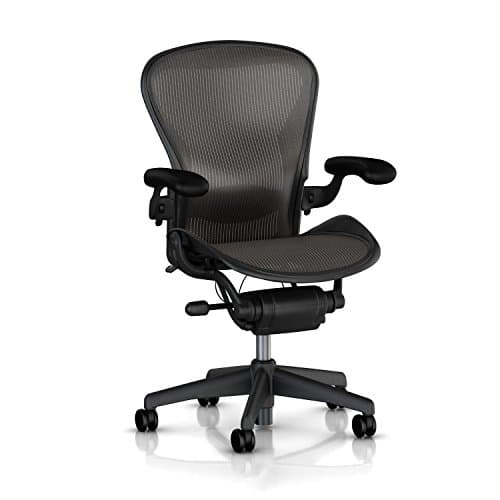
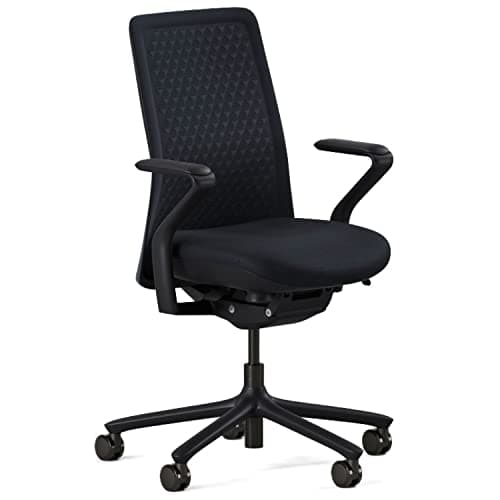
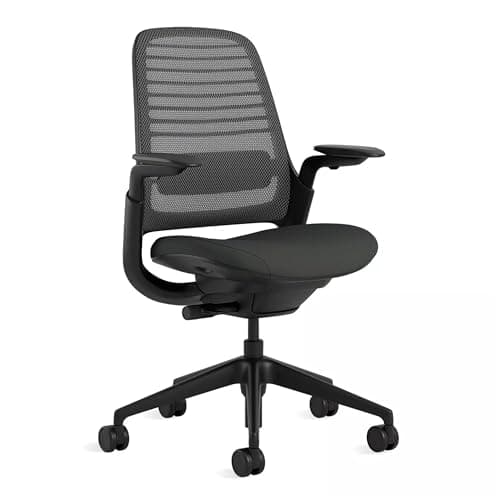
Buy the Steelcase Series 1. Its flexing LiveBack moves with your spine instead of forcing one posture, and it comes from a maker whose entire business is documented, durability-tested ergonomic furniture. The Herman Miller Aeron is the more repairable, longer-warranty alternative if you can stretch to it, and the Branch Verve is the middle option here with a height-adjustable lumbar rest and an emissions certificate Branch actually prints.
We are enthusiasts, not clinicians, and we don't run a lab — nothing on this page is medical advice or a measurement we took. If your pain is persistent or severe, talk to a professional. What we can do is explain which chair features actually support a spine, and rank the seats that have them.
Lumbar support has to reach your curve
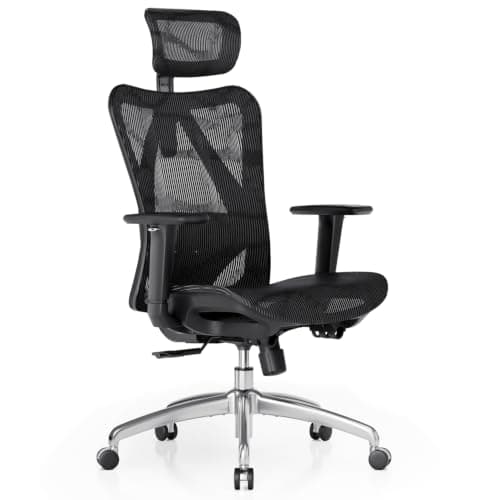
Back pain at a desk is very often the lower back losing its inward curve and rounding into the seat. The fix is support that pushes into that curve — and it has to be adjustable, because a fixed bump set for the average spine will miss yours. The Series 1 and the Verve both let you set lumbar height; the Aeron's PostureFit SL supports the sacrum and lower back together. The SIHOO M57 is the honest budget option here — it has an adjustable lumbar and 3D arms, which is unusual at its price — but SIHOO publishes no emissions certificate and no BIFMA result we could verify, which is why it ranks last.
Seat-edge pressure is the overlooked culprit
A seat that is too deep presses its front edge into the back of your knees, and you compensate by sliding forward — straight off the lumbar support you paid for. Set seat depth so a couple of fingers fit between the seat edge and your calf, and use a chair with a waterfall front edge to keep pressure off the underside of your thighs. This one adjustment resolves more chair-hurts-my-back complaints than any lumbar setting. If a specific pain problem is not what is driving the search, our best ergonomic office chairs roundup ranks the same seats on general fit, adjustment range and published certification.
Adjustability, and the certifications behind it
The chairs that help a sore back are the ones you can tune: seat height, seat depth, lumbar and arm height at minimum. It is not a coincidence that those same chairs tend to carry real certification. A BIFMA-tested frame is one that will hold its adjustment and its support for years rather than sagging into the exact slump you are trying to avoid — durability and back support are the same story over time.
Two readers need a narrower answer than this page gives. If your lower back started hurting during pregnancy, the adjustment that matters most is forward seat tilt rather than lumbar firmness, and we set out why in office chairs for pregnancy. And if the chair has begun dropping under you, no amount of lumbar support will help until the cylinder is dealt with — see why your office chair keeps sinking.
The chair is half of it — keep moving
Every credible source on desk-related back pain says the same thing: the best posture is the next one. A supportive chair reduces the load while you sit, but sitting still for hours is itself part of the problem, so alternate with standing. Read whether it actually helps in our standing desks and back pain guide, and if you want low emissions alongside support, see our certified chairs. If the ache sits in the hip rather than the lumbar spine, the adjustment that matters changes from lumbar height to seat depth and seat angle — that is a different page, and it is office chairs for hip pain.
Setting up a chair to protect your back
Seat depth before anything else
Sit all the way back so the lumbar meets your spine, then check the gap behind your knees: aim for two or three fingers between the seat edge and your calf. Too deep and you slide forward off the support; too shallow and your thighs are unsupported. A sliding seat pan, on the Series 1 or the Branch, is what lets you get this right for your leg length. Sliding forward is also how a back complaint becomes a tailbone complaint, because the pelvis rotates back as you slump — if the sore spot is the bone at the very base of your spine rather than the lumbar curve, that is a different page: chairs for tailbone pain.
Armrests take load off your spine
Supported forearms mean your shoulders and upper back are not holding the weight of your arms all day. Set armrests so your shoulders relax and your elbows sit near a right angle without hunching or reaching. Height-adjustable arms are the feature to insist on for a painful back; fixed arms that sit too high quietly keep your shoulders raised for hours — the same mechanism that turns into a neck complaint, which we deal with in chairs for neck pain.
Mesh vs foam for a sore back
Neither is inherently better for pain — support geometry matters more than the surface. Mesh stays cool and distributes weight evenly across a suspension; a firm, well-shaped foam seat can be equally supportive and feels more cushioned at first but softens over the years. Prioritize the chair with the lumbar and depth adjustment you can dial in, then pick the surface you prefer.
Why alternating sit and stand matters most
The single most useful change for a desk-bound back is not a setting — it is getting up. A supportive chair paired with a standing desk lets you switch positions through the day, which loads your spine differently and breaks the long static holds that stiffen it. The chair is the support; the movement is the medicine, and no chair replaces it.