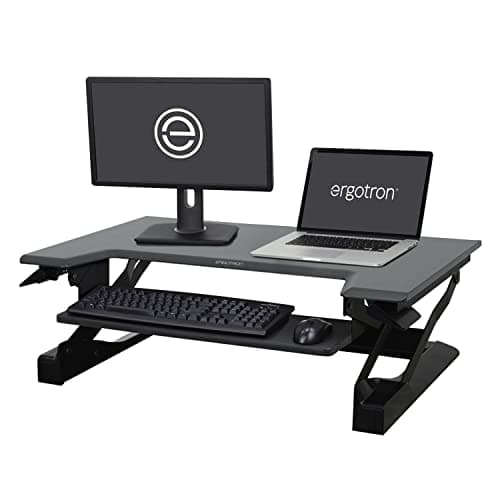
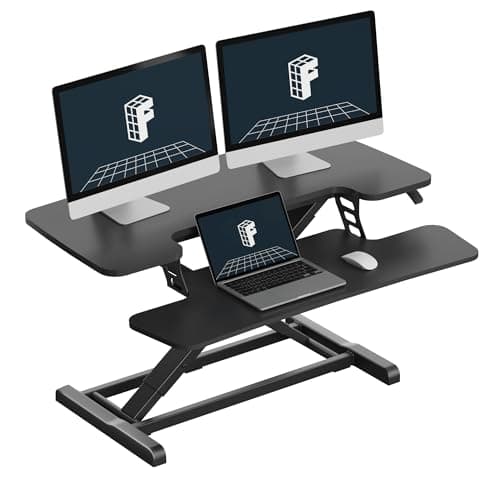
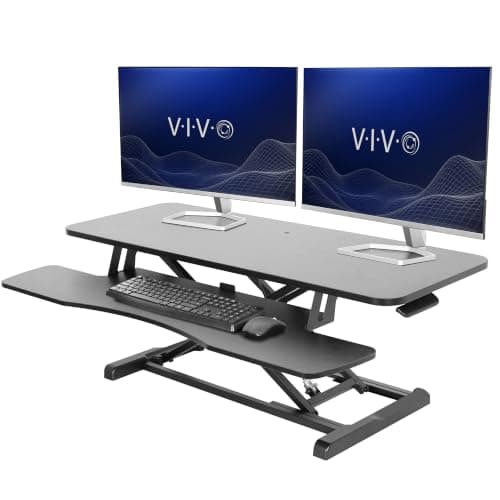
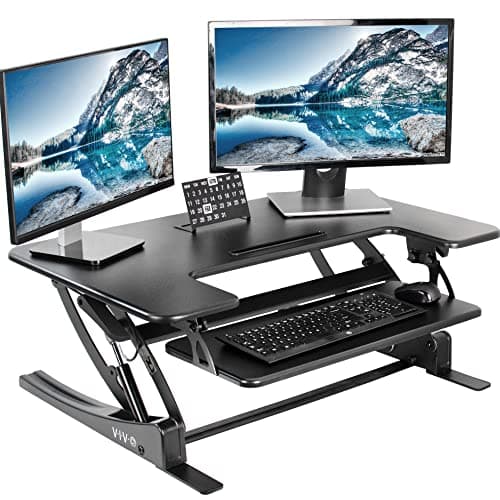
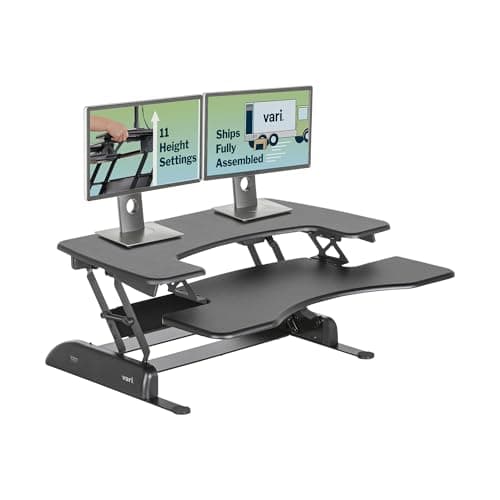
Buy the VariDesk Pro Plus 36. It arrives assembled, the spring lift is smooth enough that you will use it several times a day, and Vari's own published certification table lists it with ANSI/BIFMA certification — which for a device holding two monitors above your lap is a more meaningful credential than it sounds. If you need to carry serious screen weight, the Ergotron WorkFit-T is the better machine and costs like it.
Who a converter is actually for
Three groups, and if you are not in one of them you should buy a desk instead:
- Renters and people in shared offices who cannot remove or drill the desk they have.
- People with a desk they love — an heirloom, a solid-wood slab, something with a shape a frame will not fit.
- People testing the idea who do not yet know whether they will stand, and want a reversible experiment.
Everyone else is better served by a real sit-stand desk, which is steadier, does not steal desk depth, and costs less per square inch of working surface. We go through that trade in detail in standing desk vs converter.
The three lift mechanisms, and which one you want
Converters differ far more in how they move than in what they are made of, and the mechanism decides whether you use the thing.
- Spring-assisted vertical (VariDesk): rises straight up on a Z-frame with spring help. Predictable, keeps its footprint, and the surface stays over the same patch of desk at every height. The safest default.
- Constant-force / gas (Ergotron, VIVO): moves with one hand and stops anywhere you let go. The nicest to use and generally the highest capacity, but the mechanism costs money.
- Pneumatic arc (X-Elite): swings up in an arc, which brings the surface toward you as it rises. Simple and cheap, but you need standing room behind you and the working position shifts as you change height.
Two tiers or one surface?
A two-tier converter puts the monitor on the upper deck and the keyboard on a lower tray. That is the ergonomically correct arrangement: screen at eye level, hands at elbow level, which are not the same height and never were. A single-surface converter is simpler and better for laptop work and writing, but it forces the screen and the keyboard to share a height, and something has to be wrong.
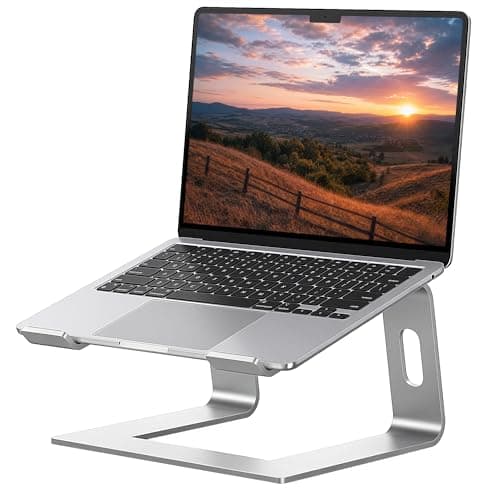
Unless you work mainly on a laptop, buy the two-tier version. If you already own a single-tier riser, a keyboard tray underneath the host desk can restore the split for very little money.
The cost nobody quotes: desk depth
A converter sits on your desk, so its own depth comes straight out of your usable surface. A typical 36-inch converter is about 24 inches deep, which on a 30-inch desk leaves you six inches of real estate behind it and nothing in front. Measure your desk depth before you buy anything, and if you are on a 24-inch-deep desk, treat the deeper converters as unavailable regardless of how good they are.
The related failure is monitor distance. Push a screen back on a converter and you run out of deck; leave it forward and it is closer to your eyes than it should be. This is the single most common reason converter users end up with eye strain, and the fix is a monitor arm clamped to the host desk rather than a screen sitting on the converter deck.
Stability: the honest comparison
No converter is as steady as a decent sit-stand desk, because a converter is a stack. You have the host desk's own flex, plus the converter's mechanism, plus the height of the load above both. The good ones manage this well enough that you stop noticing; the cheap arc-lift ones bounce when you type hard at full height.
Two things help more than the brand does. First, put the converter over a leg or a frame rail rather than in the unsupported middle of a wide desk. Second, if the host desk itself wobbles, fix that before blaming the converter — the fixes in our wobble guide apply just as well to a fixed desk.
Materials, briefly and honestly
Converter decks are laminate over composite, exactly like desktops, and almost none of them publish an emissions certificate — including the ANSI/BIFMA-certified VariDesk, whose certification is structural rather than about emissions. That distinction matters and we will not blur it. Read what BIFMA covers if you want the detail. On the plus side, a converter deck is a much smaller piece of composite wood than a full desktop, so it is a smaller version of the same question.
How to buy a sit-stand converter
Measure your desk depth first
The converter's depth comes out of your desk. Under 26 inches of desk depth, stick to the compact models; at 30 inches you can take almost anything.
Count your monitors honestly
Two monitors on a converter needs real capacity and a wide deck. A cheap riser rated "dual-monitor" with two 27-inch screens on it is how you learn what a bouncy keyboard deck feels like. If that is your setup, we go through it properly in the best converters for two monitors, including the cheaper answer of putting the screens on an arm instead.
Pick two tiers unless you are laptop-only
Screen at eye level and hands at elbow level are different heights. A split-tier converter is the only one that respects that.
Check the standing height it reaches
A converter adds its travel to your existing desk height. If your desk is 29 inches and the converter lifts 16, you top out at 45 — which is short for anyone over about six feet. Get your target from the height calculator and check the math before ordering.
Prefer a lift you can work one-handed
Two-handed squeeze bars mean you put your coffee down every time. It sounds trivial; it is the difference between four height changes a day and one.
Plan the cables for a surface that moves
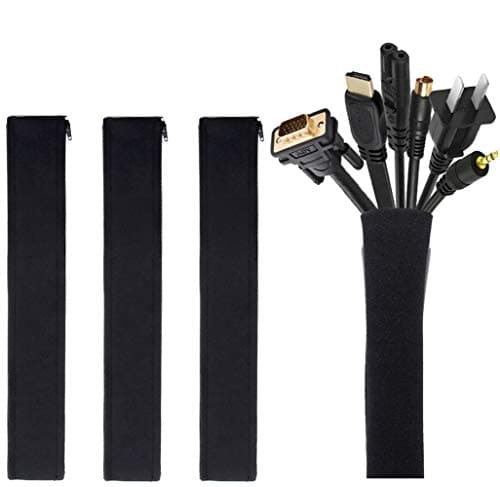
Everything on the converter travels 16 inches several times a day. Give it slack, bundle it, and route it off the back — see cable management.