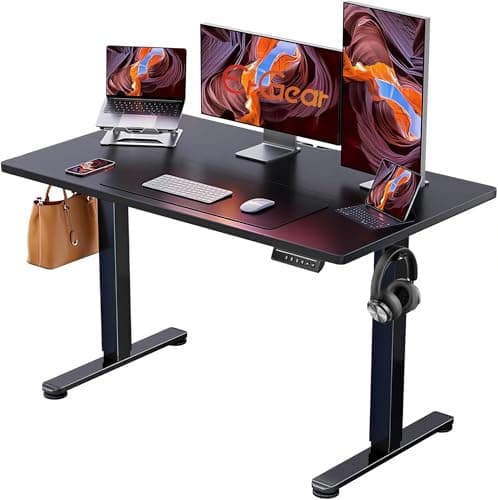
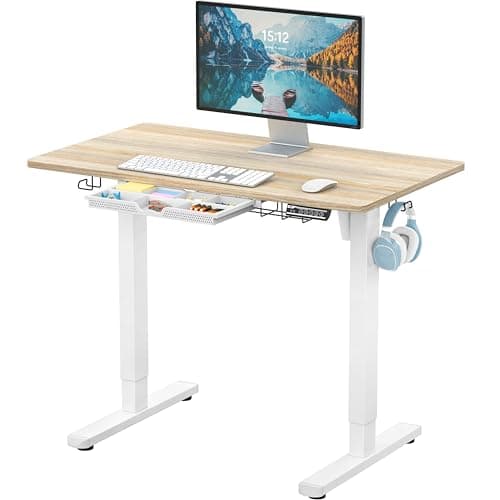
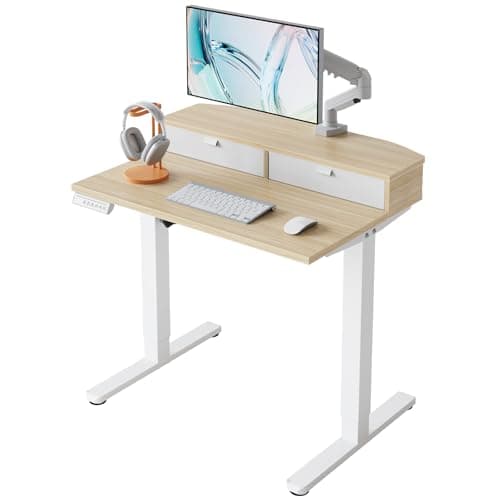
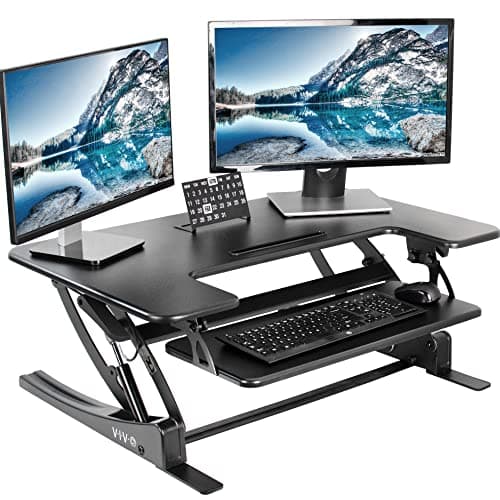
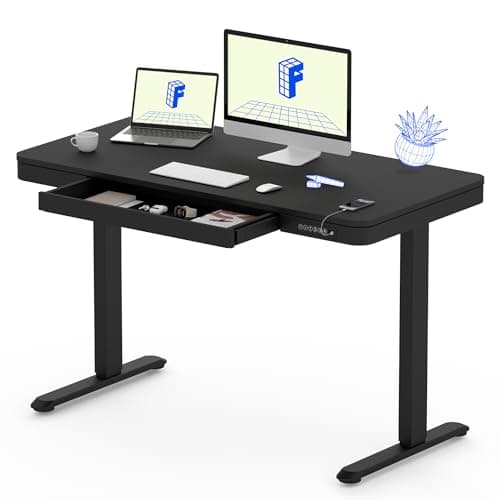
Buy the FlexiSpot Comhar. In a small room the desk has to be one object rather than a frame-plus-slab project, and the Comhar is a genuine all-in-one at 48 inches with a drawer and a built-in keypad. It is the compact desk that feels finished. Below it we go smaller in steps — 40 inches, then 32 — and finish with the converter option for rooms where the desk is not yours to replace.
Measure the standing footprint, not the desktop
The mistake everyone makes is measuring the top. What a standing desk actually needs is the topplus a place for you to stand, plus somewhere for the chair to go while you are standing. A 48-inch desk in a 7-by-8-foot room works fine until you realize the chair has nowhere to live for four hours a day. Plan for that before you plan for width.
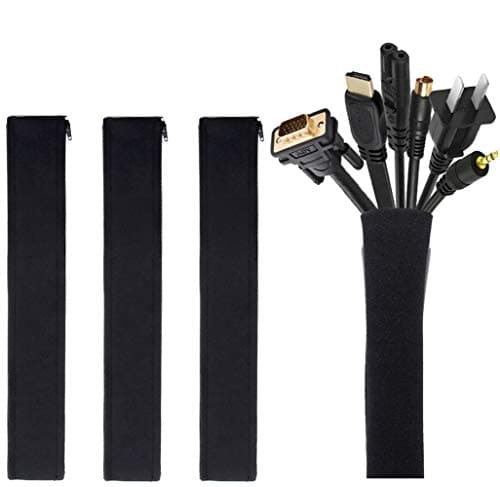
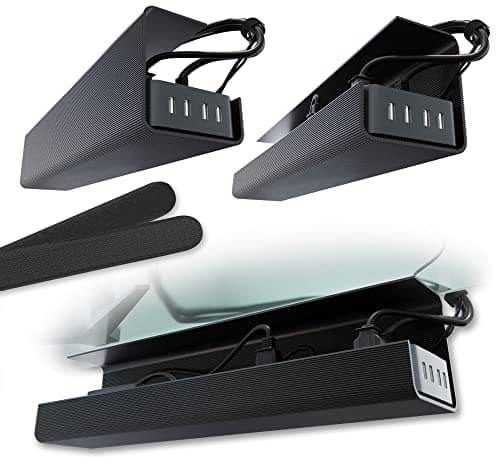
The other invisible dimension is the cable drop. A desk that travels needs slack, and slack has to go somewhere — in a small room it usually goes across a walkway. That is a genuine trip hazard rather than a tidiness preference, and it is worth solving on day one with a tray and a sleeve. Our cable management guide covers the traveling-versus-fixed principle that makes this simple.
The width ladder
- 48 inches: a full working desk. Monitor, keyboard, notebook, coffee. This is the size to buy if you can.
- 40 inches: a single monitor and a keyboard, comfortably. A second screen is possible only if you go vertical with an arm.
- 32 inches: a laptop desk. Genuinely. It fits where nothing else does, and you should go in knowing what it is.
Below 32 inches you are buying furniture, not a workstation. And if none of these fit, the answer is not a smaller desk — it is a converter that sits on whatever surface you already have, which is why the VIVO converter closes this list.
Small desks wobble differently
Here is the counterintuitive part: narrow tops are often steadier than wide ones on the same frame, because a narrower surface gives a sideways push less leverage. What you lose in a compact desk is not usually side-to-side stiffness — it is front-to-back, because shallow tops put your monitor closer to the front edge and your hands closer to the tipping line.
The practical fix is to put the monitor on an arm clamped at the back edge, which moves the weight off the desktop and back over the frame. In a small room that also buys you back four or five inches of usable depth, which matters more here than anywhere else.
Storage is the real constraint, not surface
In a small room, whatever was on your old desk has to go somewhere, and a standing desk cannot have a pedestal drawer unit under it — the unit blocks the travel. That is why the picks with integrated drawers rank so highly here. A shallow drawer attached to the underside of the top moves with the desk and does not fight the mechanism, and it is the difference between a clear surface and a cluttered one.
When the room is too small even for this
If the honest answer is that no desk fits, a sit-stand converter on an existing table is a real solution rather than a consolation prize. It costs less, it needs no floor space of its own, and it comes off when you move. The trade is depth: a converter eats the front half of the surface it sits on. Read standing desk vs converter for the honest comparison, and our converter roundup for the ranked picks.
How to buy a standing desk for a small room
Draw the floor plan first
Desk footprint, plus 24 inches behind it for you to stand, plus wherever the chair goes when it is not in use. If the numbers do not work on paper, they will not work in the room.
Prefer an all-in-one over a frame kit
Frame-plus-top builds are the better value at 60 inches. At 40 they are more hassle than they are worth, and the pre-matched all-in-ones are properly proportioned.
Spend the saved money on a monitor arm
Clamping the screen to the back edge is the highest-value square-inch purchase in a small room. It reclaims depth, it fixes your neck angle, and it takes weight off a small top.
Buy the drawer
You cannot put a filing pedestal under a desk that moves. An integrated shallow drawer is the only storage that travels with the desk.
Sort the cables before the first raise
In a small room, slack cable ends up in the walkway. A tray plus a sleeve costs very little and removes the single most common reason people stop raising the desk.
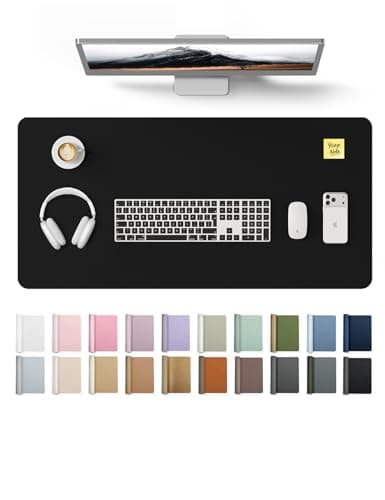
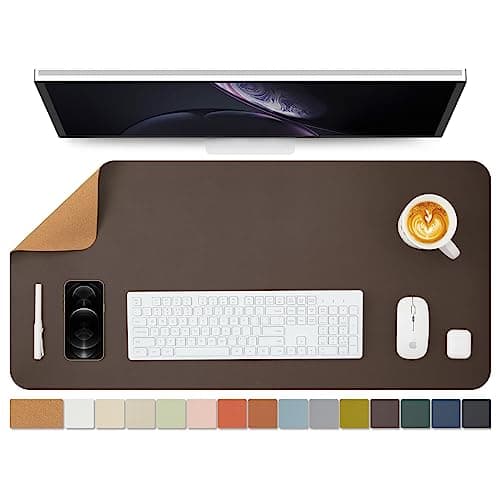
Do not skip the mat because the room is small
A compact mat still prevents the hard-floor fatigue that stops you standing. See the anti-fatigue mat roundup — the sculpted Topo Mini exists precisely for small footprints.