Smell it before you spray it. A sharp chemical or plastic smell on a chair less than a few weeks old is off-gassing, it is about materials, and ventilation is the fix. A musty or earthy smell is moisture in the foam or fabric, which is a microbial problem — and the EPA's position on that is unambiguous: the key to mold control is moisture control. A stale, sour or sweaty smell on a chair you have owned for years is absorbed body oil and skin cells in the upholstery, and that is a cleaning job. Only the first of those three is a reason to think about what the chair is made of, and it is the only one that fades by itself.
1. The new-chair chemical smell
A new chair is a stack of materials that were manufactured, glued, finished and then sealed in a box: polyurethane foam, adhesives, a surface finish, a plastic shell, and composite panels in the base or the arms. Those materials release volatile organic compounds, the release is fastest when the product is newest and warmest, and a sealed carton concentrates everything so the first unboxing is the worst moment you will ever smell.
The fix is dilution and time, in that order. The EPA's indoor air quality guidance puts ventilation and source control at the top of the list for a reason — increasing outdoor air exchange is the single most effective thing available to you in a home. Unbox the chair somewhere ventilated, give it a few days with the windows open if the weather allows, and keep the room warm rather than cold, because warmth accelerates the release you are trying to get through rather than trapping it for later. We wrote the full protocol on the first 72 hours.
Two things not to do. Do not spray a fragrance over it: you have added a source rather than removed one, and you can no longer tell when the original smell has gone. And do not assume the smell means formaldehyde specifically — formaldehyde is one compound among many, it is regulated in composite wood panels under TSCA Title VI, and a desk with a composite top is a much more likely source of it than a mesh chair.
How long is too long? If a sharp chemical smell is still obvious after a few weeks of ventilated use, that is no longer the normal curve. At that point it is worth treating the chair as a product you would not have bought with the information you now have, and the return window is the relevant tool.
2. The musty smell
Musty is a different mechanism and it does not fade. Chair foam and fabric hold moisture, and moisture plus time plus still air is the standard recipe for microbial growth. Common sources: a chair stored in a basement, garage or storage unit; a chair that got rained on in transit; a chair in a humid room with no airflow; or a spill that soaked into the foam and was dried only on the surface.
The EPA is direct about the principle — "the key to mold control is moisture control" — and about the timeline: dry water-damaged areas and items within 24 to 48 hours to prevent mold growth. It also notes that mold exposure can irritate the eyes, skin, nose, throat and lungs, and can trigger asthma episodes in people with asthma. That is why a musty chair is worth taking more seriously than a chemical-smelling new one, not less.
Practically: get it dry all the way through, not just on the surface, with real airflow and ideally some sun. Lower the humidity in the room. If the smell survives genuine drying, the growth is inside the foam, and foam is not something you can clean to the core. A seat pad is sometimes replaceable on a contract-grade chair; on a budget chair it usually is not, and replacing the chair is the honest answer.
3. The stale, sour or sweaty smell
This is the most common one on a chair that is a few years old, and it has nothing to do with materials certification. Upholstery absorbs skin oils, sweat and food residue, and fabric holds it. A mesh back is far less prone to this than a padded one, for the obvious reason that there is less to absorb into and more air moving through it — which is one of the underrated arguments in mesh versus foam.
The fix is cleaning, with one rule that matters more than the product you use: do not soak it. Water driven into foam that you cannot then dry is how a sour chair becomes a musty chair, which is strictly worse. Follow the chair maker's own cleaning guidance where it exists — contract-grade makers publish it and budget brands generally do not — and use the least moisture that works. Our chair lifespan guide covers the rest of the maintenance picture.
What a low-emission certificate does and does not promise
If the chemical smell is what brought you here, this is the part worth understanding before you replace anything.
GREENGUARD and SCS Indoor Advantage Gold both test a finished product in a controlled chamber against emission limits, using the ANSI/BIFMA M7.1 / X7.1 method, which in turn descends from the CDPH Standard Method. A certificate means the product was measured and stayed under published limits. It does not mean the chair has no smell — it means the emissions were quantified rather than left to your nose.
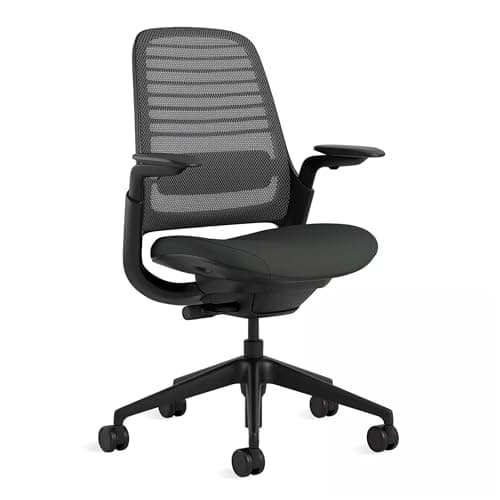
It also matters which registry the certificate lives in, because this is where most buying guides are wrong. Steelcase's Series 1 carries SCS Indoor Advantage Gold, not GREENGUARD, so you verify it with SCS rather than at UL SPOT. Branch prints "Certified Greenguard Gold for low VOC emissions" on the product pages for its Ergonomic Chair, Verve and Daily — and not on the Ergonomic Chair Pro. So if you are buying a chair because of an emissions certificate, the model matters more than the brand, and the three picks below are the ones where the maker actually publishes one.
The cheaper chairs on this site publish nothing, which is not the same as being worse — the budget ranking says so plainly — but it does mean ventilation is doing all the work rather than being a belt-and-braces measure.