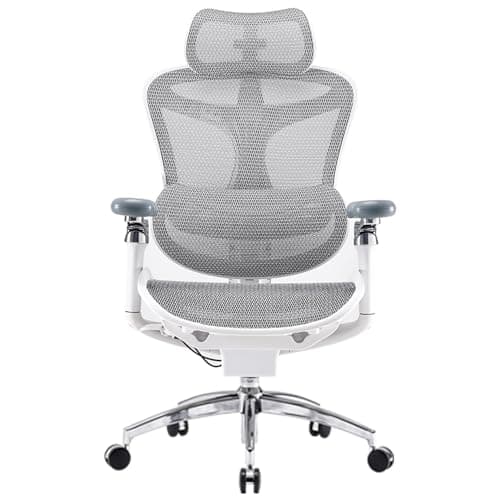
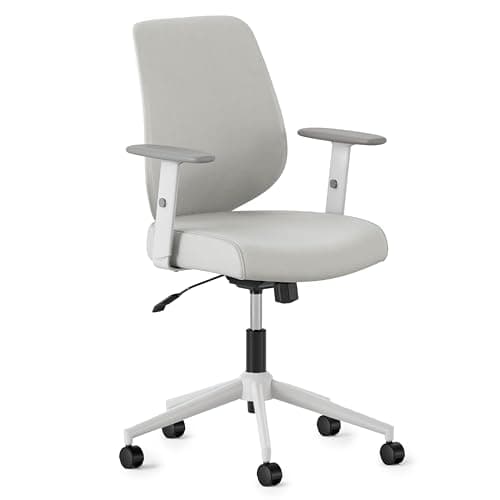
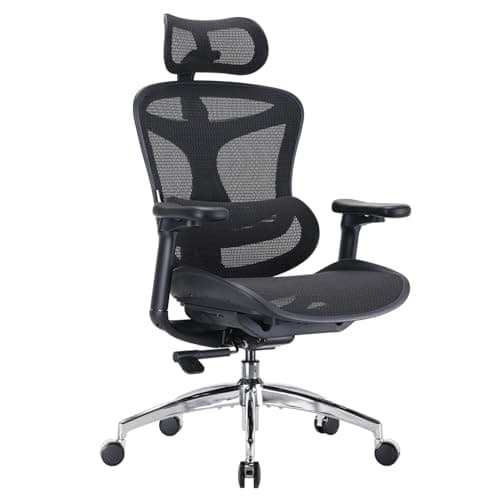
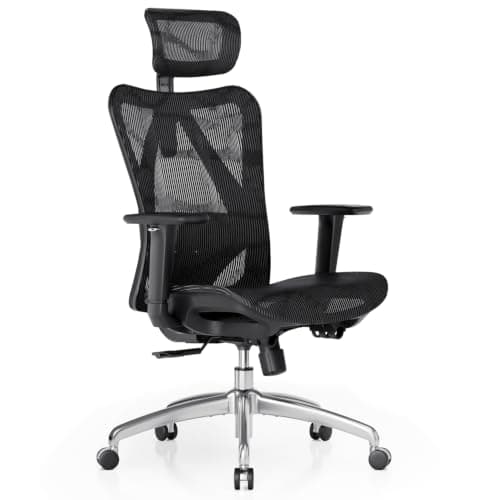
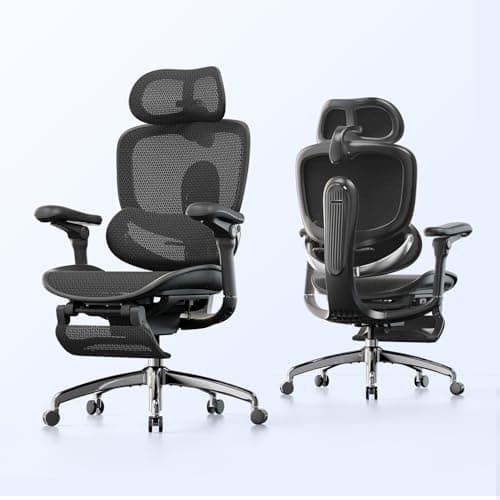
Under five hundred dollars, buy the SIHOO Doro C300 Pro V2 if you want the most mechanism for the money — a listing-stated built-in footrest, 8D armrests and a 135 degree recline — and buy the Doro C300 Pro instead if you sit at the desk all day, because seat-depth adjustment is worth more over eight hours than another armrest axis. The budget pick is the SIHOO M57: the cheapest chair on this site that still has genuinely adjustable lumbar and 3D arms. If a readable certificate is the reason you are shopping, the Branch Daily is the only chair in this band whose maker prints an emissions line — and it is also the least adjustable chair here. That trade is the whole page.
Every chair below carried a live price under $500 at the last price check; the exact figure and the as-of date render beside each pick, because prices move and ours come from the price layer rather than from this sentence.
One note on the top pick, because it is the reason people arrive at this band in the first place: the footrest on the Doro C300 Pro V2 is no longer the only one available to you. There are now cheaper chairs that publish a retractable footrest, including two that publish fit and safety numbers this one does not, and we rank the whole group on office chairs with a footrest. If the mechanism is what you came for rather than the price band, start there.
Who each pick is for
- SIHOO Doro C300 Pro V2 — a chair that is also where you recline and read; buy it for the break, not for the typing.
- SIHOO Doro C300 Pro — short femurs, tall sitters and a chair two people share; the one Doro whose listing names seat-depth adjustment.
- Branch Daily— the buyer who wants a published emissions line at the bottom of a documented brand's range.
- SIHOO Doro C300 — a full workday with no foam seat pan under you: mesh back and mesh seat.
- SIHOO M57 (budget pick) — the cheapest chair that does the job: real lumbar adjustment, 3D arms, mesh back.
What $500 buys in 2026
The useful thing about a hard price ceiling is that it exposes what the market actually prices. Below five hundred dollars you can now have: adjustable or load-responsive lumbar, three or more armrest axes, a mesh seat as well as a mesh back, a published maximum load, a deep recline, and on one chair here seat-depth adjustment — which was a flagship-only feature not long ago. What you cannot have is the paperwork.
That is not a value judgement, it is what the documents say. Every SIHOO chair in this band carries the same marketing line — the Doro range is described as "environmentally certified by BIFMA and TUV" — with no certificate number, no standard number and no registry entry we could find. BIFMA writes the ANSI/BIFMA X5.1 performance standard and separately runs the LEVEL sustainability program; a sentence that says "certified by BIFMA" without saying which is a badge rather than a document. Our BIFMA explainer unpicks it properly.
One chair in the band breaks the pattern. Branch prints "Certified Greenguard Gold for low VOC emissions" on the Daily Chair's own page, which is a named certificate from a named certifier you can look for at UL SPOT. Branch publishes that line per chair rather than per brand — a point we make at length on our Branch chair review — and the Daily is the cheapest chair in the range that carries it. The catch is published too: four adjustment points and a fixed lumbar rest, which is the least adjustable chair on this page.
Above the ceiling, and why we are telling you
If you can reach past five hundred dollars, the next step is not a slightly better budget chair. It is the Steelcase Series 1, where the entire difference is documentation: a dated compliance certificate to ANSI/BIFMA X5.1 and X5.11 at 400 lb, a cut sheet naming BIFMA LEVEL 3, CAL 117 and SCS Indoor Advantage Gold, a published Environmental Product Declaration and a twelve-year warranty against three. For a buyer who filters on what a product is made of and what it is certified to, that is the step that matters, and pretending otherwise would be the easiest way to lose your trust. It is ranked at the top of our general chair ranking.
Below the ceiling in the other direction, we checked the $200 band and did not build it: exactly one task chair in our registry has a live price under two hundred dollars, which is not enough to rank honestly. If that is the budget, read our budget ergonomic chair ranking instead, which is written about that end of the market and is honest about which of its picks currently have no buyable offer.
The three things to check before you spend $500
At this price the chair will be adjustable enough. What goes wrong instead is fit, and fit is three measurements.
Seat depth against your femur. The Doro C300 publishes a single fixed 18.11 in seat depth with no adjustment, and if your thigh is shorter than that the seat edge lands behind your knees. The Pro is the chair in the family that fixes it, which is why we rank adjustment over armrest axes. Our page for shorter sitters has the measuring method.
Seat height against your floor. SIHOO publishes no seat-height range and no stature guidance for the Doro line at all, which means you cannot size those chairs from published data. Mayo Clinic and OSHA both put the target in the same place — feet flat, thighs roughly parallel to the floor — and if a chair cannot get you there, a footrest is the cheap correction.
Capacity, where it is published. SIHOO states 330 lb maximum load and a 20.28 in maximum hip width for the C300; Branch publishes 225 lb for the Daily. Those figures are manufacturer statements rather than third-party test results, and the difference between them is large enough to decide the purchase on its own. If you are near either number, read chairs for big and tall users, which is written entirely about which capacity claims have documentation behind them.
The band above this one is where the claims stop being sentences. Office chairs under $1,000ranks the chairs whose makers publish a dated BIFMA compliance certificate and an SCS Indoor Advantage Gold document you can look up in a registry — which is the single thing no chair in this band offers, at any price inside it.
Before you buy
Spending $500 well
1. Buy adjustment you will use, not axes you will count
Seat depth and lumbar height change how you sit for eight hours. The seventh and eighth armrest axis change a specification sheet.
2. Decide early whether the certificate matters to you
In this band it is a genuine either/or: the most adjustable chairs publish the least, and the chair with a printed emissions line is the least adjustable.
3. Measure your femur and your lower leg
A fixed seat depth is the most common misfit at this price, and no lumbar adjustment can rescue a seat that pushes you off the backrest.
4. Treat an unpublished spec as unknown
No published seat-height range means you cannot size the chair from data. That is a reason to buy from a seller with a real returns window.
5. Ventilate it for the first week
Every undocumented chair here gets the same advice: unbox it in a ventilated room and give it a few days before an eight-hour day. See off-gassing in the first 72 hours.
6. Then set it up properly
Seat height, then seat depth, then lumbar, then arms. In that order, once — our adjustment guide has the detail.