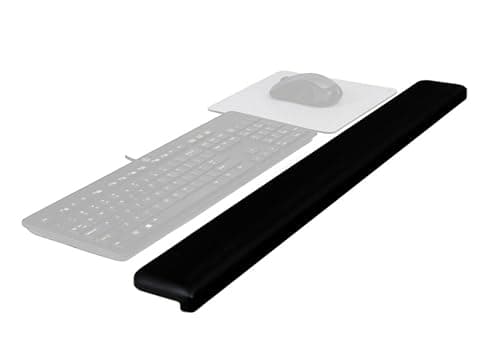
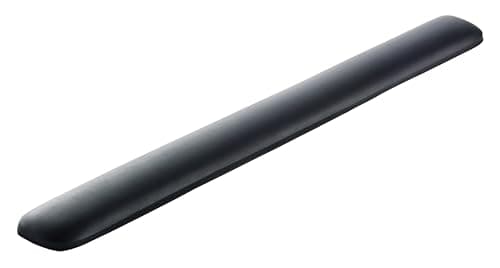
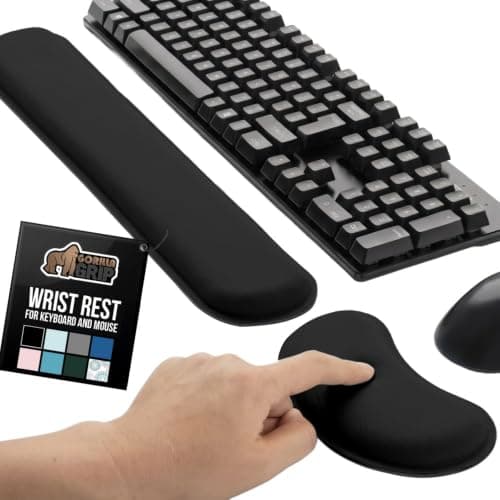
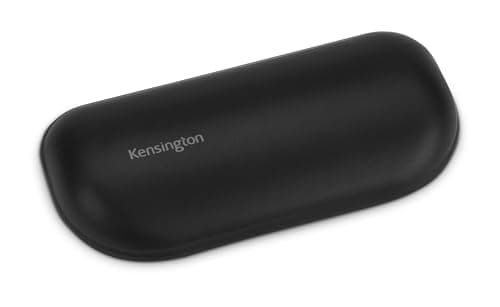
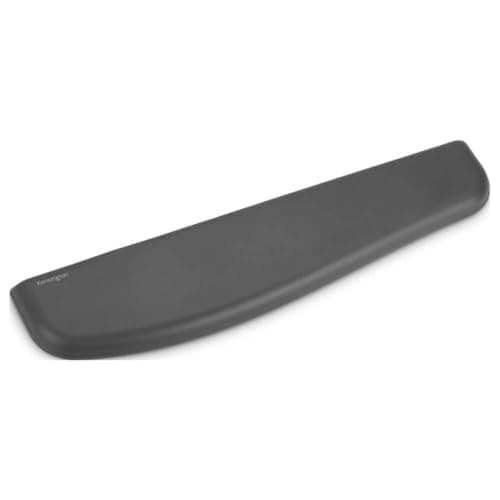
Buy the Kensington ErgoSoft in the version matched to your keyboard height — that match matters more than the material. If you work standing, buy the 3M rest designed to wrap the desk edge instead: a standing forearm contacts the front edge of the desk, not the surface in front of the keyboard, and a conventional rest does nothing there. Before either, read the technique section. The most common way to use a wrist rest is the wrong way.
What a wrist rest is actually for
It is a rest. The clue is in the name and almost everyone ignores it. The intended use is to support the heel of your hand during pauses — between sentences, while reading, while thinking — so your arms are not held up unsupported for hours.
The wrong use is planting your wrists on it and typing with your hands pivoting from that fixed point. That does two harmful things at once: it bends the wrist upward into extension, and it presses directly on the underside of the wrist, which is where the carpal tunnel and its contents sit. OrthoInfo's carpal tunnel material is the background here — sustained pressure and sustained extension are precisely the mechanical factors worth avoiding.
Correct technique: hands float while typing, wrists straight and roughly level with the forearm, and the rest catches the heel of the hand when you stop. If you cannot float your hands, the problem is that your keyboard is at the wrong height and a rest is treating the symptom.
Height match is the specification that matters
A wrist rest should bring the heel of your hand level with the front row of keys. Too low and your wrist angles down; too high and it angles up. Both are worse than no rest at all, and this is the single most common mistake in the category, because rests are usually bought on price and material rather than height.
- Slim keyboards — laptop-style, low-profile, most wireless boards — need a low rest. Kensington sells a specific slim version and the difference is not cosmetic.
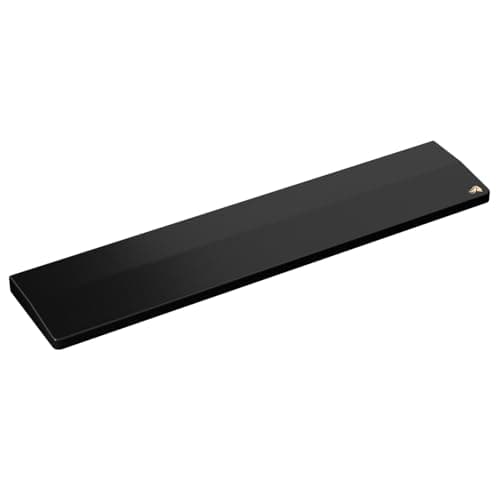
- Full-height and mechanical keyboards need a tall rest. This is what the standard Kensington and the wooden rests are sized for.
- Split and tented keyboards usually come with integrated palm supports designed for their geometry — see our keyboard roundup. Adding a separate rest to those is often a downgrade.
Gel, foam or wood
Three materials, three different failure modes:
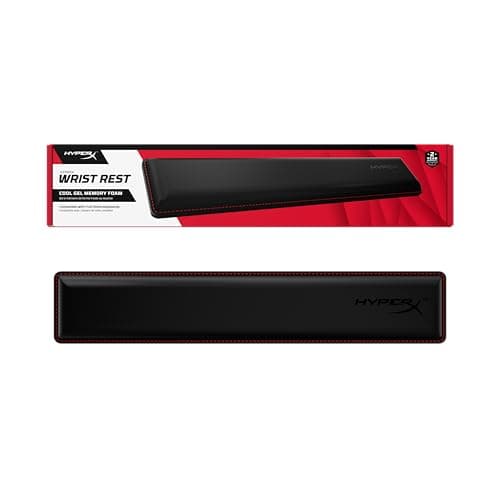
- Memory foam is the softest and the most popular, and it takes a permanent impression within a year or two of daily use. It also warms up, which is why the better ones add a cooling gel layer.
- Gel spreads pressure without conforming as closely, stays the same firmness in a cold room, and does not take a set. A puncture ends it instantly.
- Solid wood does not compress at all, has no cover to absorb hand oils, and will outlast the keyboard. It is also hard, which some people dislike immediately — and, on a site about materials, it is the only option here with no polyurethane in it. Solid ash is a hardwood rather than a bonded composite, so the formaldehyde question that applies to MDF does not apply.
None of these publishes a foam or finish certificate. Foam rests are among the smellier small objects you can buy, so unwrap a new one and let it air — the same principle as every other new foam product, covered in our break-in guide.
The standing-desk case nobody makes
Almost all wrist-rest advice assumes a seated user. Standing changes the contact point: your forearms tend to rest on the front edge of the desk rather than on the surface in front of the keyboard, and a square desk edge under a bony forearm is genuinely uncomfortable after an hour.
A conventional wrist rest is in the wrong place for that. The 3M standing-desk rest wraps the edge itself, which is the correct geometry — it is a niche product and it is the right one if you stand for a meaningful part of the day. If you would rather not buy anything, a keyboard tray that brings the board forward and down achieves something similar by removing the edge contact.
Do not forget the mousing hand
The mouse hand does far more small repetitive movement than the typing hand, and it does it one-sided. One-sided forearm or wrist discomfort is more often a mouse story than a keyboard story. A small mouse rest is cheap; a vertical mouse or trackball that changes the forearm rotation entirely is usually the bigger win, and the two are alternatives rather than a pair — a flat rest often gets in the way of a vertical mouse.
One last thing, said plainly: if you already have wrist pain, a wrist rest is not a treatment. Fix the keyboard height, change the mouse, take breaks, and see a clinician. This page is general information, not medical advice.