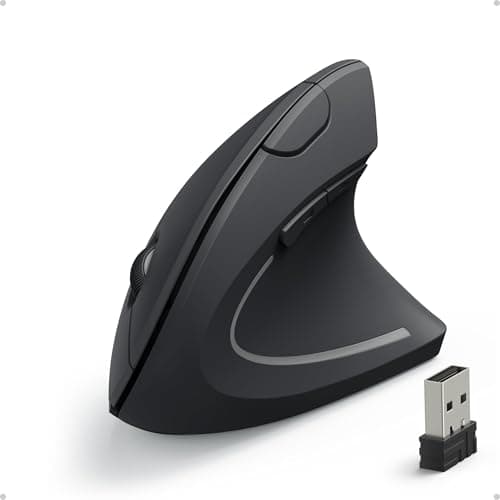
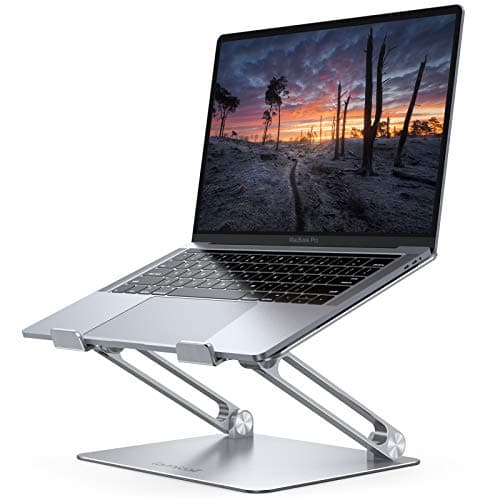
If you know they work on a laptop, buy the Lamicall aluminum stand and stop reading. It fits every laptop, needs no measuring, has nothing in it that can off-gas, and it fixes the single most common desk complaint — a screen too low, and a neck bent over it all day. If they use a desktop computer, the Anker vertical mouse is the next safest bet: cheap enough to be a genuine try-it gift, and it targets the forearm twist that makes a normal mouse ache.
How this list was built
Every product on this page already appears in one of our category rankings — the laptop stands, ergonomic mice, footrests, lumbar cushions and anti-fatigue matspages — where it was scored against a published rubric and had its material claims checked. We did not go looking for new products to fill a gift list. We took the ones we already stand behind and re-sorted them by a gifter's three questions: does it fit any desk, does it need their measurements, and does it fix something they have actually complained about.
A note on the price band. "Under $50" describes where each pick sat when we wrote this page. The price you see on each button is pulled live from Amazon and stamped with the date we checked it — if something has crept over the line by the time you read this, the button will tell you, not us.
The rule that makes a cheap ergonomic gift work
Ergonomic gifts fail for one predictable reason: they need fitting. A chair needs the recipient's body. A monitor arm needs their desk thickness and a VESA pattern on the back of their screen. A standing desk needs their room. Under $50 you cannot buy any of those anyway, which turns out to be a feature — everything in this price band is a self-contained object that sits on or under a desk and addresses one complaint. The job is just to match the object to the complaint.
Match the gift to the complaint
- "My neck hurts" and they use a laptop. The Lamicall stand. A laptop screen sits a foot below eye level, and the fix is to raise the screen and add a separate keyboard. The stand is the giftable half. It is a single piece of aluminum — no foam, no laminate, no composite, so there is nothing to air out, which matters more than it sounds for a gift that arrives boxed in December.
- "My wrist aches from the mouse." The Anker vertical mouse. A vertical mouse holds the forearm in a handshake position instead of rotating it flat, which is the posture that accumulates over a working day. Our ergonomic mouse ranking rates the Logitech Lift and MX Vertical higher for daily use, but both sit outside this budget; the Anker is the honest way to find out whether a vertical shape suits them at all, and our under-$150 guide has the upgrade if it does.
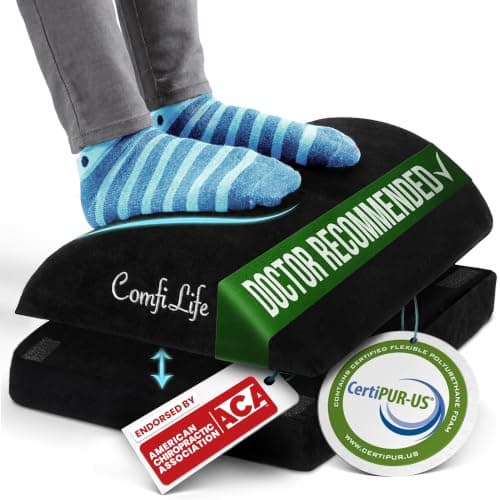
- "My feet dangle" or "my lower back aches when I sit." The ComfiLife footrest. A chair set correctly for the arms very often leaves the feet off the floor, and the fix is a few inches of height under them. This is the most under-bought item in ergonomics and one of the cheapest.
- "My chair has no lumbar support."The ComfiLife lumbar cushion. The right amount of memory foam and an adjustable strap that actually holds. It is polyurethane foam with no published certificate, so unwrap it and let it air out for a few days before it lives against someone's back — tell them that when you hand it over.
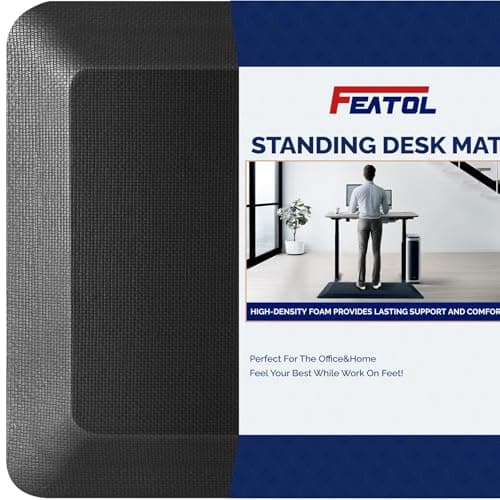
- "My feet hurt when I stand." The FEATOL mat. The thickest cushion for the money, for someone who already has a standing desk and stands on a hard floor. It is a comfort-first budget pick, and we say so on the mat page: the brand does not document its foam beyond marketing language. If the person you are buying for cares about what a mat is made of, the sculpted Topo in our under-$150 guide is the one with a real material disclosure.
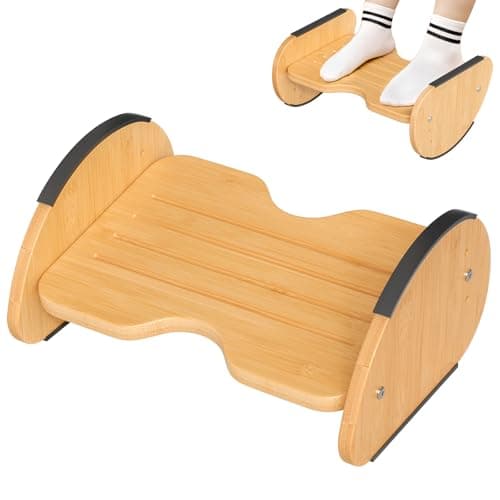
- You want the low-tox option. The Amazer bamboo footrest. Bamboo is a solid grass rather than a formaldehyde-bound composite, so on emissions it is the lowest-concern material on this page, and the rocking-or-fixed reversible design means it suits someone who wants to keep their ankles moving. It is a board, and it feels like one — not for bare feet on a cold floor.
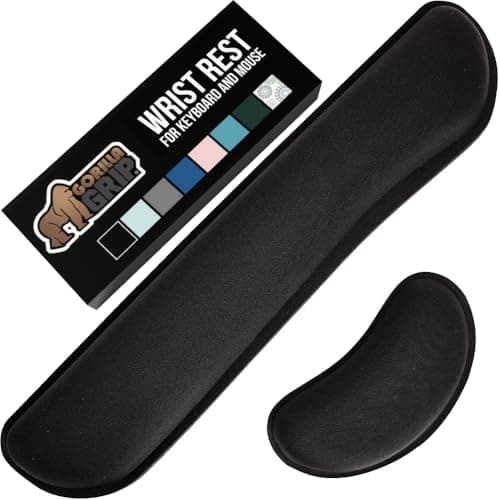
- The stocking-stuffer, with a sentence attached. The Gorilla Grip wrist rest. A wrist rest is for the pauses between typing — a place to set the heel of the hand while thinking. Resting the wrists on it while typing presses on the carpal tunnel. Gifted with that one sentence, it is a useful few dollars; gifted without it, it can do harm.
What not to buy for under $50
- A posture corrector, brace or "alignment" strap. These carry medical claims and fix nothing about the desk that caused the posture. If someone has pain, the useful gift is a well-set-up workstation.
- A cheap "ergonomic" chair cushion with a picture of a spine on the box. Cushions work — we rank them — but only when the complaint matches the shape. A coccyx cutout for someone with tailbone pain is a good gift; the same cushion for someone with general stiffness is the wrong shape. See our gifts for someone with back pain if that is the situation.
- A split keyboard. Wonderful for the right person, and a two-week typing-speed penalty for everyone else. Only buy one for someone who has asked.
- A "standing desk mat" for someone who sits all day. It will sit under the chair as a trip hazard. Buy the footrest instead.
The one thing to check before buying each pick
Laptop stand: that they have, or will accept, an external keyboard — raising the laptop without one moves the hands up with the screen and solves nothing. Vertical mouse: which hand they mouse with; most verticals are right-handed only. Footrest: that their feet do not already sit flat — a footrest someone does not need just pushes their knees into a worse angle. Lumbar cushion: that their chair has a back worth strapping it to. Mat: that they actually stand — a mat is a standing-desk accessory, not a desk accessory. Wrist rest: include the instruction.
If you can stretch the budget
The step up from this page is not a bigger object, it is a better version of the same one: the Logitech Lift is the daily-use vertical mouse the Anker only imitates, and the Ergodriven Topo is the mat that keeps feet moving rather than just cushioning them. Both lead our best ergonomic gifts under $150. And if the budget is genuinely open, our no-budget-limit guide explains how to give a certified desk or a real chair without gifting someone a return to process.
How to choose an ergonomic gift under $50
Buy for a complaint you have actually heard
Neck, wrist, feet, lower back. Each has a different answer, and guessing wastes the gift.
Prefer objects with no fit dimension
Stands, mice, footrests, cushions and mats fit everyone. Chairs, desks and monitor arms need measurements you do not have.
Prefer inert materials for a gift that arrives boxed
Aluminum and bamboo have nothing to air out. Memory foam is fine, but it should sit unwrapped for a few days before daily use — which is an odd thing to have to say on Christmas morning, so consider giving the foam items early.
Ignore the price you remember; trust the button
Every price on this page is pulled live from Amazon and dated. If a pick has drifted over $50, the button will show it.
Include the one-sentence instruction
Especially for the wrist rest (pauses, not typing) and the lumbar cushion (unwrap and air it). The sentence is the difference between a gift that helps and one that sits in a drawer.
How we picked
We compiled specs from manufacturer manuals, verified every certification claim in the certifying body's own registry (UL SPOT for GREENGUARD, BIFMA, CARB), did the cost-to-own math, and read the aggregated owner reviews, then scored each product against a published rubric. The scores are judgments from documented research — they are not measurements we took, because we do not have a lab and we are not going to pretend we do.